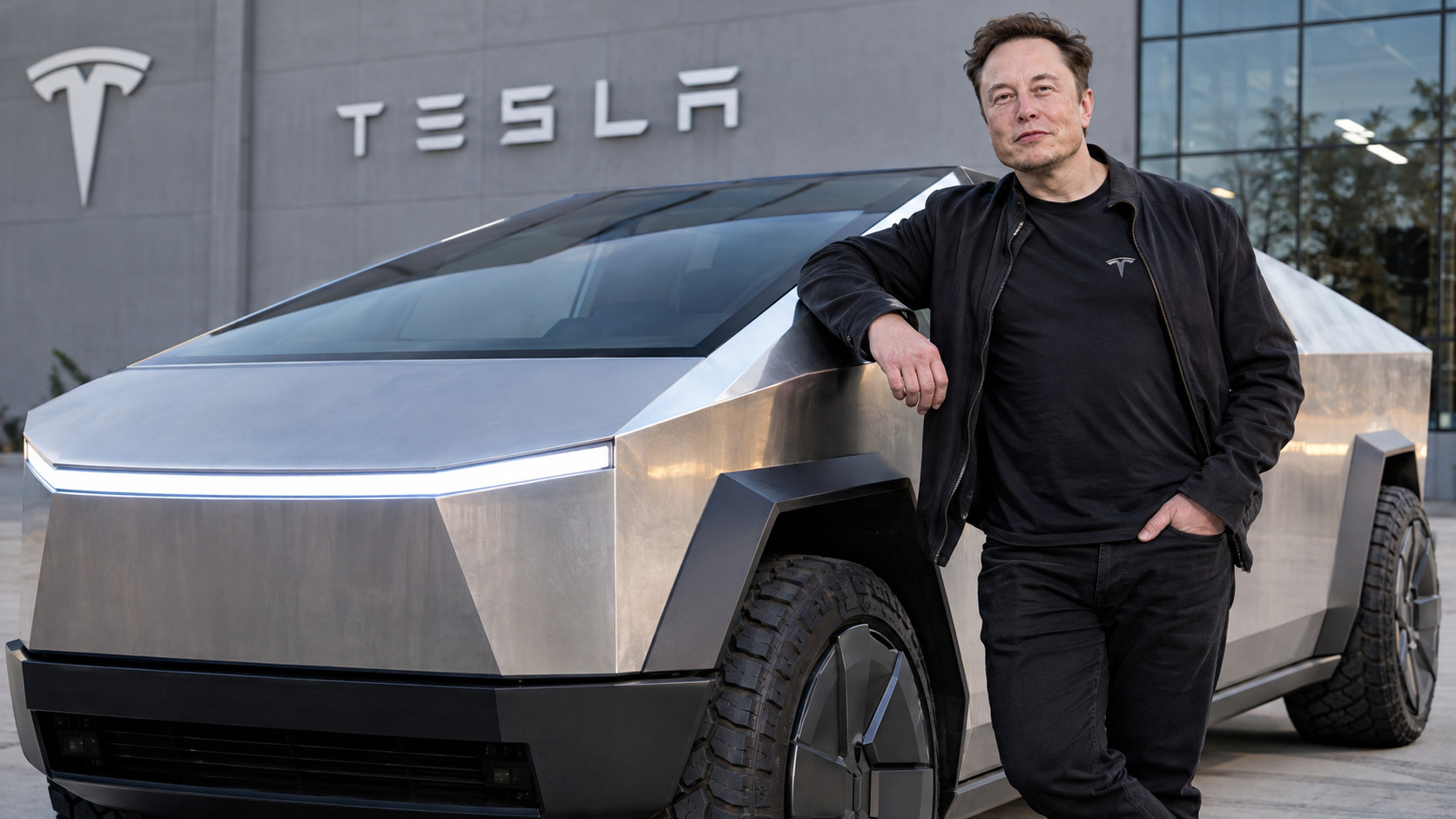
Cybertruck production will begin winding down at Tesla’s Texas factory around mid-2027 as Elon Musk makes room for the company’s self-driving Cybercab. Musk announced the decision Friday, November 6, on X, explaining that the move would “make room for increased Cybercab production.” The Texas Gigafactory is currently the only facility manufacturing the stainless-steel pickup, raising questions about whether Tesla’s most recognizable truck is nearing its final chapter.
The announcement comes less than three years after Tesla began delivering Cybertrucks to customers in November 2023. When Musk first unveiled the vehicle in 2019, its sharp angles, stainless-steel exterior, and futuristic appearance immediately sparked conversation. Tesla promoted the truck as a powerful alternative to traditional pickups, but the debut also became memorable when a demonstration of its supposedly durable windows ended with cracked glass.
Getting the truck to customers proved difficult. Production delays pushed back its arrival, while pricing changed dramatically from the original announcement. Tesla initially promoted a starting price of $39,900, but the vehicles eventually reached buyers at much higher prices. Cybertruck production was supposed to support an ambitious expansion into the pickup market. Instead, affordability and demand became major obstacles.
Musk had previously predicted annual Cybertruck sales of approximately 250,000 vehicles. According to Kelley Blue Book, Tesla sold an estimated 38,965 Cybertrucks in 2024 before sales dropped to 20,237 in 2025. That represents a decline of roughly 48 percent in just one year. Tesla does not report individual Cybertruck sales separately in its quarterly delivery figures, making outside industry estimates an important measure of the vehicle’s performance.
The slowdown continued throughout 2026. Kelley Blue Book estimated that Tesla sold 11,586 Cybertrucks during the first nine months of the year, approximately 28 percent fewer than during the same period in 2025. Cybertruck production now faces a very different reality from Musk’s earlier projections. Kelley Blue Book also reported an average Cybertruck transaction price of $98,109 in September, putting the vehicle beyond many everyday car buyers’ budgets.
Sales were not the only challenge. The Cybertruck experienced multiple recalls involving safety and manufacturing problems, including accelerator pedals, windshield wipers, and exterior components. In March 2025, federal regulators announced a recall affecting approximately 46,000 Cybertrucks because stainless-steel trim panels could detach while driving, potentially creating hazards for other motorists. Some recalls required physical repairs, while others involved software fixes.
The vehicle also became caught up in controversy surrounding Musk’s political activities. His involvement with the Trump administration’s Department of Government Efficiency generated protests against Tesla, while some Cybertrucks and Tesla facilities became targets of vandalism. Although Cybertruck production had already struggled to meet expectations, the political backlash added another challenge for the brand during a difficult period.


Made to order and shipped to your door.
Wall Street analyst Dan Ives, senior managing director of Yorkville Ives & Co., told CBS News that “the writing was on the wall” for the Cybertruck because of its high price and disappointing demand.
“Musk is focused on robotics and the robotaxi era, which frees up production with the Cybertruck ramp now winding down,” Ives said.
Tesla’s next priority is the Cybercab, a two-seat electric vehicle designed to operate without a steering wheel or pedals. Unveiled in 2024, the Cybercab began production in 2026, with limited ride service launching in Austin in September. Unlike the Cybertruck, which customers operate themselves, the Cybercab is designed for a driverless transportation network. The company hopes to expand that service as its autonomous driving technology develops.
For current Cybertruck owners, several questions remain unanswered. Musk did not confirm whether Cybertruck production would move to another factory or stop completely. However, Cybertruck lead engineer Wes Morrill indicated that Tesla would continue providing spare parts and service support for existing vehicles.