

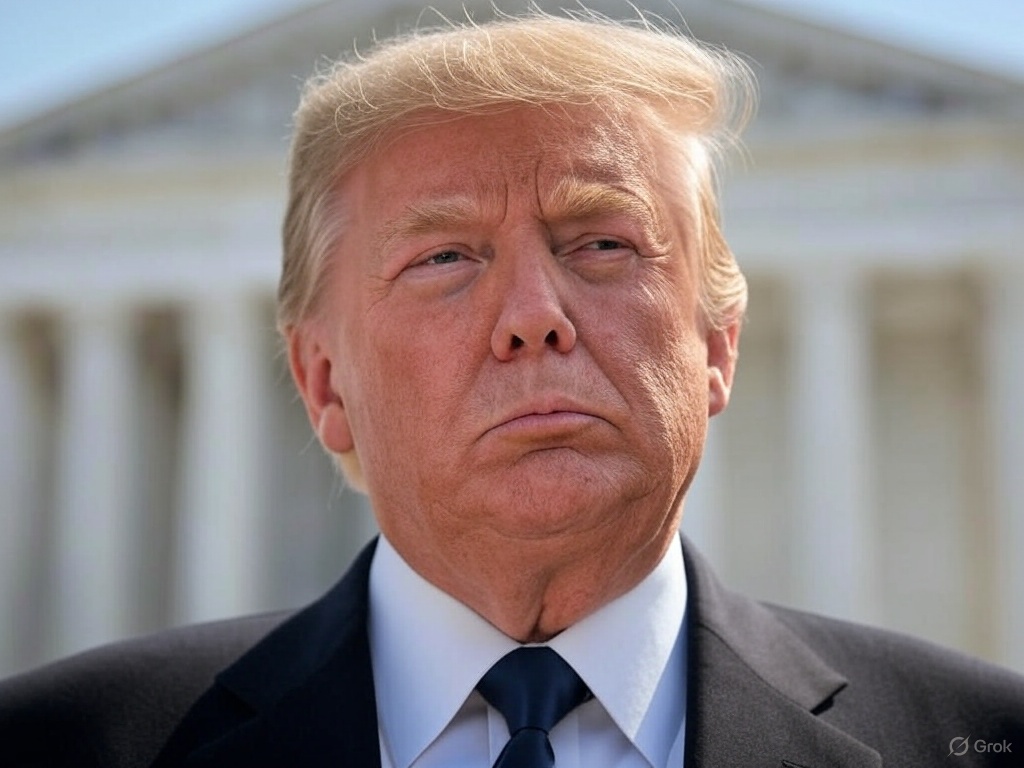
Trump announced Friday morning on Truth Social that the United States will allow up to 300,000 metric tons of foreign beef into the country without the usual penalty tariff, a move he says will lower what Americans pay for ground beef.
Here is how that works. The US already lets in a set amount of beef each year at a low tariff. Anything past that ceiling gets hit with a much steeper one, which is why importers stop at the line. That system is called a tariff-rate quota. What Trump is doing is waiving the steeper tariff on an additional 300,000 metric tons of beef headed for ground beef, which makes it cheap enough for companies to actually bring in. The waiver lasts 90 days.
That is a meaningful amount. The US imported roughly 4.4 billion pounds of beef in 2025, so an extra 300,000 metric tons works out to close to 15 percent of annual imports.
Trump framed it as a two-part win, saying the deal will reduce prices for Americans while giving space for what he called the Great American Beef Herd to grow again. He also said there is a commitment that this beef will be sold at 25 percent below current market prices.
He did not say who made that commitment, how it gets enforced, or whether grocery stores and processors are responsible for passing the savings along. That is the weakest part of the announcement, because the tariff waiver affects what importers pay at the border, not what a store charges you at the register.
The reason any of this is happening is a cattle shortage. Beef peaked at $6.69 a pound in December, the highest since the Department of Labor began tracking the number in 1984. The total US cattle supply is at a 75-year low. The beef cattle herd sat at 27.6 million on January 1, down one percent from the year before. Years of drought thinned the herds, wildfires took grazing land, and Mexican supply got cut off over a pest problem. Rebuilding a cattle herd takes years, because you have to hold back breeding stock instead of selling it, which makes the shortage worse before it gets better.
This is Trump’s second run at the same idea. In February he signed a proclamation quadrupling Argentina’s quota, adding 80,000 metric tons of lean beef trimmings for 2026 released in four quarterly batches. That came out of a trade deal Argentina’s foreign ministry valued at an $800 million increase in its beef exports, and it was a win for Javier Milei, one of Trump’s closest allies in the region.
The February version did not go over well, and this one is landing the same way. Ranchers and cattle industry groups opposed it. More than a dozen House Republicans sent a letter to Agriculture Secretary Brooke Rollins and Trade Representative Jamieson Greer objecting to the Argentine beef push. The National Cattlemen’s Beef Association said it welcomed pressure on Argentina to open its own market to American beef but flagged foreign animal disease as a reason for caution.
Democrats went at the new announcement immediately. Ohio Representative Marcy Kaptur wrote on X that Trump paid Argentina twenty billion dollars to send beef here and is now importing another 300,000 metric tons to undercut American cattlemen, calling it a slap in the face to ranchers, producers, and farmers.
Whether any of it reaches your grocery bill is the open question. When Trump did this in February, economists said the numbers were too small to matter. David Ortega, a food economist at Michigan State, said 80,000 tons amounted to about 0.6 percent of the overall US beef supply. Derrell Peel at Oklahoma State said there is nothing the administration can do in the short run to change US beef prices.
This round is nearly four times larger, so the same dismissal does not automatically apply. But the core problem has not changed. There are not enough cattle in the country, and no tariff waiver puts more cows on the ground.
