

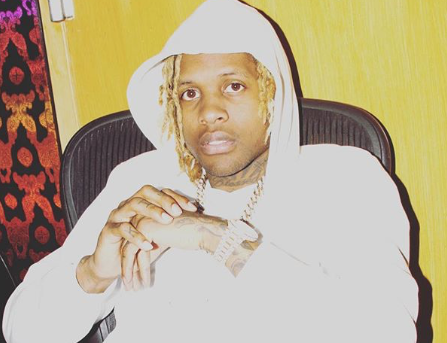
Lil Durk was found not guilty on all five federal counts in his Los Angeles murder-for-hire trial on Friday, and he is still sitting in federal custody tonight. For a lot of people watching, those two facts do not fit together. An acquittal is supposed to mean you go home. In the federal system, it does not always work that way, and the reason has nothing to do with what the jury decided.
Start with what the verdict actually covered. Prosecutors accused Lil Durk, whose legal name is Durk Banks, of financing and directing a 2022 ambush at a gas station near the Beverly Center in Los Angeles. The government said the target was Atlanta rapper Quando Rondo, born Tyquian Bowman, and that the motive was revenge for the 2020 killing of King Von. Bowman survived. His 24 year old cousin, Saviay’a Robinson, was shot and killed. The five counts were conspiracy to commit stalking, stalking using a dangerous weapon, stalking resulting in death, conspiracy to use interstate facilities to commit murder for hire resulting in death, and the murder for hire count itself. The jury of seven women and five men deliberated for three days and asked the court at one point to clarify what the law means by intent. They came back with not guilty on every count. His two co defendants, Deandre “OTF Dede” Wilson and David “Browneyez” Lindsey, were convicted of conspiracy to commit stalking, stalking, and stalking resulting in death.
So why is Lil Durk still locked up. Because that trial was never the only case against him. Earlier this year, prosecutors filed additional racketeering charges. Racketeering is the tool the federal government uses to prosecute a group as a criminal enterprise rather than charging individuals one crime at a time. Instead of proving a single shooting, the government tries to prove that an organization existed, that it operated through crime, and that the defendant helped run it. Prosecutors allege that Only the Family, the label and collective Durk founded, functioned as that kind of enterprise. Durk has denied it.
Those charges came in through what is called a superseding indictment, which is simply an updated set of charges filed after the original ones. This was the third version in the case, and it landed about a month before the Los Angeles trial was scheduled to begin. Durk’s lawyers argued it was too late to fold new allegations into a trial that had been building for close to two years, and in July the judge agreed to sever them, meaning separate them out into their own proceeding. The judge also ruled that a January 2022 killing in Chicago and an alleged February 2019 attempted murder in Atlanta were off limits at the Los Angeles trial. That ruling was a win at the time. It also guaranteed that even a clean sweep in Los Angeles would leave a second case standing.
The second piece is how federal detention works. Whether someone is held before trial is a judge’s call, not a jury’s, and it turns on two questions: is this person a danger to the community, and is this person likely to run. A not guilty verdict in one case does not answer either question for a different pending case. Former federal prosecutor Neama Rahmani told Complex that prosecutors would almost certainly push to keep Durk detained no matter what the Los Angeles jury decided, precisely because that decision rests on flight risk and public safety rather than on the outcome of a single trial.
Durk’s detention record going into Friday was already long. He was arrested in the Miami area in October 2024, and prosecutors argued at the time that he was preparing to leave the country. Judges rejected multiple attempts to get him released, including a bond package his lawyers valued at $2.7 million in assets paired with around the clock private security, electronic monitoring, and full court supervision. Prosecutors also accused him of witness intimidation and told the court that witnesses and their family members had been threatened.
What changes now is the argument his attorneys can make. Civil rights attorney Adanté Pointer has said an acquittal strengthens the case for home confinement or electronic monitoring, because the conduct described in the racketeering case overlaps heavily with the conduct a jury just refused to convict him for. That is a real argument, and a judge could accept it. Even then, the government has the option to appeal a release order. It did exactly that after a judge granted bond to Karl Jordan Jr. following the reversal of his conviction in the Jam Master Jay murder case.
The racketeering trial is expected in the coming weeks. An early October start date has circulated widely since the verdict, but it traces back to secondhand reporting rather than a court filing, so treat the specific date as unconfirmed until it appears on the docket. What is confirmed is that the case exists, that it was severed in July, and that Durk remains in federal custody while it moves forward.
The jury in Los Angeles heard the government’s cooperating witnesses, including OTF Jam, and Durk’s defense team spent the trial arguing those witnesses were admitted killers implicating him to avoid life sentences. Twelve people looked at that and said no. The same office that lost that argument gets to make a different one, with different charges and a different theory, to a brand new jury.

LAWSUIT. DEFAMATION. BRAND SMEARING. WAR CRIME. ATTEMPTED SLAVERY.
NO ONE PLAYS NOR WORKS TO LOSE NOR GIVE UP.
HE BEATS A LOT OF PEOPLE IN THE BUSINESS OF LIFE AND BUSINESS SO THEY WANT HIM EXILED.
IT DOESN’T WORK THAT WAY.
WHAT THEY WANT IS BAD FOR THE AUTHENTIC SPIRIT OF STRENGTH AND COURAGE AND CONFIDENCE.
MR. BANKS OWES THEM NO APOLOGY.
BE UNAPOLOGETICALLY GREAT.
Quando Rondo is a Savannah GA native.. not Atlanta.