

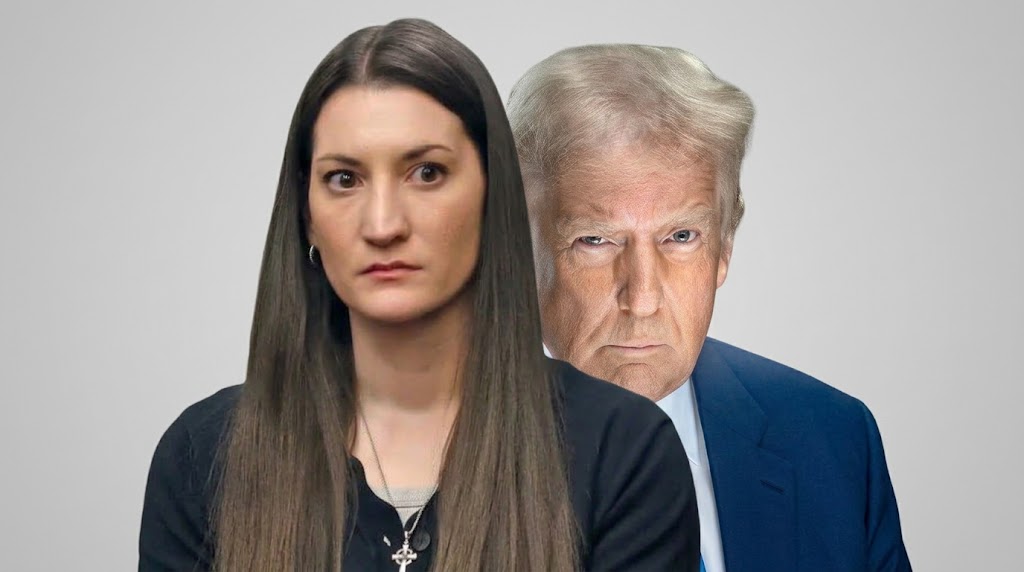
A Lindsay Clancy pardon request went out over national television Tuesday morning, delivered by her own defense attorney and aimed directly at Donald Trump. Kevin Reddington, who represented Clancy through her murder trial in Massachusetts, sat down with George Stephanopoulos on “Good Morning America” and asked Trump to “consider this young lady, the type of person she is, what she has been through, and consider a pardon.”
There is one problem with the ask. Trump cannot do it. The presidential pardon power laid out in the Constitution applies only to federal crimes, meaning offenses charged by the United States government and prosecuted in federal court. Clancy was charged by the Commonwealth of Massachusetts and tried in Plymouth County Superior Court on state murder charges. A president has no authority to erase a state case, no matter how closely he follows it. In Massachusetts, clemency runs through the governor with approval from the Governor’s Council, and even that process applies to people who have already been convicted. Clancy has not been convicted of anything. So a Lindsay Clancy pardon from the White House is not a long shot. It is not an available option at all.
Clancy, 36, is a former labor and delivery nurse. Prosecutors charged her with three counts of murder in the strangulation deaths of her three children at the family’s home in Duxbury, a suburb south of Boston, on January 24, 2023. The children were Cora, who was 5, Dawson, who was 3, and Callan, who was 8 months old. That same night, Clancy went out a second-story window in a suicide attempt that left her paralyzed. She uses a wheelchair and is currently being held at Tewksbury Hospital, a state medical facility, rather than a jail.
She pleaded not guilty by reason of insanity. That plea does not dispute that a death occurred. It argues that because of mental illness, the defendant could not appreciate that what she was doing was wrong or could not control her actions, which under Massachusetts law makes her not criminally responsible. Reddington built the defense around postpartum psychosis, a rare and severe psychiatric emergency that can follow childbirth and bring on hallucinations and delusions. It is distinct from postpartum depression, and it moves fast, sometimes within days. He argued Clancy was hearing voices that directed her actions and that she was also living with bipolar disorder.
Plymouth County prosecutors rejected all of it. Their case was that Clancy knew exactly what she was doing and planned it, pointing to the fact that she sent her husband out on an errand shortly before the children were killed. Premeditation was the center of their argument, because it cuts directly against the claim that she was not in control.
The jury deliberated roughly 38 hours across six days and could not reach a unanimous decision. Judge William Sullivan declared a mistrial on Friday, September 4. A mistrial means the trial ends with no verdict, so there is no conviction and no acquittal. The case simply stops where it is. Reddington had filed a last-minute request to pause the decision, and the judge declared the mistrial anyway.
In the same “Good Morning America” interview where he raised the Lindsay Clancy pardon idea, Reddington said he believes his client would have been acquitted if not for one juror who became the subject of a dispute over whether the judge’s instructions were being followed during deliberations. Speaking outside the courthouse after the mistrial, he said the panel had been moving toward finding Clancy not criminally responsible.
What happens now sits with Plymouth County District Attorney Timothy Cruz, and he has three options. He can retry the case in front of a new jury. He can negotiate a resolution with the defense, which, given the medical record here, would likely involve commitment to a psychiatric facility rather than prison. Or he can drop the charges entirely. Cruz told reporters on the day of the mistrial that he would not make that call immediately and that a decision would come later. Reddington said Tuesday that he is hopeful the two sides can reach an agreement.
Trump did weigh in on the case last week, saying he had been following it and calling it a shame, a horrible tragedy and a terrible situation. He said Clancy would face consequences of some kind, whether that meant jail time or time in a mental institution. When asked about Reddington’s pardon request Tuesday, the White House pointed back to those earlier remarks.
Reddington’s ask still does something for his client even though it goes nowhere legally. It puts postpartum psychosis in front of a national morning television audience and frames Clancy as a woman who was sick rather than a woman who was calculating, which is the exact argument he will make again if Cruz decides to retry her. The person who actually holds her future is a district attorney in Massachusetts, and he has not made his decision yet.
