

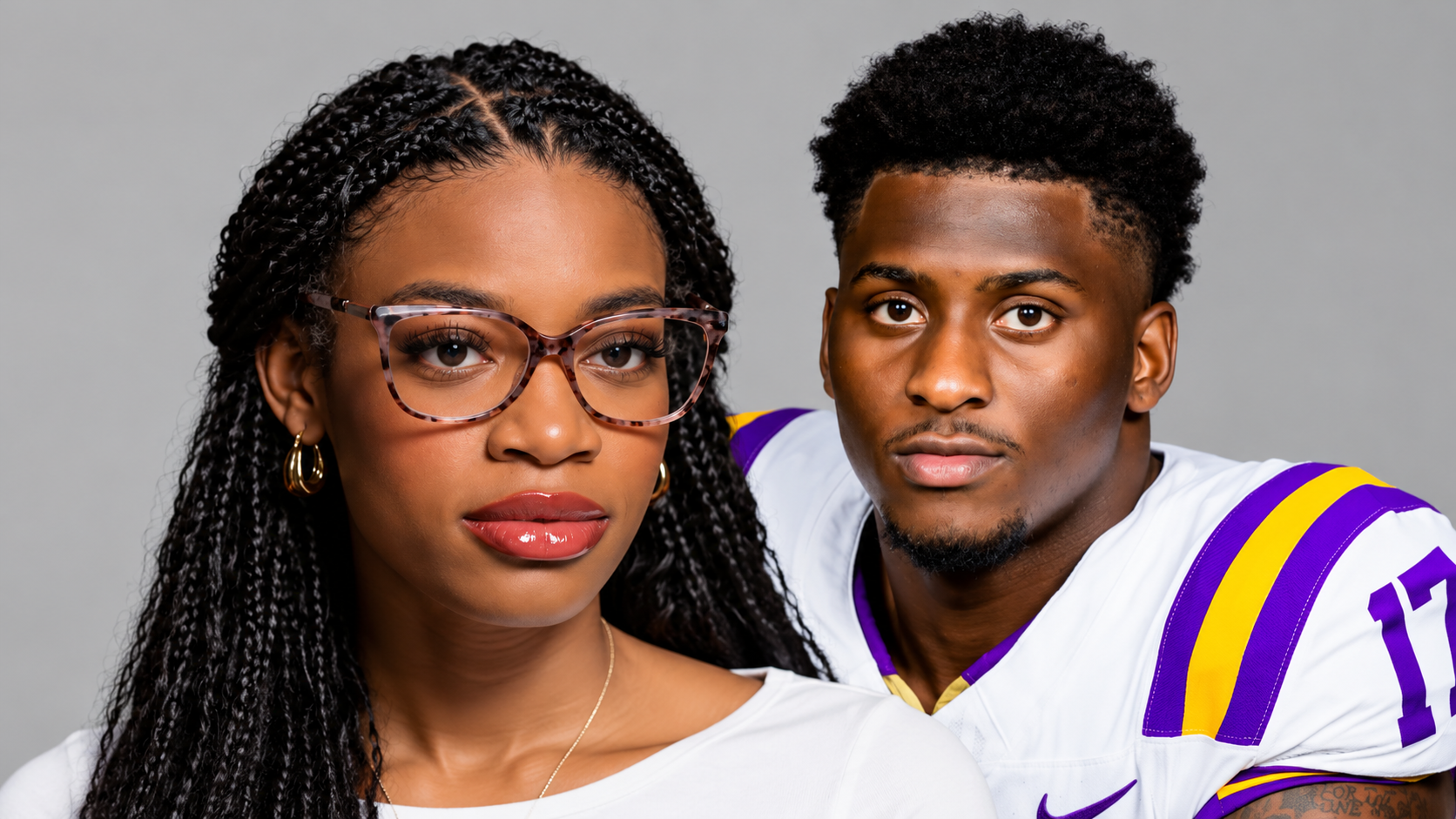
A 19-year-old Louisiana State University student is speaking out after the school upheld a finding that a football player was responsible for forcible rape but reduced his punishment, allowing him to remain on campus. Now, a criminal investigation is underway as the student questions why the university did not do more to protect her.
Video
The LSU football player, identified as 20-year-old defensive end Damien Shanklin, remains listed on the university’s football roster despite the findings of its internal investigation. According to CBS News, national correspondent Jericka Duncan interviewed the student, Kendall Danielle Francis, about the alleged assault and her concerns with LSU’s response.Francis says the incident happened on October 18, 2025, when she visited Shanklin at a campus residence hall after meeting him through social media.
According to ESPN’s review of police and university records, the two initially engaged in consensual sexual activity. Francis alleges Shanklin later penetrated her without consent. The two provided differing accounts of what happened during the encounter, but LSU’s Title IX investigation eventually found Shanklin responsible for sexual assault classified as forcible rape.
In an earlier interview with Baton Rouge news station WAFB, Francis said she returned to her apartment in shock following the alleged assault. LSU Police later transported her to a hospital, where she said she spent approximately seven hours receiving medical care.
Francis formally filed a Title IX complaint in January 2026. The university conducted an investigation, reviewed evidence, and ultimately found Shanklin responsible in July.
LSU initially suspended the football player for two semesters, preventing him from attending classes or participating in campus activities during that period.
However, Shanklin appealed the disciplinary decision.
In August, administrative law judge Janet Waguespack upheld the university’s finding but reduced the suspension to four semesters of disciplinary probation without restrictions.
The Los Angeles Times reported that Waguespack considered the original punishment “exceedingly harsh.” Her written decision acknowledged that Shanklin’s conduct was “although nonconsensual” but described it as “an error in judgment.”
As a result, the LSU football player was permitted to remain enrolled and participate in university activities despite the university’s finding remaining in place.
For Francis, the decision was devastating.
According to WAFB, Francis said the alleged assault affected her mental health, academic performance, and ability to feel safe on campus. She reported experiencing depression, severe anxiety, and significant weight loss while seeking therapy.
She also said she failed both semesters of her freshman year and eventually moved her coursework online because she feared encountering Shanklin.
“The fact my entire freshman year was taken away from me because of this experience is why I spoke out about it,” Francis told WAFB.
On September 14, Francis shared her experience publicly through TikTok, describing the alleged assault and expressing frustration with LSU’s disciplinary process. Her videos attracted widespread attention, bringing national scrutiny to how the university handled the allegations.
Francis also explained to WAFB that she initially misunderstood the Title IX process. She believed the university’s finding would lead to criminal charges, but later learned that disciplinary proceedings and criminal investigations operate separately.
According to WAFB, Francis filed a formal police report on September 21, 2026.
The following day, East Baton Rouge Parish District Attorney Hillar Moore confirmed that his office was reviewing the allegations.
Moore requested reports, interviews, evidence, and other relevant materials from LSU, campus police, Baton Rouge Police, and additional agencies involved in the case.
The criminal inquiry is separate from the university’s Title IX findings. An administrative determination of responsibility does not establish criminal guilt, and prosecutors must evaluate the evidence under a different legal standard.
Meanwhile, LSU has defended its handling of the matter.
In a statement reported by WAFB, LSU President Wade Rousse maintained that the university took the allegations seriously and followed its established procedures. He also said LSU would cooperate with law enforcement following the filing of a criminal complaint.
The university explained that the student-athlete initially reported the incident to police in October 2025, although no criminal complaint was filed at that time.
The case has also attracted attention from Louisiana lawmakers.
State Representative Vanessa Caston LaFleur called for a review of how universities communicate with students about the Title IX process. LaFleur acknowledged that LSU followed existing procedures but questioned whether students receive sufficient guidance about pursuing criminal investigations after university disciplinary proceedings conclude.
Shanklin, through his attorneys Grant L. Willis and Morgan H. Johnson, has denied the allegations.
In an October 1 statement reported by WAFB, the attorneys said Shanklin maintains his innocence and intends to cooperate fully with investigators. They also argued that information circulating publicly does not represent a complete account of the circumstances.
Although Shanklin remains listed on LSU’s official 2026 roster, the Los Angeles Times reported on October 2 that he had not participated in preseason training camp or appeared in a game this season.
