
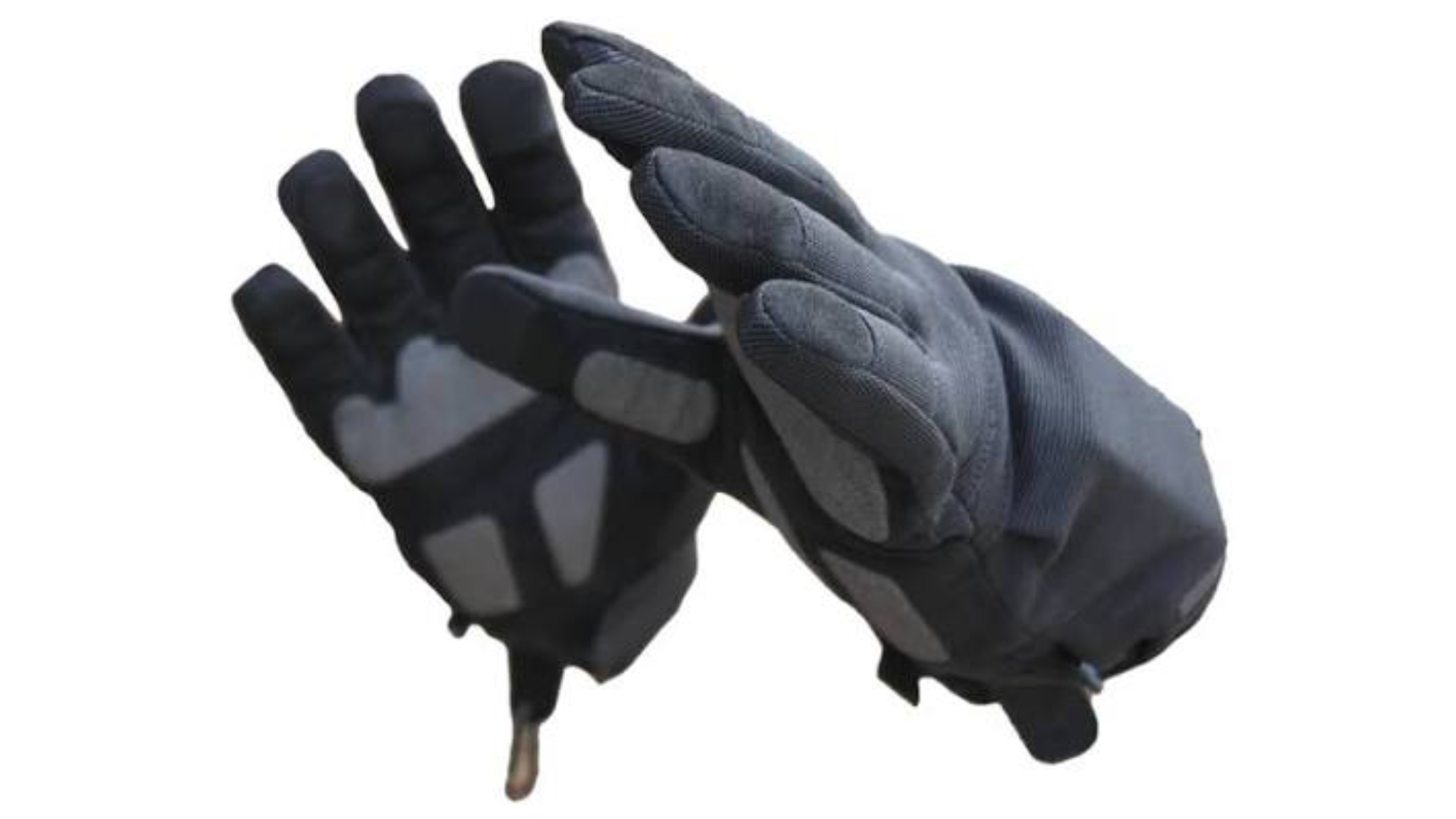
Police officers working inside some Nebraska schools are carrying electric shock gloves, and a group of mothers in the Omaha area is fighting to get them out.
The gloves, sold as the G.L.O.V.E. by a Kentucky company called Compliant Technologies, deliver a painful shock when the wearer touches someone’s bare skin. The company says the maximum charge is 380 volts, far less than a Taser, and that the devices are built to make a person follow instructions whether that person is violent or simply refusing orders. The user manual advises against using them on small children. California has already banned them, and when Army experts tested the gloves, the pain was so intense the testers grew wary of continuing and had to be replaced.
Parents in Omaha learned this summer that school resource officers, the police officers assigned to work inside their kids’ schools, had been wearing the same shock gloves Immigration and Customs Enforcement ordered for its agents. Officers have used the gloves on students across the city at least five times since 2022.
Omaha police paid close to $66,000 for 40 pairs in June 2025 and trained 29 of its 34 school resource officers to use them. An Omaha police officer said at an August news conference that the gloves were bought specifically for schools.
The first Omaha use came in January 2026 at South High School, when an officer shocked a student who was fighting with an administrator. The second came in May and involved a middle school student in a program for children with special needs. School and police reports say the student threw a chair and punched a security guard.
Omaha Public Schools Superintendent Matthew Ray said he had no idea officers in his buildings were using the shock gloves. With the mayor’s backing, he banned them in August.
In the neighboring suburban Millard district, leadership went the other way. Superintendent John Schwartz declined to speak with CNN and pointed to a district statement arguing that taking the gloves away would remove a lower impact option and could put students, staff, and officers at greater risk of injury.
Rachel Murphy, the mother of a seventh grader, said that when parents raised the issue at a September school board meeting, the board announced it was keeping the gloves and moved on.
Katy Eilers, whose 16 year old son attends Millard North High School, said students there are scared of being shocked or watching a friend get shocked. Her son is autistic and has a heart defect. She explained that autistic kids sometimes freeze when they cannot put into words what is happening, the kind of moment an officer could read as refusing an order. Her fear is that a shock could send him into a fatal arrhythmia, an irregular heartbeat that can stop the heart. “I’m terrified that they’re going to shock my son,” she told CNN.
Jenna King, another Millard mom, said her son is biracial and neurodivergent, and that one bad day could end with him being shocked while she has no control over whether the gloves are in his school.
The mothers are also angry about how they found out. Eilers said the school sent families a letter when it brought in a drug dog, yet nobody told parents or even teachers that officers had shock gloves in the building for half of last school year.
Police see it differently. Bellevue Police has carried the shock gloves for more than four years and refused when Omaha’s superintendent asked it to stop. The department provides officers to two Omaha schools and to schools in Bellevue, and a spokesperson said students have been shocked three times at Bellevue East High School, in January and April 2023 and January 2025, each after a student resisted an officer. Chief Ken Clary said he is not comfortable giving up a tool he considers safe and less harmful than the alternatives.
John Stuck, a Bellevue police captain who trains officers in use of force, said the gloves get immediate compliance, leave no marks, and work as a deterrent. He described students obeying the moment they see an officer put the gloves on and called that a complete success.
Compliant Technologies CEO Jeff Niklaus declined to speak with CNN but said in a video last month that the gloves are safe and effective and are tested on people weighing 35 pounds and up. The average American 11 year old weighs more than 75 pounds, according to CDC data.
Sherman Wells, a longtime Omaha neighborhood activist, said he was stunned the community was even debating shocking children in 2026. He said he could understand the gloves being used to break up prison fights or during traffic stops, but not on kids.
Three of the six seats on the Millard school board are on the ballot in November. Wells and the Millard parents say they will keep pressuring the district and want Schwartz out.