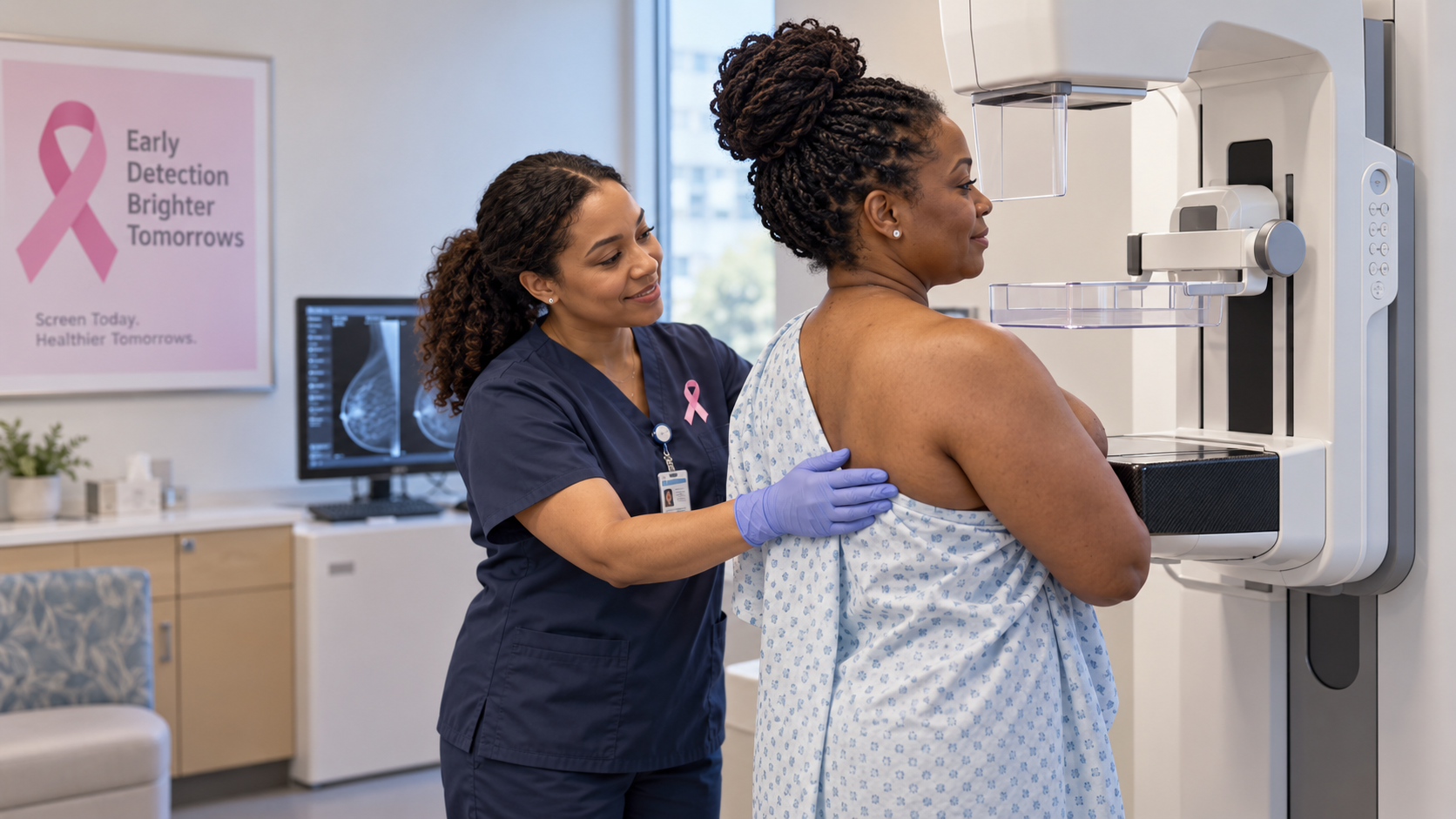
More than one in three U.S. women ages 35 through 75 say they have skipped or delayed a mammogram they believed was due, a troubling gap that carries even more weight during Breast Cancer Awareness Month.
According to Hologic’s 2026 national survey, 37 percent of 1,000 women surveyed said they had skipped or postponed a recommended mammogram. Among women who fell behind, four in 10 went more than two years without getting screened. Nearly one in four overdue respondents said a direct recommendation from their doctor would be the biggest motivator to schedule an appointment. The online survey was conducted in August 2026 through a Dynata opt-in research panel, making it a snapshot of women’s reported experiences rather than a population-wide screening estimate.
The numbers also challenge the idea that women delay mammogram screening simply because they are careless about their health. Hologic found much larger screening gaps among women already dealing with instability in daily life. Among respondents facing transportation barriers, 59 percent had skipped a mammogram, compared with 31 percent of women without those barriers. More than half of women experiencing housing instability or food insecurity had also skipped screening.
Those realities can be especially familiar in urban communities, where being geographically close to a hospital does not always mean care is easy to reach. A 2026 review of mammography access barriers found that transportation problems, inflexible clinic hours, long waits, confusing referral systems, job or wage loss, and caregiving demands can all stand between low-income women and screening. The review found that barriers frequently overlap, meaning a woman may be dealing with cost, a work schedule, child care, and transportation at the same time.
Cost remains one of the biggest sources of confusion. According to the Centers for Disease Control and Prevention, most health insurance plans are required to cover screening mammograms every one to two years for women beginning at age 40 without a copay, deductible, or coinsurance. Yet Hologic found that 36 percent of surveyed women either did not know or did not believe preventive mammograms were generally covered at no cost under most plans.
That does not mean every breast imaging bill is automatically free. Susan G. Komen notes that diagnostic imaging ordered after an abnormal screening result may come with out-of-pocket expenses depending on a person’s insurance and circumstances. That distinction can create anxiety for women who fear that one free screening could open the door to medical bills they cannot afford. Komen advises patients to ask imaging centers and insurers about costs and available financial assistance before follow-up testing when possible.
Fear and misinformation create another layer. The Hologic survey found that 43 percent of women either believed or were unsure whether mammograms expose patients to dangerous levels of radiation. The Food and Drug Administration describes mammography as a safe, low-dose X-ray used to detect breast cancer at early stages. Federal rules also require mammography facilities to notify patients about their breast density. The FDA says dense breast tissue can make cancer harder to detect on a mammogram and is itself associated with an increased risk of developing breast cancer.
The access conversation is particularly urgent for Black women. According to the American Cancer Society’s 2026 cancer statistics, breast cancer mortality among Black women is 37 percent higher than among White women despite Black women having a lower incidence rate. The American Cancer Society also reports that Black women are less likely to have breast cancer diagnosed at a localized stage. That means improving mammogram screening is important, but screening cannot be separated from timely follow-up, accurate diagnosis, and access to quality treatment.
For women at average risk, the U.S. Preventive Services Task Force recommends mammogram screening every other year from ages 40 through 74. Other medical organizations use somewhat different schedules, and women with a strong family history, certain genetic risks, previous breast cancer, or other high-risk factors may need individualized plans. The safest move is to discuss personal risk and screening frequency with a qualified health care provider rather than assuming one schedule fits everyone.
For women worried about price, several national resources can help. The CDC’s National Breast and Cervical Cancer Early Detection Program provides free or low-cost breast cancer screening and diagnostic services for qualifying women with low incomes who are uninsured or underinsured. Eligibility varies, but the CDC provides a state, territory, and tribal program finder. Susan G. Komen’s Breast Care Helpline at 1-877-465-6636 can connect women with screening resources, patient navigators, and some no-cost services based on eligibility. HRSA-funded community health centers provide health care regardless of insurance status and use sliding fee scales based on ability to pay. Women can also use the FDA’s certified mammography facility search to locate approved imaging centers by ZIP code.
Breast Cancer Awareness Month can bring screening back into the conversation, but awareness means little if women are left to navigate transportation, lost wages, confusing insurance rules, and medical fear on their own. Making mammogram screening easier to understand, easier to schedule and easier to afford can turn October’s message into something that matters all year.