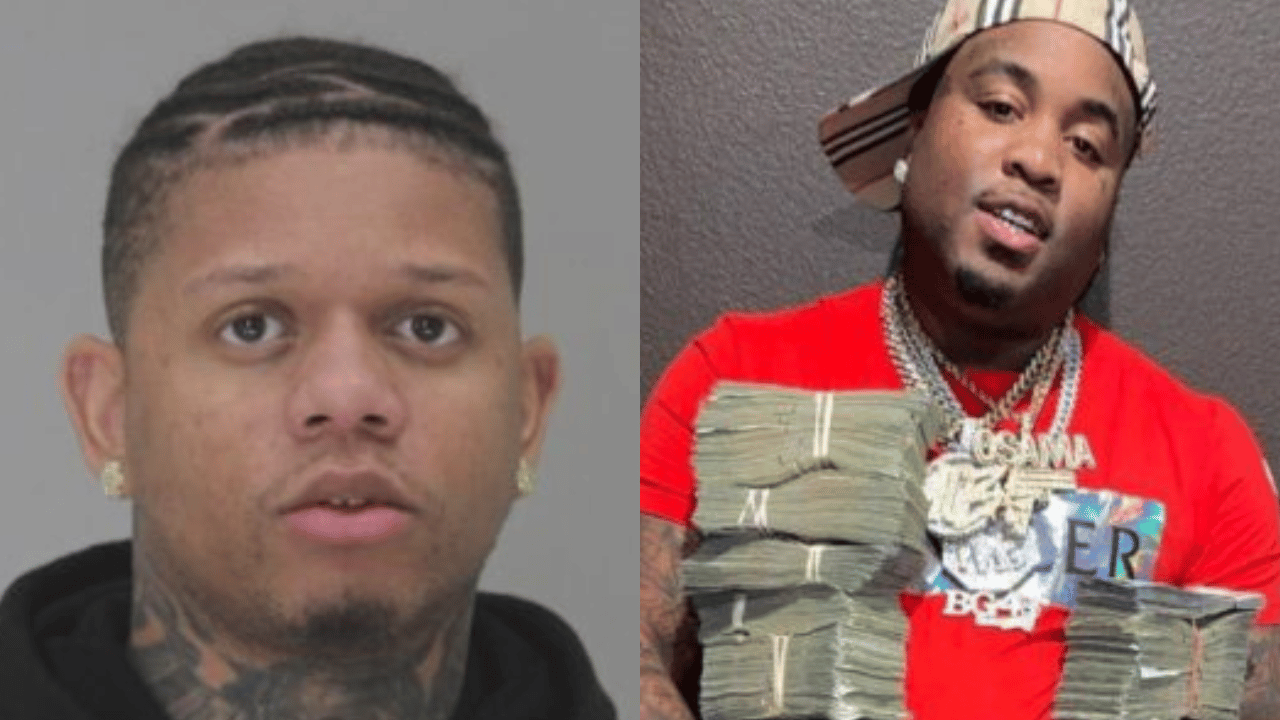
Lawyers in the Yella Beezy trial persuaded a judge to restrict the use of a three-way jail call discussing an alleged $50,000 bounty on Mo3 before the Dallas rapper was convicted of capital murder and sentenced to life in prison without parole.
Court filings detailed a recorded conversation involving convicted gunman Kewon White, Dallas County Jail inmate Darius Fields, and Nyreon Beasley. The recording was made on November 11, 2020, approximately four hours after Mo3, whose real name was Melvin Noble, was fatally shot on Interstate 35 in Dallas.
According to court documents reported by TMZ, Fields told Beasley he had heard that Yella Beezy, whose legal name is Markies Conway, placed $50,000 on Mo3’s life.
When White was connected to the conversation, Fields reportedly repeated the allegation. White laughed and made a cryptic remark, but his attorneys argued that the exchange contained no direct admission that he had been hired by Conway or received payment from him.
That became a central argument in the defense’s attempt to keep the recording from being presented to jurors.
Attorneys handling the Yella Beezy trial argued that the conversation amounted to hearsay, meaning statements made outside court that prosecutors might seek to use as proof of what happened.
The defense emphasized that neither Fields nor Beasley had been identified as a participant in the alleged murder conspiracy. Their statements, according to the filing, were based on information circulating among other people rather than firsthand knowledge of a payment arrangement.


Made to order and shipped to your door.
The attorneys also challenged whether White’s reaction could legally qualify as evidence of a conspiracy.
Under the rules governing statements by alleged co-conspirators, certain conversations may be admitted when they were made during a conspiracy and helped advance its objectives.
However, Conway’s lawyers argued that the conversation occurred after Mo3 had already been killed. They maintained that White was not attempting to recruit another participant, arrange a payment, or conceal the shooting during the exchange.
The defense also noted that White never directly identified Conway as someone who hired him.
Judge Chika Anyiam granted the advance motion concerning the recording, requiring prosecutors to obtain court approval before introducing the disputed material. That ruling did not automatically establish that every portion of the conversation was permanently barred.
The three-way recording was not the only disputed jail conversation in the Yella Beezy trial.
Defense attorneys separately challenged a November 23, 2020, recording in which White discussed money authorities seized after his arrest and referred to receiving approximately $20,000 from another person.
The defense maintained that White did not identify Conway as the source of that money or establish that the payment was connected to Mo3’s killing.
Prosecutors argued that the recording supported their theory that money continued moving between people involved in the alleged murder-for-hire arrangement after the shooting.
During the trial, the judge ultimately declined to allow the disputed payment statement from that separate recording to be introduced as evidence.
The court battles unfolded while prosecutors pursued a capital murder case alleging Conway arranged Mo3’s killing through White as part of a longstanding feud between the Dallas rappers.
Prosecutors alleged that Conway paid White $40,000 to carry out the shooting. That figure was separate from the unverified $50,000 rumor discussed during the November 11 jail call.
Financial records, surveillance footage, cellphone location information, and witness testimony became major components of the state’s case.
Investigators presented evidence concerning cash withdrawals, communications among people connected to the case, and White’s movements before and after Mo3 was killed.
The defense disputed whether that evidence proved Conway ordered the murder, arguing that prosecutors relied heavily on assumptions about the relationships and activities of the people involved.
The Yella Beezy trial also examined testimony concerning the history between Conway and Noble, including prosecutors’ claims that years of tension contributed to the killing.
On November 11, 2020, Mo3 was traveling along Interstate 35 when an armed man approached his vehicle. Noble attempted to escape on foot as the gunman pursued him along the busy highway.
The 28-year-old rapper was fatally shot, and another motorist was wounded during the attack but survived.
White was subsequently convicted of capital murder in September 2026 and sentenced to life in prison without the possibility of parole.
Conway continued to maintain his innocence as his own trial approached its conclusion.
On November 11, 2026, exactly six years after Mo3’s death, a Dallas County jury unanimously found Conway guilty of capital murder for hiring White to carry out the killing.
The conviction resulted in a mandatory life sentence without the possibility of parole because prosecutors were not seeking the death penalty.
The courtroom proceedings also drew emotional reactions from relatives and others in attendance as Conway was taken into custody.
Following the verdict, defense attorney Toby Shook expressed disappointment with the outcome and indicated that Conway’s legal team intended to continue challenging the conviction through the appeals process.
The Yella Beezy trial ended with a guilty verdict despite the defense’s successful challenges to portions of the disputed jail-call evidence.
Another defendant, Devin Brown, also faces a capital murder charge connected to Mo3’s death. He has not been convicted in the case and is awaiting trial.
Conway and White have both received life sentences without parole, while Conway’s legal team prepares to pursue an appeal.