

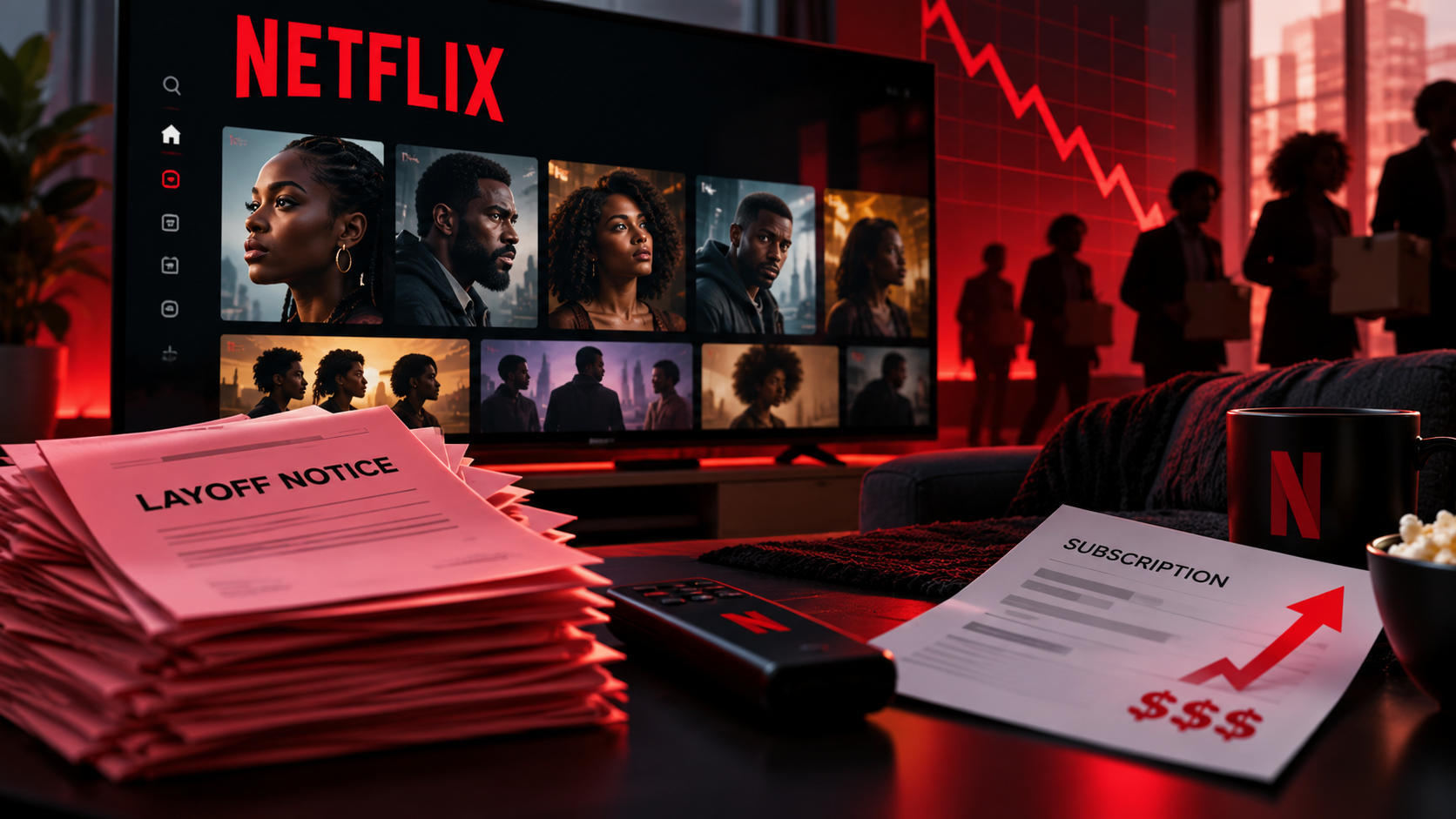
Netflix is reportedly preparing to eliminate approximately 800 jobs, raising concerns about what the cuts could mean for Black shows and subscribers already dealing with higher streaming bills.
According to the Los Angeles Times, the Netflix layoffs could affect roughly 5% of the company’s workforce, with an announcement potentially arriving during the week of October 12, 2026.
The reported cuts would affect creative departments, including employees working on feature films. Netflix has declined to comment, and no specific shows or projects have been identified for cancellation.
The proposed restructuring comes as Netflix struggles to increase audience engagement despite investing heavily in entertainment.
According to the Los Angeles Times, viewing hours increased only about 2% during the first half of 2026 compared with the previous year. The slowdown has intensified investor concerns about the company’s future growth.
At Bloomberg’s Screentime conference, Netflix co-CEO Ted Sarandos acknowledged the challenge.
“Overall we’re not growing as fast as I want us to, and we’re working on making that move faster,” Sarandos said.
While Netflix has not announced plans to reduce Black programming, its history of cancellations and previous workforce reductions raises questions about which stories could face greater scrutiny if the company tightens spending.
In January 2026, Netflix canceled “The Vince Staples Show” after two seasons. According to TheWrap, the streaming service also canceled “The Abandons,” although neither decision was attributed to workforce reductions.
Previously, Netflix canceled the Black family superhero series “Raising Dion,” produced by Michael B. Jordan, after two seasons in April 2022. TVLine confirmed the cancellation following an announcement by cast member Sammi Haney.
These cancellations occurred before the newly reported layoffs and do not establish that Netflix is specifically targeting Black productions. However, they demonstrate that Black stories, including those with recognizable talent and dedicated audiences, are not guaranteed additional seasons.
The concern extends beyond cancellations.
Netflix previously faced criticism in 2022 when layoffs affected people responsible for promoting entertainment to underrepresented audiences.
According to a Los Angeles Times investigation, the company dismissed workers and contractors involved in editorial and social media efforts highlighting Black, LGBTQ, Latino, and Asian stories.
Some former workers questioned Netflix’s commitment to diversity after losing their positions.
Netflix disputed suggestions that it was abandoning those efforts, explaining that it was bringing certain publishing and social media operations in-house. The company maintained that platforms such as Strong Black Lead remained priorities.
That year, Netflix eliminated approximately 150 employee positions in May and another 300 in June, following its first subscriber decline in more than a decade.
The new layoffs could become the company’s largest workforce reduction since that period.
For Black filmmakers, writers, and actors, the potential impact goes beyond whether an established series gets renewed.
Fewer creative employees could mean less development support for emerging storytellers, tougher competition for production funding, and fewer resources dedicated to discovering and promoting shows outside Netflix’s biggest franchises.
However, Netflix continues investing in successful Black programming.
In July 2026, the company confirmed that Tyler Perry’s “Beauty in Black” had secured a fourth season before its third season premiered. The renewal shows that Netflix is still backing Black entertainment, even as its broader business faces scrutiny.
The financial pressure could also affect consumers directly.
According to Reuters, Netflix raised U.S. subscription prices again in March 2026, following increases in early 2025.
The plan with advertisements rose to $8.99 monthly, while the Standard plan without ads increased to $19.99. Premium subscriptions now cost $26.99 monthly.
That translates to nearly $240 annually for Standard subscribers and approximately $324 for Premium customers, before taxes or additional member fees.
For viewers who subscribe specifically to watch Black comedies, dramas, documentaries, and original films, the concern is straightforward: What happens if the monthly bill continues rising while the selection of culturally relevant programming becomes smaller?
There is currently no evidence that the reported layoffs will directly result in fewer Black shows or immediate programming reductions. However, workforce cuts within creative departments make future development decisions especially important to watch.
Netflix’s challenge is no longer simply attracting subscribers. It must convince paying customers that higher prices will continue delivering enough entertainment, including the Black stories and creators who help make its platform worth watching.
