

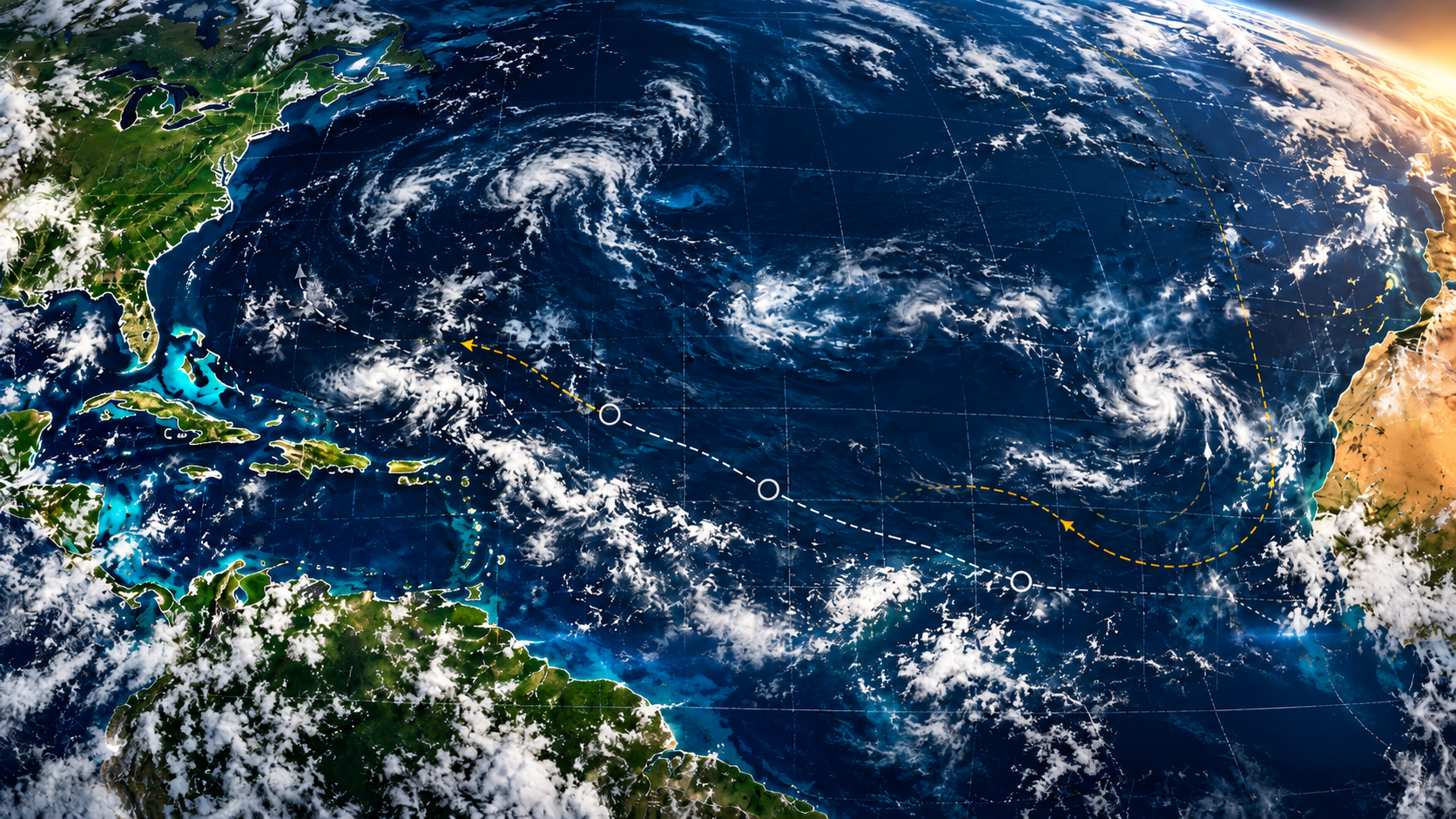
The Atlantic has pushed deep into September without producing a single hurricane, putting the 2026 season in territory that has not been seen in more than a century. According to the National Hurricane Center’s 2026 Atlantic season summary, six named storms had formed through September 23: Arthur, Bertha, Cristobal, Dolly, Edouard and Fay. None reached hurricane strength, leaving the Atlantic hurricane season with zero hurricanes and zero major hurricanes more than three months after the official season began on June 1.
The prolonged hurricane drought has now become a historic one. AccuWeather reported that the Atlantic passing September 21 without its first hurricane broke a 112-year record, while NOAA historical records show 1914 was the last Atlantic season to go an entire year without a hurricane. NOAA records also identify 1907 as the only other season in the historical database with no recorded hurricanes.
The comparison to 1914 is especially striking because NOAA researchers describe that year as the quietest Atlantic hurricane season on record. According to NOAA’s Hurricane Research Division, the 1914 season produced just one tropical storm and no hurricanes. That makes the current stretch particularly unusual even before the final weeks of the 2026 season play out.
The lack of hurricanes is happening during what is normally the busiest portion of the calendar. The National Hurricane Center’s tropical cyclone climatology identifies September 10 as the statistical peak of the Atlantic season, with most activity occurring from the middle of August through the middle of October. The agency’s September 23 season summary shows 2026 running four named storms, four hurricanes, and two major hurricanes behind the 1991 to 2020 normal pace for this point in the year.
Tropical Storm Fay became the latest system to come close without crossing the hurricane threshold. According to the National Hurricane Center’s storm records, Fay existed as a tropical cyclone from September 19 through September 22 and reached maximum sustained winds of 60 knots, or about 69 mph. The National Hurricane Center classifies a hurricane as a tropical cyclone with maximum sustained winds of at least 64 knots, or 74 mph, meaning Fay remained just below hurricane strength at its peak.
By the morning of September 22, Fay was already fading. A National Hurricane Center advisory reported maximum sustained winds of 40 mph at 9 a.m. GMT. By 3 p.m. GMT, another agency advisory showed Fay had weakened into a tropical depression with winds near 35 mph as forecasters expected it to transition into a remnant low.
The season’s overall energy has been just as unusual as its hurricane count. The National Hurricane Center’s September 23 summary placed the Atlantic’s Accumulated Cyclone Energy, commonly called ACE, at 6.3, which was 92 percent below normal. ACE tracks the combined strength and duration of named storms by using sustained wind measurements throughout the life of each qualifying system.
NOAA had already expected 2026 to lean quieter than normal, although the season has so far remained even quieter in the hurricane category than the agency’s projected full season ranges. In its May Atlantic hurricane outlook, NOAA gave the season a 55 percent chance of below-normal activity and projected 8 to 14 named storms, 3 to 6 hurricanes and 1 to 3 major hurricanes. The agency cited the expected emergence of El Niño as one of the main factors working against Atlantic development.
NOAA became even more confident in a quieter season when it issued its updated August outlook. The agency raised the probability of a below-normal season to 75 percent and lowered its forecast to 7 to 13 named storms, 2 to 6 hurricanes, and as many as two major hurricanes. NOAA researchers have explained that El Niño typically increases vertical wind shear across the Atlantic, making it more difficult for thunderstorms to organize and strengthen into hurricanes.
There is still time for the numbers to change. The National Hurricane Center says the Atlantic hurricane season officially continues through November 30, leaving more than two months after the current record was established. But through September 23, six tropical storms have come and gone without a single one reaching 74 mph, giving the 2026 Atlantic hurricane season a place in the record books that has been more than a century in the making.
