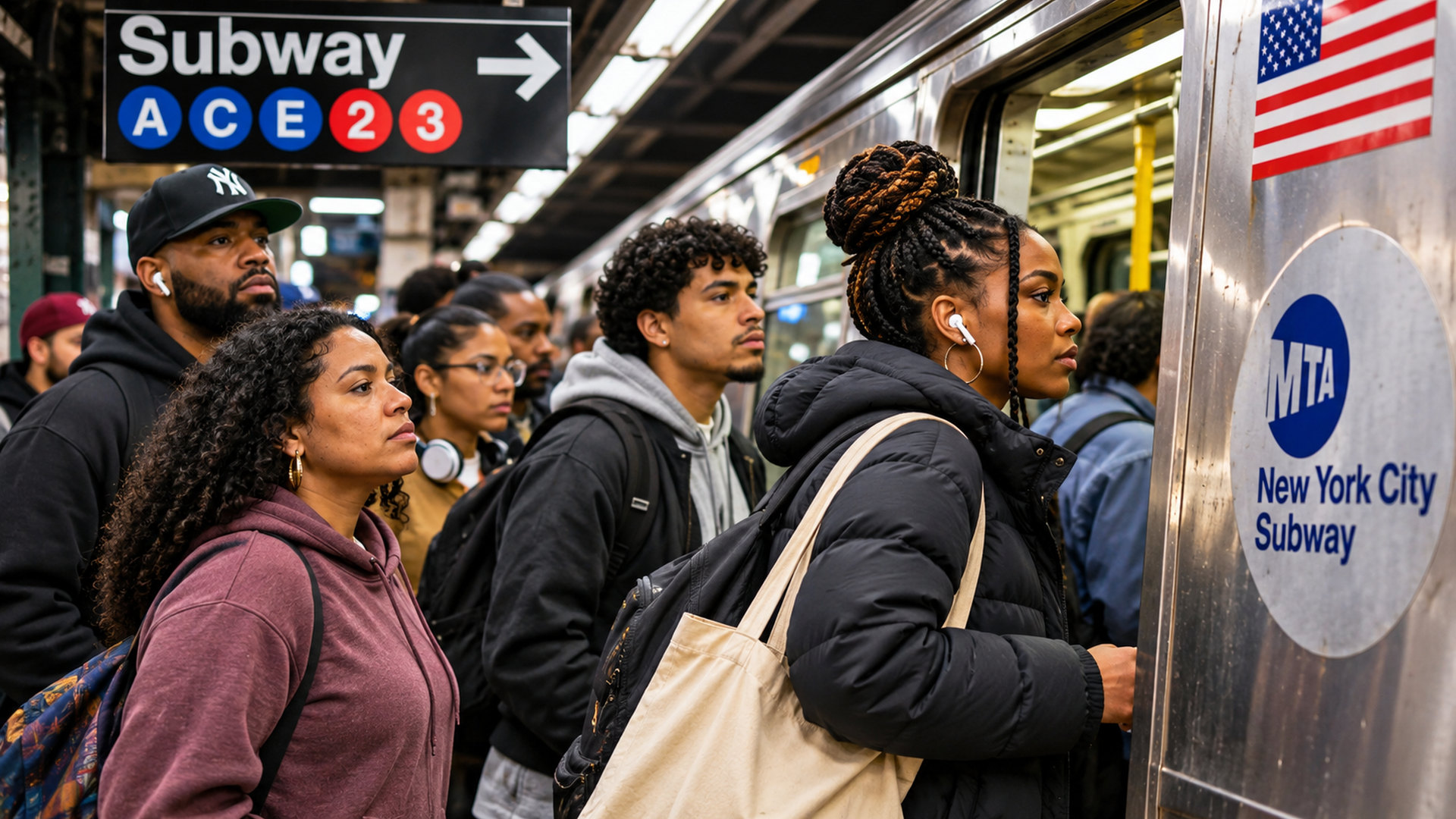
For one in five New York City subway and bus riders, even a $3 trip isn’t always in the budget. And having a job doesn’t necessarily make things any easier.
A new report from the Community Service Society of New York (CSS) reveals that 20% of subway and bus riders cannot afford their fare when they need transportation, raising fresh concerns about how expensive everyday life has become in the city.
The November 2026 findings come from a survey conducted between August 26 and September 23, covering 1,837 public transit riders among more than 2,000 New York City respondents.
What’s especially concerning is that many of the people struggling aren’t unemployed. In fact, 51% of riders who report difficulty paying their fares are working, including 26% who hold full-time jobs for an employer.
The numbers are even more troubling for New Yorkers making a living through freelance work or self-employment. Among workers earning at or below 200% of the federal poverty level, 54% of self-employed and freelance workers report difficulty affording transportation. That compares with 28% of part-time employees and 21% of full-time employees.
The struggle also looks different depending on where riders live.
The Bronx has the highest rate of transit unaffordability at 29%, followed by Manhattan and Staten Island at 21% each. Brooklyn comes in at 18%, while Queens has the lowest reported rate at 15%. Researchers caution that the Staten Island figure comes from a smaller sample.


Made to order and shipped to your door.
Race also plays a major role in the findings. Thirty percent of Hispanic riders and 27% of Black riders report being unable to afford subway or bus fares when needed. Meanwhile, just 12% of white riders and 10% of Asian riders report the same issue.
The transportation struggle is also closely connected to broader financial problems.
Among New Yorkers who ran out of money before their next paycheck or income source during the past year, 34% report being unable to afford transit fares. That number drops to just 9% among riders who didn’t experience that financial hardship.
And while New York City is preparing to expand its discounted transit program, the report suggests more help may be needed.
The city’s Fair Fares program currently provides qualifying residents with a 50% discount on eligible subway and bus rides. Beginning November 30, eligibility will expand from 150% to 200% of the federal poverty level, allowing approximately 340,000 additional New Yorkers to qualify.
However, there’s a catch.
Nearly 29% of riders who cannot afford transportation live in households earning above 200% of the federal poverty level. That means they would still earn too much to qualify under the expanded program, despite struggling to pay for rides.
Rachel Swaner, CSS’s vice president of policy, research and advocacy, told amNewYork, “The findings point to the need for both targeted and universal approaches.”
The organization is recommending that New York City expand discounted fares to residents earning up to 300% of the federal poverty level while making transportation free for those earning at or below 150%. It also supports making city buses free for everyone, a campaign promise from Mayor Zohran Mamdani that has yet to become reality.
Meanwhile, another MTA fare increase of approximately 4% is expected in 2027, potentially creating even more pressure for riders already struggling.
The findings make one thing clear: Having a paycheck doesn’t guarantee New Yorkers can afford to get around. For thousands of residents, transportation is becoming another expense competing with rent, groceries, and other basic needs.