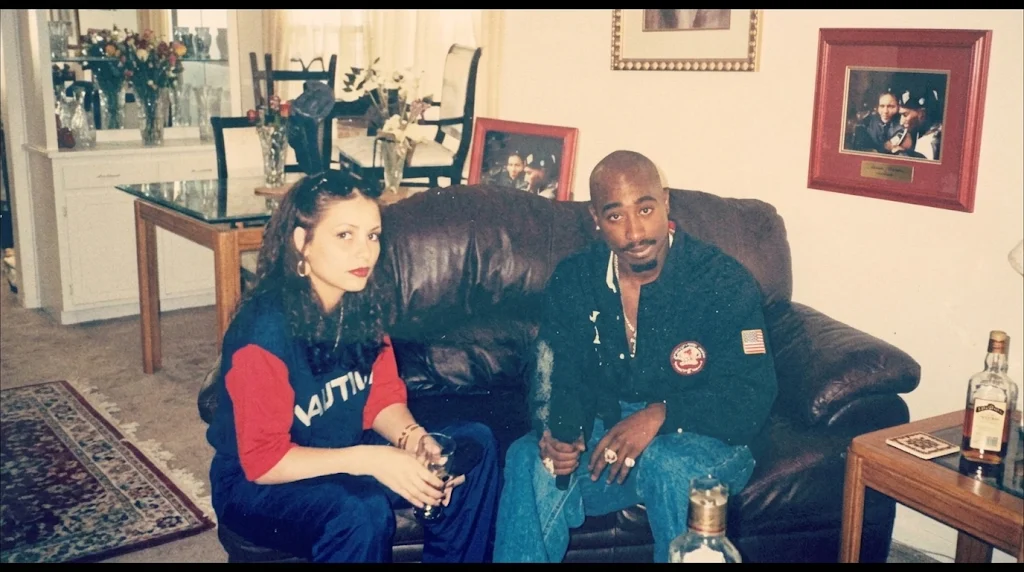
Some people want you to believe The Tupac Tapes With Angie Martinez is old news. Critics are asking why anybody should care about an interview from 30 years ago.
Respectfully, that argument falls apart the second you look at what this culture actually watches.
Little Richard died in 2020, and his documentary, Little Richard: I Am Everything, opened the Sundance Film Festival in 2023, nearly 70 years after “Tutti Frutti.” Luther Vandross has been gone for more than 20 years, and Luther: Never Too Much premiered at Sundance in 2024. Rick James died in 2004, and his doc premiered at Tribeca in 2021 before it hit Showtime. Decades later, we are still telling Michael Jackson’s story and still lining up to watch it. Nobody stood up at Sundance and asked who cares about Little Richard. Nobody told Luther’s family his life was too old to talk about.
History doesn’t expire. So if the age of the tape isn’t the problem, what is?
Is it that a woman from Hot 97 held the most explosive interview in hip hop history for three decades and decided for herself when the world would hear it? Is it that she didn’t hand it to somebody else to profit off it first? Because when you strip away the noise, that’s the only thing that makes this release different from every other legacy doc we’ve celebrated.
In June 1996, Angie sat in Tupac’s Los Angeles apartment and recorded him at the height of the East Coast and West Coast war. Three months later, he was shot and killed in Las Vegas. She could have put that tape on the air at Hot 97 the minute she got back to New York, and it would have been the biggest interview of the year. She didn’t. She had just watched Monie Love take heat in New York for appearing in Tha Dogg Pound’s “New York, New York” video, and she knew what Pac’s words could set off on the radio in 1996. She protected the people in the story before she protected the story. Only someone from inside the culture makes that call.
Thirty years later, she brought the tape back with the right people around it. Monie Love, Ed Lover, Big Boy, Lil’ Cease and RZA knew Pac and lived through that era, and they give context no outside narrator could. Charlamagne Tha God and Joe Budden help break down what his words mean now, to a generation that only knows Pac as a legend.


Made to order and shipped to your door.
That’s the difference when it’s us. When the Rick James doc came out, the culture was glued. Director Sacha Jenkins built it around Rick’s daughter Ty, who opened his storage unit and walked us through a life most people only knew from a comedy sketch. Dear Mama showed us Tupac through Afeni Shakur, and you can’t understand Pac without understanding the Black Panther who raised him. Biggie: I Got a Story to Tell gave us Christopher Wallace, the kid from Brooklyn, and not just the legend. Each one worked because the people telling the story had access, trust and love for the person at the center of it. When outsiders tell our stories, they go for the mugshot and the tragedy. When we tell them, we bring the whole person.
And the whole person isn’t always pretty.
Rick James was a genius, and he also lost years to drugs, violence and prison. Biggie’s story starts on a Brooklyn corner, selling crack as a teenager to survive. Afeni Shakur fought addiction, and Dear Mama doesn’t hide it. Little Richard’s doc doesn’t look away from how he spent his life fighting himself over who he was.
The Tupac Tapes might be the hardest one yet. You hear Pac at his angriest and most guarded. He talks about women in ways that have aged badly, says things about gay people that would get anyone cancelled today, and makes sure his claim about sleeping with Faith Evans lands on the record. Faith has denied it for years. Monie Love, who knew Pac since 1988, is still pushing back on it and calls Faith a casualty of war.
That’s uncomfortable to hear, and it’s supposed to be. Pretending Pac was a saint does him no favors, and neither does reducing him to his worst moments. He was a poet and a revolutionary’s son. He was also a 25 year old in the middle of a war he helped start. Both things are true, and only the people who understand where he came from can hold both at the same time.
That’s why we can’t outsource our history. The interviews, the home videos, the storage units full of memories and the tapes sitting in a laundry room for 30 years are the record. If we don’t preserve it and tell it with the people who lived it, somebody else will. They’ll get it wrong, and their version will be the one our kids find first.
So no, this isn’t about something that happened 30 years ago. It’s about who gets to tell the story of what happened. This time, it’s us.