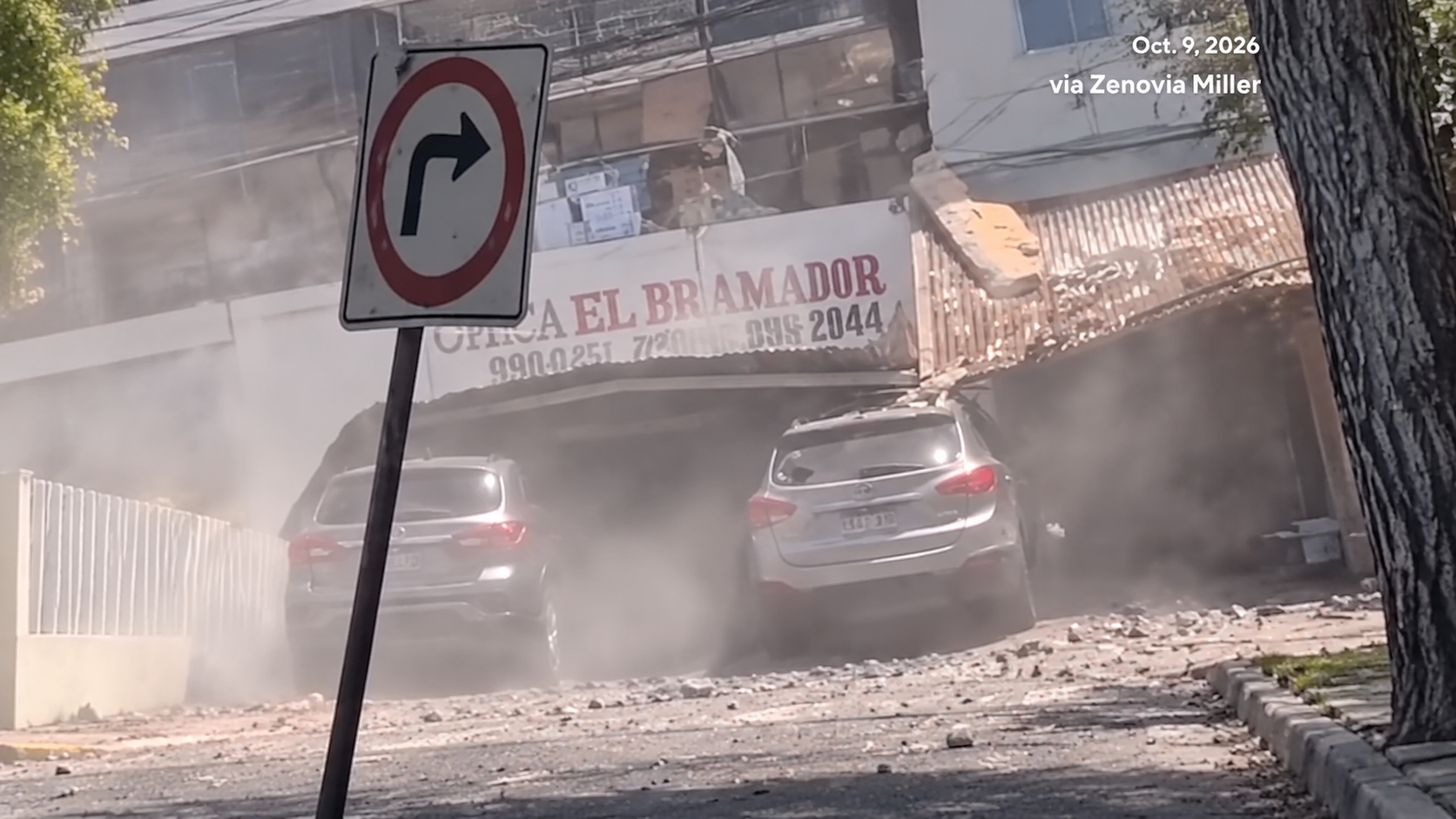
Panama residents rushed out of homes, offices and businesses on Friday after a massive earthquake shook the country, damaged buildings and triggered tsunami warnings across parts of Central and South America.
Video
The Panama earthquake, which struck October 9, 2026, was widely reported at a magnitude of 7.7, making it one of the strongest earthquakes to affect the country in decades. According to the U.S. Geological Survey, the quake struck at approximately 12:56 p.m. local time near Pitaloza Arriba in Herrera province, at a relatively shallow depth of about 6 miles. Magnitude estimates have varied between 7.6 and 7.7 as seismic data has been reviewed.What began as a frightening afternoon quickly escalated into a nationwide emergency. Buildings swayed, people poured into the streets, and authorities began assessing structural damage while powerful aftershocks continued to rattle communities.
According to the Associated Press, the initial earthquake was followed by dozens of additional tremors, including another magnitude 6.6 earthquake Friday afternoon. Seismologists at the University of Panama recorded more than 45 aftershocks, with several measuring above magnitude 5.
The strongest damage reports came from central Panama, particularly Herrera, Veraguas, Los Santos and nearby areas. Omar Smith of Panama’s National Civil Protection Service told local television that authorities were investigating damaged structures and reported injuries.
In Penonomé, approximately 93 miles from Panama City, falling debris reportedly injured at least one person. The Associated Press reported significant damage to the city’s cathedral, including a partial collapse and visible cracks. The governor’s office and the Dos Continentes hotel were also affected.
The destruction extended to religious and historical landmarks. According to the Associated Press, local news organizations reported that the Church of San Atanasio in Los Santos province had collapsed. The church, recognized as a national historic heritage site in 1938, is among the important cultural structures affected by the disaster.
Roadways also suffered damage, with large cracks appearing in sections of Veraguas province. Although injuries have been reported, authorities had not confirmed any fatalities in the initial assessments.
One of the most alarming developments following the Panama earthquake was the tsunami threat affecting multiple countries along the Pacific Ocean.
The U.S. Tsunami Warning System initially warned of potential “hazardous tsunami waves” along coastal areas of Panama and neighboring countries, including Costa Rica, Colombia, Ecuador, Nicaragua, Guatemala, El Salvador, Peru, and Mexico.
Early forecasts indicated that some coastal areas of Panama could experience tsunami waves reaching approximately 3 to 9 feet above normal tide levels. Additional alerts extended across parts of the Pacific, including Hawaii and Chile’s Easter Island.
However, the situation changed as officials reviewed additional seismic and ocean monitoring data.
In a subsequent official tsunami bulletin, issued at 2:40 p.m. Panama time, the U.S. Tsunami Warning System confirmed that no tsunami warning, advisory, watch, or threat remained in effect for the event. The update ended the immediate tsunami concern, although emergency crews continued evaluating earthquake damage.
Videos circulating online provided a disturbing look at how violently the ground moved.
During a live sports broadcast on Panama’s RPC television network, commentators suddenly abandoned their positions as the studio began shaking. Footage covered by Argentina’s TN news outlet showed the presenters leaving the set while objects rattled and fell around them.
Additional footage documented water spilling from elevated swimming pools, damaged buildings, and frightened residents gathering outdoors. The images illustrated how quickly an ordinary Friday afternoon turned into an emergency.
The Panama earthquake also caused significant transportation and infrastructure disruptions.
According to Reuters, electricity provider Naturgy reported outages affecting six provinces. Panama City’s metro system temporarily halted operations, while traffic congestion increased as offices released workers and families attempted to reach safer locations.
Tocumen International Airport, a major regional travel hub, suspended flights and activated evacuation procedures while officials conducted safety inspections.
Schools also closed across the country, creating additional challenges for families trying to navigate the aftermath.
Despite the widespread disruption, one of Panama’s most important economic operations continued functioning.
According to the Associated Press, the Panama Canal Authority confirmed that shipping activity remained operational following the earthquake. Specialized teams inspected facilities for potential damage while prioritizing the safety of workers, ships, and crews.
The fact that canal operations continued was significant because the waterway serves as a major international shipping route connecting the Atlantic and Pacific oceans.
For families closer to the epicenter, however, the immediate concern was whether their homes remained safe.
Reuters interviewed 74-year-old Ricardo Brown, a resident of Herrera province, who described damage to homes in the Las Minas area. Brown expressed concern that the structural damage to his home could place him and his family in danger.
Another resident, Rosendo Domínguez, told the Associated Press that the violent shaking had knocked items over inside his kitchen. Although he was unharmed, he described widespread fear among neighbors who had gathered outdoors.
Panamanian leader José Raúl Mulino urged residents to remain calm while emergency agencies coordinated inspections and gathered information about affected communities.
As reported by the Associated Press, Mulino wrote on X, “What happened should not be used to cause alarm or disorder.”
Scientists are also examining the geological conditions responsible for the powerful shaking.
Reuters reported that Nestor Luque, director of Panama’s geosciences institute, linked the earthquake to the Azuero Sona Fault System, where accumulated tectonic pressure can eventually be released through seismic activity.
Panama sits within the broader Pacific Ring of Fire, a region known for significant earthquake and volcanic activity. The Associated Press noted that the country experienced another devastating earthquake in 1991, when a magnitude 7.4 event centered in neighboring Costa Rica killed 23 people, injured hundreds and left thousands without homes in the border region.
While the latest Panama earthquake has not produced a confirmed death toll, the reports of damaged homes, historic landmarks and interrupted essential services underscore the seriousness of the disaster.
Authorities are continuing to determine the full extent of the destruction, assess buildings for safety and monitor additional seismic activity. With residents already shaken by multiple powerful tremors, the most pressing concern remains protecting affected communities as Panama begins the difficult process of recovering from one of its strongest earthquakes in recent history.