

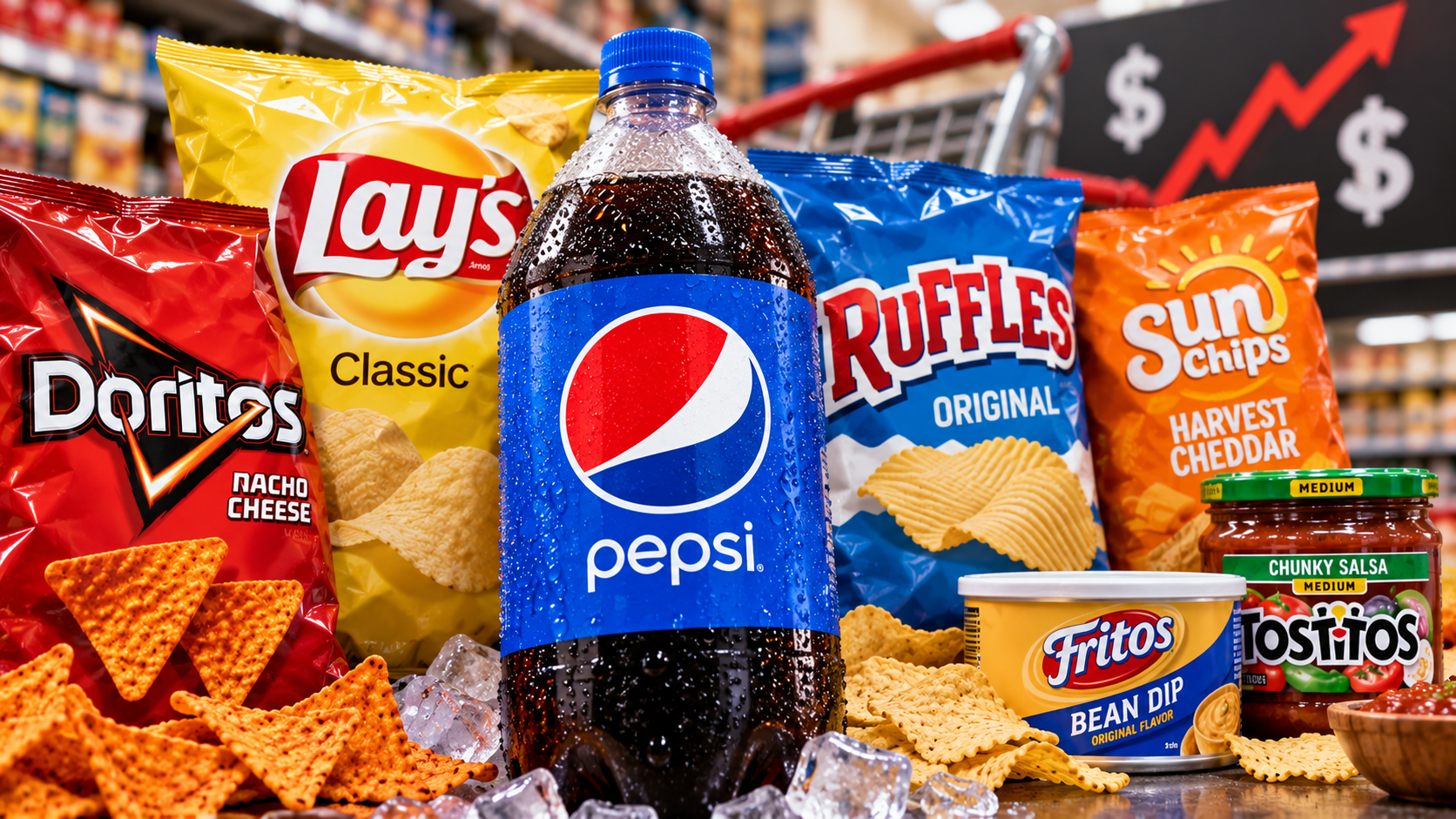
Shoppers who regularly reach for Doritos, Ruffles, or other PepsiCo favorites could soon notice another change at the checkout line.
According to Reuters, PepsiCo plans to raise prices on select chips as the company deals with inflation and higher commodity costs while trying to strengthen demand in the United States. The increases are expected to land in the low to mid-single-digit percentage range, with some changes reportedly arriving by the end of 2026 or in early 2027.
SunChips and certain beverages could also become more expensive. Some Tostitos salsa and Fritos dip products have already received higher prices at retailers.
Exactly what consumers pay will depend on where they shop. Retailers ultimately determine shelf prices, meaning an increase from PepsiCo does not necessarily translate into an identical percentage increase at every supermarket, convenience store, or discount chain.
The timing is especially notable because PepsiCo was moving in the opposite direction only months ago.
In February, PepsiCo announced that it was lowering suggested prices on several major snack brands by as much as nearly 15 percent. Lay’s, Doritos, Cheetos, and Tostitos were included in the initiative.
“At the heart of our business are the consumers who choose our brands. They trust us to bring them moments of joy, and they’ve been honest with us about how rising everyday costs are making their daily decisions harder. Message received,” PepsiCo said at the time.
The company lowered the suggested everyday price of an 8-ounce bag of Lay’s Classic Potato Chips from $4.99 to $4.29, while an 8.5-ounce bag of Doritos dropped from $6.29 to $5.49.
That makes the latest PepsiCo price increases an unusual reversal. However, the company is not expected to completely erase those earlier reductions, meaning affected products can still remain below their previous suggested prices.
The bigger issue for consumers is that the increases are arriving while grocery bills remain elevated.
According to the U.S. Bureau of Labor Statistics, food purchased for consumption at home cost 2.2 percent more in August 2026 than it did a year earlier. Overall food prices increased 2.7 percent, while nonalcoholic beverages climbed 3.7 percent during the same 12-month period.
Those increases can compound the pressure families feel because groceries are recurring expenses. A few extra cents on one product may seem minor, but higher prices across beverages, snacks, meat, produce and other household staples can quickly change what fits into a weekly budget.
PepsiCo is also facing pressure on the other side of the transaction. The company is dealing with higher commodity costs while consumer demand has been strained by elevated fuel prices. Those conditions make pricing complicated because passing higher costs to shoppers risks pushing already cautious customers toward cheaper brands, smaller purchases or no purchase at all.
PepsiCo is hardly alone in confronting that problem.
In February, Mondelez International, the company behind brands including Oreo and Cadbury, was seeing pressure on sales volumes after multiple rounds of price increases tied largely to elevated cocoa costs. Mondelez reported that fourth-quarter volumes declined 4.8 percentage points as pricing increased 9 points.
Hershey has also leaned on higher prices. The chocolate company entered 2026 after steadily increasing prices to offset cocoa costs and tariff-related pressures. Overall company volumes declined 3 percent while pricing increased 9 percent.
Beverage companies are dealing with their own cost challenges. In July, Coca-Cola faced higher than anticipated costs for aluminum and PET packaging. The company had previously used price adjustments and different package sizes as part of its strategy for navigating higher expenses.
The broader inflation pipeline remains a concern as well. U.S. Labor Department data showed producer prices rose 5.4 percent over the 12 months ending in August, with transportation and energy costs contributing to pressure on businesses.
For shoppers, that creates a frustrating cycle. Food manufacturers face more expensive ingredients, packaging, transportation, and energy, then look for ways to protect margins. Consumers, meanwhile, have already adjusted years of spending habits around higher prices and may respond to another increase by buying less, switching brands or waiting for promotions.
PepsiCo has already seen how sensitive shoppers can be. Its decision to cut snack prices earlier in 2026 was explicitly framed around affordability and feedback from consumers dealing with rising everyday expenses.
That tension is unlikely to disappear with one pricing adjustment. Whether it is a bag of Doritos, a chocolate bar, or a bottle of soda, shoppers are paying closer attention to what everyday products cost and whether familiar brands still feel worth the price.
