

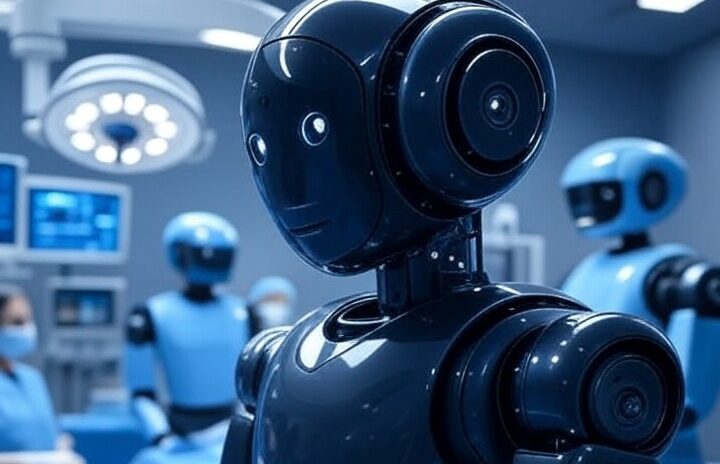
The AI revolution isn’t coming — it’s here, and it’s showing up in payroll reports. Across multiple sectors, companies are replacing human labor with artificial intelligence systems that never sleep, never take sick days, and can work for a fraction of the cost. From the way your favorite coffee shop takes orders to how banks approve your mortgage, AI is eliminating the need for human involvement in ways that were unthinkable just a few years ago.
Customer Service and Support
The call center, once a hub of human interaction, is increasingly staffed by machines. AI-powered chatbots and voice agents now handle up to 70% of routine customer requests — from password resets to order tracking — without a single human on the line. Entire customer service departments are shrinking, with many companies cutting a quarter of their staff after switching to automated systems. Telemarketing has taken a similar hit, with AI-driven calling tools able to dial thousands of numbers, deliver scripted pitches, and even respond to basic questions in a convincing synthetic voice. The hospitality industry is also feeling the shift, as hotels and banks deploy AI kiosks and robotic receptionists to greet guests, answer basic questions, and process payments, particularly during off-hours.
Manufacturing and Production
Factories are where AI has perhaps the most visible impact. Assembly line workers are being replaced by AI-guided robotic arms that can weld, fasten, and assemble products with unmatched speed and precision. Quality control inspectors are losing ground to machine vision systems that spot defects instantly, 24/7, without human fatigue. Even machine operators — once seen as skilled, secure jobs — are seeing their roles reduced as AI systems monitor, operate, and maintain entire fleets of manufacturing equipment. One Foxconn plant replaced 60,000 workers with robots in a single move, underscoring the scale of this transformation. Material handlers and forklift drivers are also being replaced by autonomous guided vehicles and robotic palletizers in smart factories linked to automated warehouses.
Finance and Banking
Bank tellers have been steadily disappearing for years thanks to ATMs, but AI is accelerating the decline. Banking apps now come with AI assistants that handle balance inquiries, transfers, and common questions without human help. On Wall Street, human stock traders have been sidelined by algorithmic trading systems that execute 90% of trades at speeds no person can match. Loan officers and underwriters are also under threat, as machine learning models can review credit histories, verify documents, and make approval decisions in seconds. Bookkeepers and accounting clerks are watching their roles vanish as AI-enabled software like QuickBooks and SAP automatically categorizes expenses, generates invoices, and even flags irregularities.
Healthcare
While doctors and nurses remain indispensable, support roles in healthcare are quietly being eroded by automation. Radiologists are seeing AI systems take on initial image reviews, flagging normal scans as clear and highlighting suspicious areas for further review. Lab technicians are losing tasks to AI models that analyze tissue samples and blood tests with incredible accuracy. Medical transcriptionists have been heavily impacted by speech-to-text AI that can instantly transcribe a doctor’s notes, while administrative staff face cutbacks as AI scheduling assistants book appointments and manage billing codes without human oversight.
Logistics and Transportation
Self-driving technology is on track to change the face of transportation. Autonomous trucks are already hauling goods in pilot programs, threatening millions of trucking jobs in the coming decade. Delivery drivers face competition from drones and delivery robots now being tested by retail and shipping giants. In warehouses, human pickers and packers are being replaced by fleets of AI-guided robots that retrieve, pack, and ship items with minimal oversight. AI-powered logistics software is also replacing dispatchers by instantly mapping optimal delivery routes based on real-time traffic, weather, and fuel data.
Retail and Food Service
Retail cashiers are disappearing as self-checkout machines and cashierless stores like Amazon Go spread. These systems use AI-powered cameras and sensors to track purchases and charge customers automatically. In food service, order-taking kiosks and drive-thru AI voice assistants are replacing front-of-house workers, while robots in the kitchen flip burgers, fry food, and dispense drinks. Some fast-food restaurants have even piloted fully automated locations, requiring little to no human staff for ordering or cooking. Hotels and restaurants are also rolling out service robots to deliver food to tables or rooms, further reducing the need for waitstaff and runners.
Creative Industries
Even creative professionals are not immune. Generative AI models are now writing marketing copy, drafting news briefs, and producing product descriptions, leading some companies to hire fewer junior copywriters. Proofreading roles are shrinking as AI editing tools like Grammarly catch errors and suggest improvements instantly. Graphic designers and illustrators are competing with AI image generators capable of producing detailed artwork in seconds, while video editors and audio producers are seeing AI tools automatically cut footage, add transitions, and clean up sound — work that once took teams of humans.

