

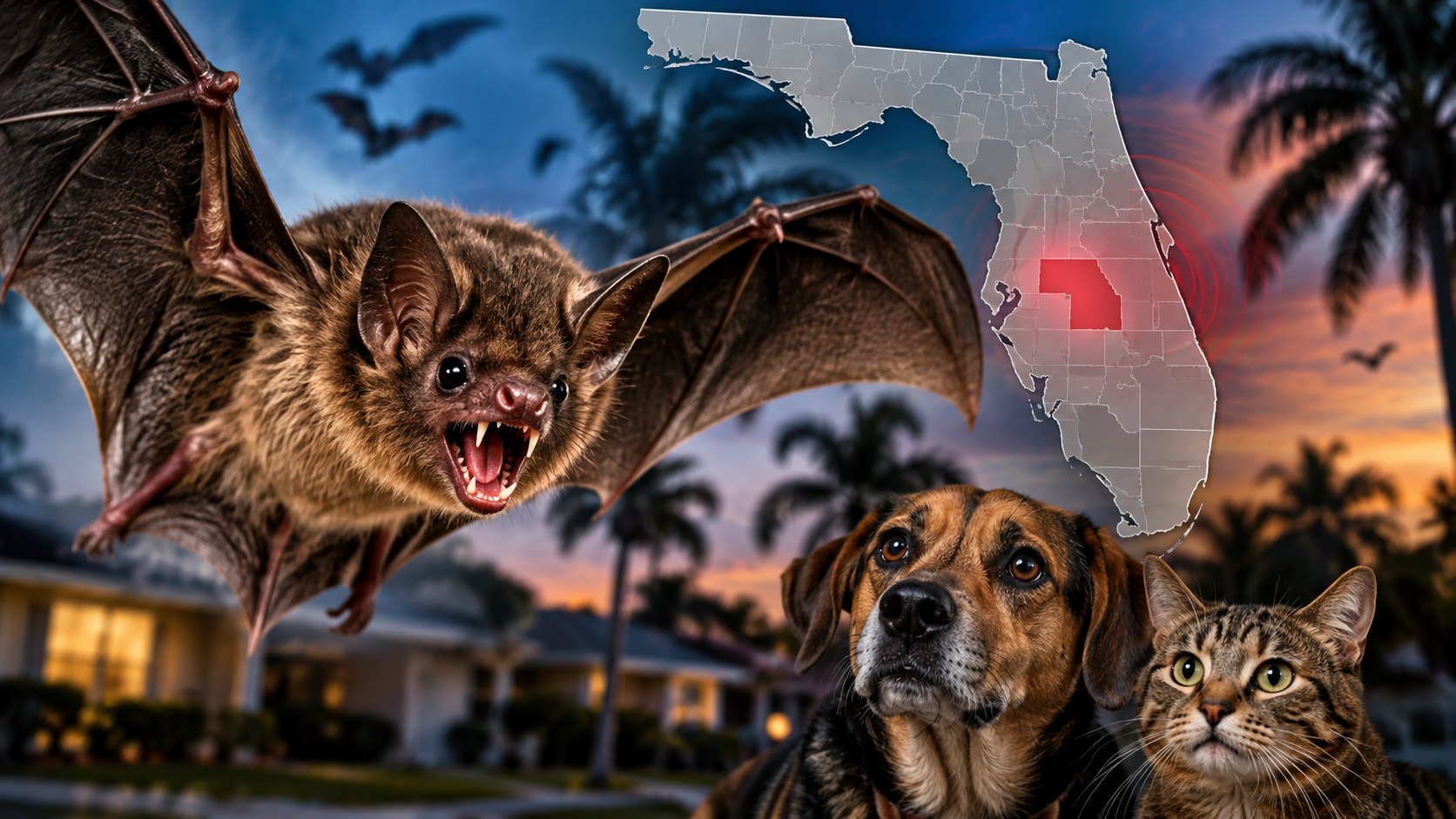
Rabies-infested bats have taken over a Florida county, and residents say the problem keeps getting worse by the month. Six rabies-infected bats have been spotted around Polk County since March, spooking residents and putting their pets in direct danger. What started as an occasional sighting has become an ongoing situation for families in the area, with local officials confirming the outbreak still hasn’t slowed.
The most recent incident happened this week when a woman spotted what she assumed was a dead mouse lying on the ground. When she got a closer look, it turned out to be a dead bat instead, just the latest reminder that Polk County’s bat problem isn’t going anywhere on its own.
So far, no humans have been bitten by any of the infected bats. Pets haven’t been as lucky. The Polk County Sheriff’s Office confirmed that several cats and dogs that came into contact with the bats ended up bitten and testing positive for rabies themselves.
Every infected animal has had to be vaccinated and placed under quarantine at home, according to the sheriff’s office. That means families across the county are now managing the stress of watching a sick pet recover at home while hoping the exposure stops there.
The sheriff’s office also released a photo as part of an official warning to residents, urging people in the area to stay alert and keep a closer eye on their animals. Anyone who comes across a bat, dead or alive, is being told to avoid direct contact and report it instead of handling it themselves.
Once a bat carcass is recovered, it gets sent to a facility in Tampa for rabies testing. From there, TMZ reports the bats are presumably destroyed once testing wraps up, which is standard practice anytime rabies exposure is suspected in wildlife.
Rabies is no small thing. It attacks the central nervous system and is almost always fatal once symptoms appear, which is exactly why health officials move fast whenever a case shows up in a residential area. The virus spreads through saliva, usually from a bite, which is why a scratch or a dead bat lying in a yard can turn into a real problem if a curious pet gets to it first.
Bats are one of the more common rabies carriers in Florida, and outbreaks tend to spike when bat colonies end up roosting closer to homes and neighborhoods. Warmer months typically bring more bat activity statewide, and wildlife officials across Florida have dealt with similar clusters tied to bats, raccoons, and foxes for years. Polk County’s situation fits that same pattern, just concentrated in one area since March.
For now, the county’s approach is containment. Track the infected animals, quarantine anything exposed, test every carcass that turns up, and warn residents before the numbers climb any higher. Six confirmed cases since March might not sound like much on paper, but for the families whose pets have already been bitten, it hasn’t felt small at all.
There’s no confirmed timeline for when this clears up. Rabies-infested bats don’t exactly follow a schedule, and until the county gets a real handle on the population behind this, more cases are possible. Residents are being told the same basics anyone in this situation would hear: keep pets away from wildlife, keep vaccinations current, and never try to handle a bat, living or dead, without protection.
Until then, expect more warnings like the one the sheriff’s office just put out. Six bats and counting is already enough to keep an entire community watching where their pets wander, and nobody in Polk County is treating this like a small problem anymore.
