


Roland Martin stepped into Baller Alert’s Instagram comments to tell Cam’ron he should have charged ESPN for his “First Take” appearances, but the rapper pushed back with a simple point about the network’s reach.
Cam’ron recently explained on “Talk With Flee” that he was willing to appear on ESPN without an appearance fee because he saw national television as promotion for his own sports platforms. In his telling, a guest spot was not just about getting paid for a day of work. It was an opportunity to show viewers what he could do and potentially bring some of that audience back to his shows.
Roland Martin saw the arrangement differently. Under Baller Alert’s post about Cam’ron’s comments, the journalist pointed out that ESPN’s household distribution has dropped sharply since its cable peak.
“ESPN is no longer in 100M homes. That was 2011,” he wrote, arguing that the audience Cam’ron hoped to reach was smaller than the number he had cited. Martin also told the rapper, “Man, make them pay!”
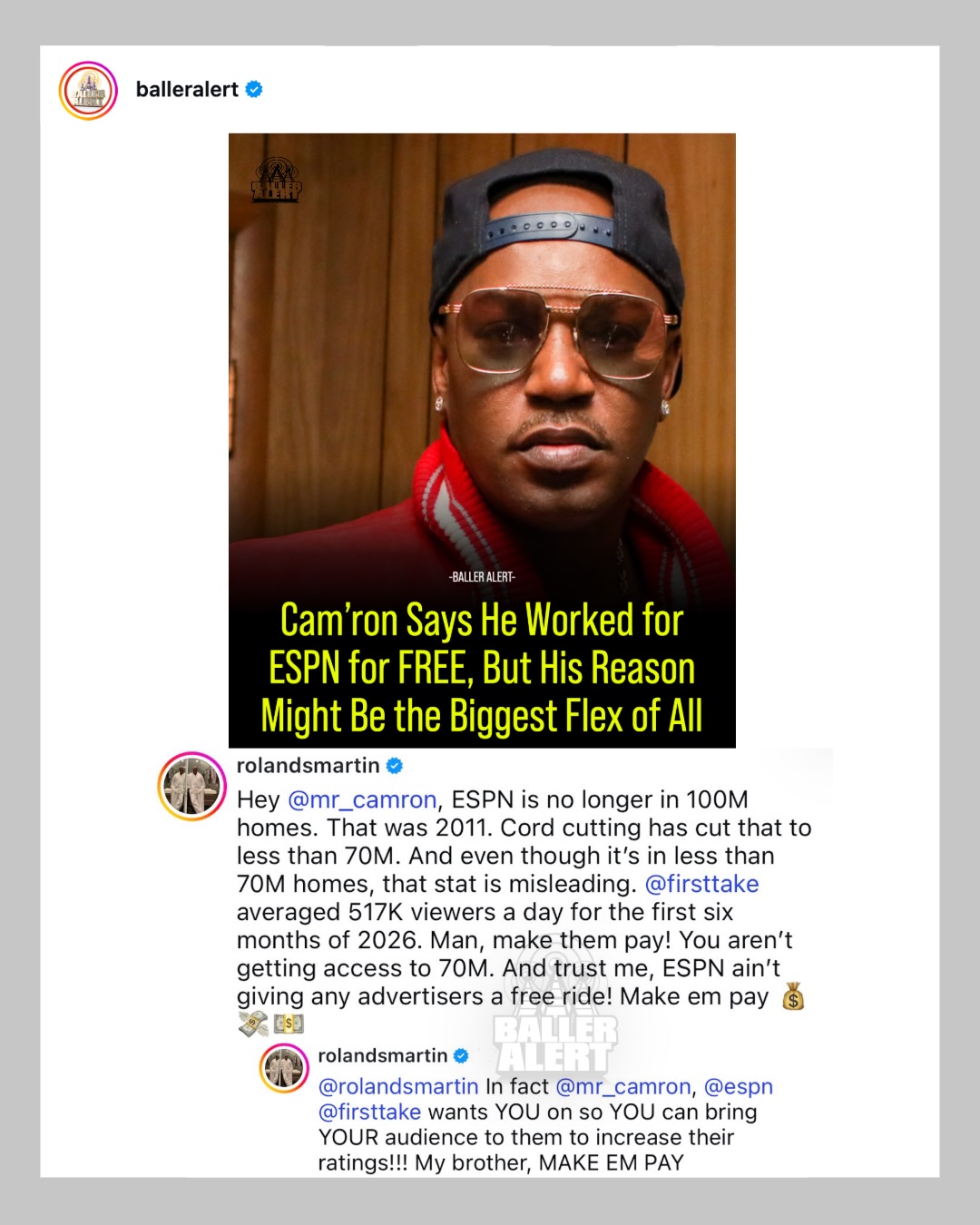
He then brought up “First Take,” saying it averaged 517,000 viewers a day during the first six months of 2026. Martin questioned why Cam’ron would give a major network his time for free when the network could benefit from his name, personality, and fan base.
He also compared the arrangement to advertising, pointing out that ESPN does not give brands free access to its audience.


Made to order and shipped to your door.
Roland Martin followed up with another direct message: “My brother, MAKE EM PAY.”
He argued that “First Take” wanted Cam’ron for the audience the rapper could bring to the program, not simply because the network was offering him exposure. In Martin’s view, that gave Cam’ron negotiating power. An established artist with a loyal following should be able to convert that attention into compensation.
But Cam’ron had a different calculation. After another commenter suggested the arrangement could benefit both sides, he replied that ESPN was “still 56 more million homes then us,” adding a shrug emoji.
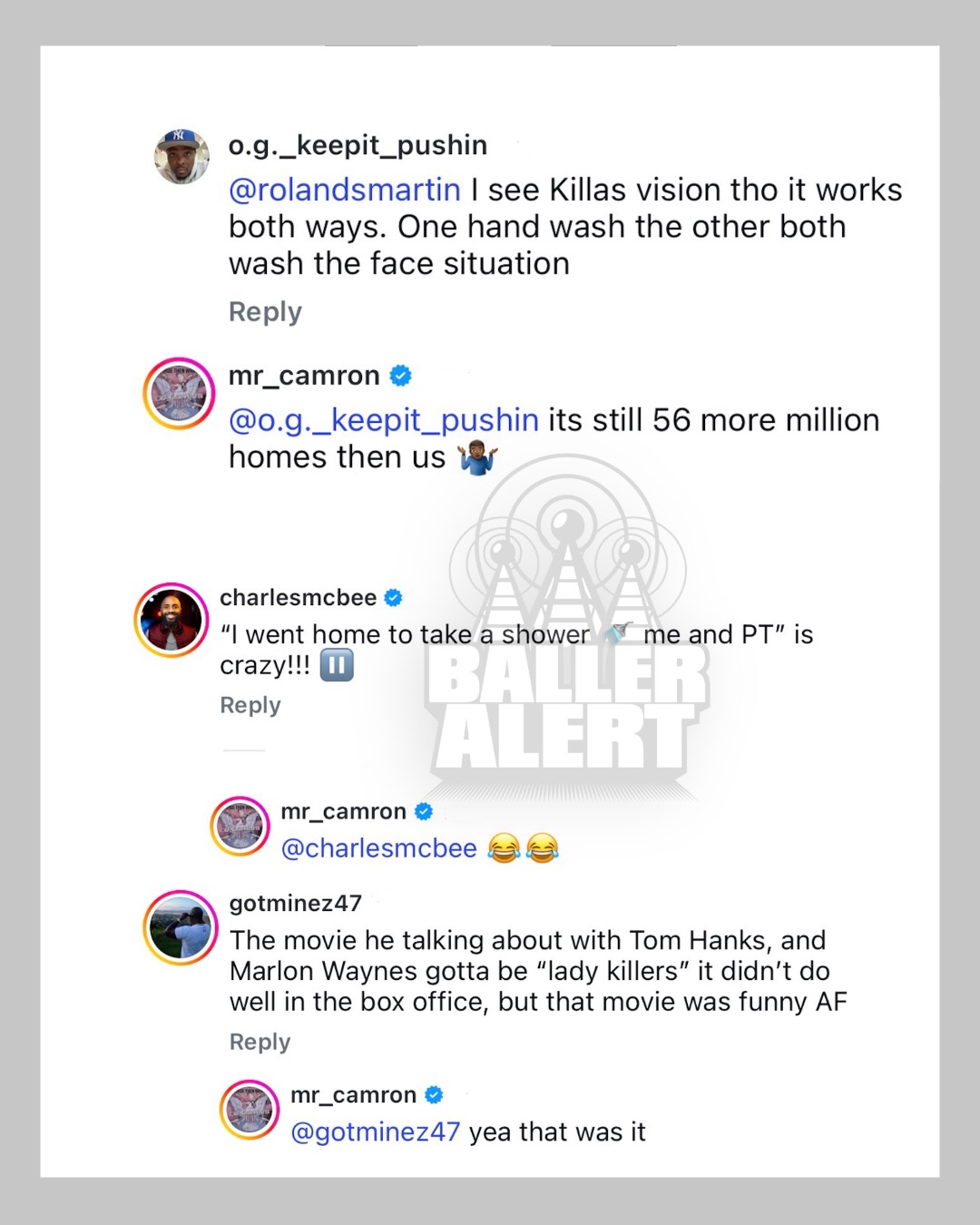
His response acknowledged the gap between the reach of his own operation and the cable giant, even after years of cord-cutting. To Cam, access to a larger platform could be a form of value on its own.
The numbers do need some separating. ESPN announced in February 2011 that its flagship channel reached just over 100 million U.S. households. Disney’s more recent reporting placed ESPN at approximately 61 million subscribers in September 2025.
That supports Roland Martin’s broader point that the old 100 million figure is outdated, although channel subscriptions, a television show’s audience, and a network’s online reach are different measurements.
The First Take figure also needs some precision. ESPN reported an average of 517,000 viewers for the show across 2025, and the same number was reported for January through April 2026. That does not independently establish the exact six-month average Martin referenced.
Their arguments ultimately come down to what each personality considers valuable.
Roland Martin is looking at what Cam’ron brings to the table: credibility in music, a recognizable personality, and an audience he built outside traditional sports television.
Cam’ron is looking at what ESPN can offer in return: visibility among sports viewers who may have never watched “It Is What It Is,” the show he hosts with Ma$e.
And this was not a bitter back-and-forth. The comments read more like two media personalities debating business strategy than two people trading personal shots.
Martin kept pushing the importance of getting paid, while Cam’ron stood by the long game of using somebody else’s platform to grow his own. Neither shared details of an appearance contract or a specific compensation offer.
