

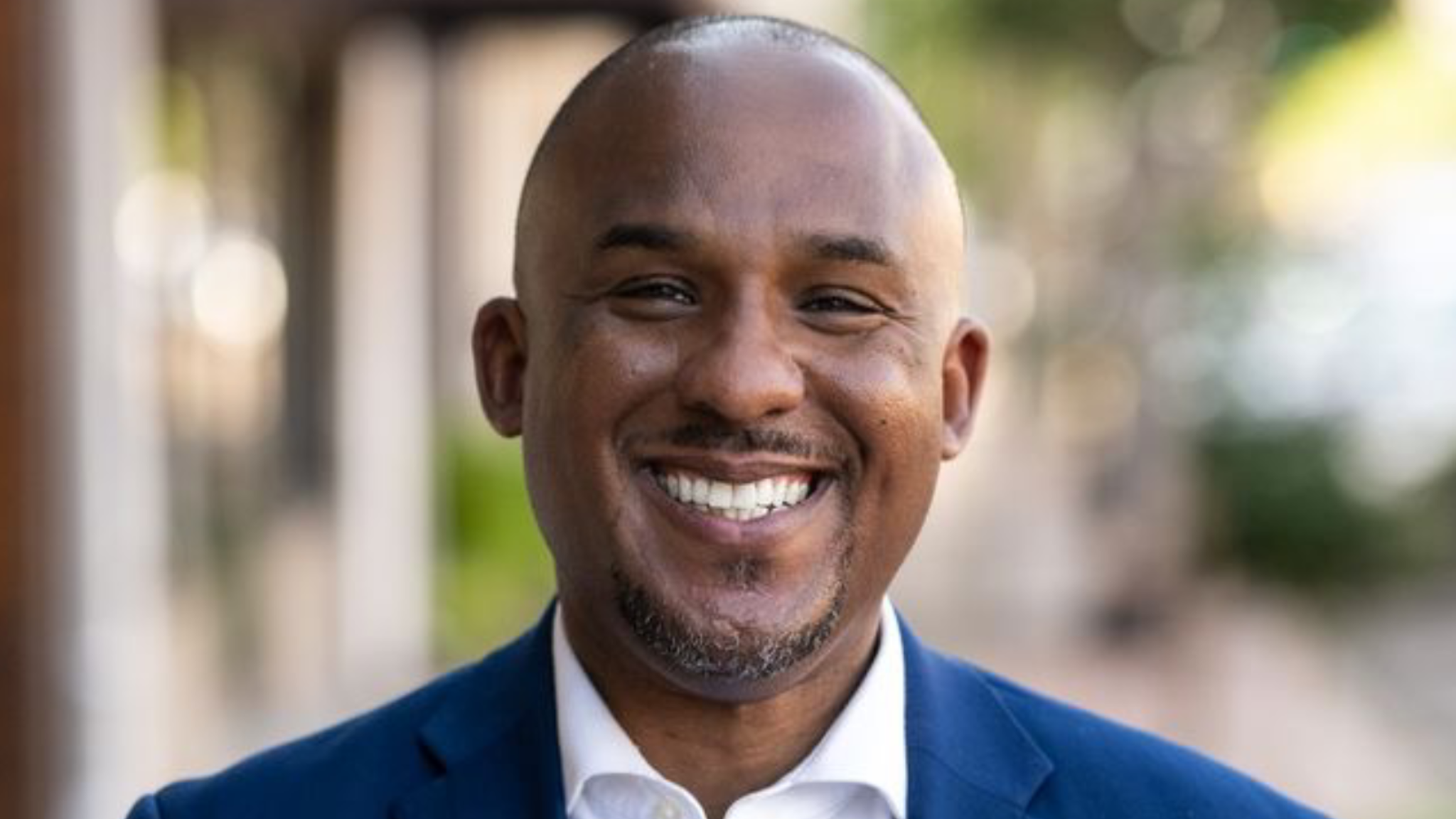
Scott Colom, the Democrat that Sen. Cindy Hyde-Smith blocked from becoming a federal judge in 2023, is projected to take her seat in the U.S. Senate.
CNN projected Wednesday that Colom will defeat Hyde-Smith in Mississippi’s Senate race, one of the closest contests of the midterms. With nearly every vote counted, Colom leads by about 4,400 votes, roughly 49.2% to 48.7%, according to the Associated Press. The results still have to be certified, and Hyde-Smith’s camp has signaled it may challenge them.
If the result holds, Colom will be the first Black person elected to statewide office in Mississippi since Reconstruction, the first Black senator from the state in 145 years, and the first Democrat Mississippi has sent to the Senate since 1982.
The fight between the two started in 2022, when then President Joe Biden nominated Colom, a longtime district attorney, to be a federal judge in north Mississippi. Rep. Bennie Thompson recommended him. Republicans backed him too, including Sen. Roger Wicker and former Gov. Phil Bryant, the same governor who appointed Hyde-Smith to the Senate in 2018.
Federal judges need more than the president’s pick. Before a district court nominee can get a hearing, the Senate Judiciary Committee sends a light blue form, called a blue slip, to both senators from the nominee’s home state. If either senator refuses to send it back, the nomination usually stalls for good. The blue slip is not a law. It is a Senate tradition that gives a single senator the power to quietly kill a judge from their state.
Wicker returned his. In April 2023, Hyde-Smith announced she would not return hers. She pointed to a letter Colom signed with other prosecutors opposing laws that criminalize transgender people, and to a PAC funded by George Soros that supported his first race for district attorney in 2015.
The Biden White House said Hyde-Smith never raised any of those concerns during months of talks, including a meeting with Colom himself. Colom wrote her a letter asking her to reconsider. She did not, and the nomination went nowhere. Had he been confirmed, Colom would have been only the second Black judge ever to serve on the federal bench in Mississippi’s Northern District.


Made to order and shipped to your door.
Hyde-Smith brought it up again on election night. Before the race was called, she told her supporters, “I blocked Scott Colom from being a federal judge, and you blocked him from being a US senator.”
Colom said he holds no grudge. “As a Christian, I’ll forgive her,” he said on Election Day. “As a district attorney, I have a lot of experience with forgiveness.”
The blue slip has a long history in Mississippi. Sen. James Eastland, a Mississippi segregationist who chaired the Senate Judiciary Committee from 1956 to 1978, turned the form into a veto. Southern senators used it to keep judges who supported civil rights off the federal bench in their states. Decades later, a senator from the same state used the same tool to stop a Black prosecutor from becoming a judge.
Hyde-Smith has faced questions about race before. In 2018, while running against Black Democrat Mike Espy, she was recorded saying of a supporter, “If he invited me to a public hanging, I’d be in the front row.” She also attended a private academy that opened after the Supreme Court ordered Mississippi’s public schools to desegregate in 1969.
Colom, 43, grew up in Columbus, Mississippi, in a family that has made history before. His mother, Dorothy Colom, was the first Black person elected to a chancery court judgeship in their district. He became the first Black city prosecutor in Columbus, then in 2015 unseated a district attorney who had held the office for more than 25 years. He is the first Black person in state history elected district attorney in a majority white district.
He won the Democratic primary in March with 73% of the vote. In the final week of the race, Trump flew to Corinth, Mississippi, for a rally to help Hyde-Smith. Colom challenged Trump to a debate.
Mississippi sent the first two Black men to ever serve in the U.S. Senate, Hiram Revels in 1870 and Blanche K. Bruce in 1875. Both were chosen by the state legislature, because senators were not elected by voters back then. After Reconstruction ended, Mississippi never sent another Black senator to Washington.
Once the results are certified, Scott Colom will be the third, and the first chosen directly by Mississippi voters.
