

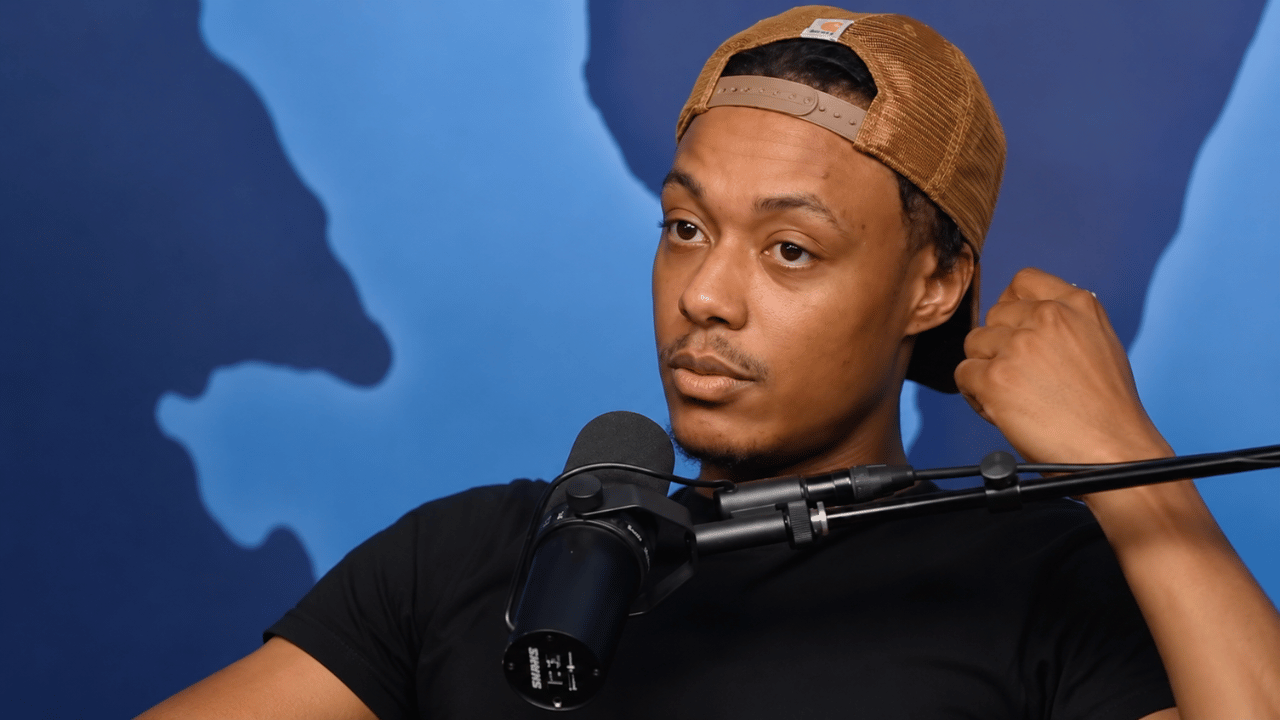
Record label pressure can turn a young rapper’s breakthrough into a dangerous situation when money arrives before education, structure, and emotional support, according to Skilla Baby.
During a recent appearance on “The Real Report” with Tony Yayo and Uncle Murda, Skilla Baby spoke about what can happen when a rising artist receives a large advance without learning how to manage the money or navigate the environment surrounding newfound success.
Skilla Baby argued that a young rapper who suddenly receives a large amount of money may feel responsible for helping everyone around him. The artist may also purchase weapons, return to dangerous environments, and become a larger target because people now believe he has money.
“You gon’ help people around you. And you gon’ buy some guns. Then you gon’ get to doing bulls**t,” Skilla Baby said during the interview. He explained that the artist may eventually spend the advance, lose the label’s support, and still be surrounded by people who assume the money is available.
Although Skilla Baby stopped short of declaring labels solely responsible for rappers dying, he said their business practices can enhance the conditions that place young artists in danger.
“The label really, I ain’t saying they the reason why young n***as die, but they enhancing this because it’s no artist development,” he said.
His criticism was not simply about receiving a bad contract or failing to release a successful song. Skilla Baby connected record label pressure to a larger absence of preparation. He said labels are not consistently teaching financial literacy or showing artists what to do with the money they receive.
Instead, he believes some companies encourage rappers to continue participating in the behavior and controversy that made them marketable in the first place.
“They’re really telling you to go do the s**t that’s helping you sell, which is the bulls**t,” he said.
That observation challenges the way success is often presented in rap. A record advance can look like instant wealth, but the money is generally an investment connected to the artist’s contract and future earnings. When an artist spends the funds without understanding budgeting, taxes, recoupment, ownership, or long term planning, the appearance of success can disappear quickly.
Skilla Baby is not the only artist questioning whether labels properly prepare new talent. Bow Wow called for companies to restore artist development in 2023, arguing that labels were placing unprepared performers in front of the public without teaching them how to handle the industry.
The former child star compared the process to sending a boxer into a fight without training. He questioned whether labels genuinely cared about the artists they were signing and said talented performers deserved development before being pushed onto major platforms.
Keke Palmer has expressed a similar frustration. She previously said her experiences with several labels taught her that artist development had largely disappeared. She explained that companies would test ideas, abandon them when they failed, and blame the performer instead of helping the artist discover how to communicate a clear identity.
Palmer said she eventually had to learn for herself how to present her voice, story, and talent to the public. Her comments support Skilla Baby’s argument that record label pressure is not always accompanied by meaningful mentorship.
Joe Budden has taken the criticism even further. He said in 2024 that he saw little benefit in many artists signing traditional record deals because independent performers can now access distribution, marketing, audiences, and production resources without depending entirely on a major company.
Budden questioned what an artist is truly signing for when that artist already has a team handling the same responsibilities. His comments highlight another part of Skilla Baby’s warning. A company may provide money and visibility, but those resources do not automatically create stability.
Chance the Rapper has also challenged the modern label system. Chance said labels increasingly avoid developing unknown performers from the beginning. Instead, he said companies often look for artists who already have visible audiences, ticket sales, and outside investment.
That approach can create a system where companies sign a movement after it becomes profitable but do not necessarily build the foundation that keeps the artist healthy, financially secure, and creatively sustainable.
Some established artists have responded by creating their own development systems. Pusha T said he launched Heir Wave Music Group to build a community where artists could develop authentic stories and receive support within their own region. He described a long term vision that allowed musicians to build local audiences before being sent elsewhere for validation.
Financial education has become another important response. Wyclef Jean partnered with TIAA on the song “Paper Right,” which featured Pusha T, Lola Brooke, Capella Grey, and Flau’jae. The project encouraged saving, investing, and generational wealth while raising money for a nonprofit that teaches financial literacy to students.
According to information connected to his Bank Account Campaign, 21 Savage has also promoted financial education for young people by supporting programs focused on saving money, opening bank accounts, and understanding basic financial tools.
These efforts matter because Skilla Baby’s argument is not that money itself destroys young rappers. His point is that money without guidance can intensify existing problems. A person who was already living around conflict may suddenly have greater visibility, more people requesting help, increased access to weapons, and a public image that rewards retaliation.
Record label pressure can make that situation worse when controversy produces streams, attention, and social media engagement. The same behavior that threatens an artist’s future may also become part of the marketing strategy surrounding the artist’s music.
Skilla Baby’s comments place responsibility on more than the individual rapper. Artists still make their own choices, but labels, managers, attorneys, family members, and teams also shape the environment around those choices. Giving a young person a check without financial education is not development. Encouraging an artist to repeat destructive behavior because it performs well online is not career guidance.
The music business often celebrates the moment when a rapper signs a deal, buys jewelry, purchases cars, and takes care of an entire neighborhood. Skilla Baby is asking what happens after that moment, especially when the money is gone, the songs stop moving, and the company turns its attention toward someone new.
Without real artist development, record label pressure can leave young rappers more famous, more exposed, and less prepared for the dangers surrounding them.
