Celebrity ownership stakes have quietly become the smartest financial move in entertainment, turning a handful of stars into billionaires while their peers cashed a single check and moved on. The difference is not talent or fame. It is structure. A flat endorsement fee pays once and disappears. An equity stake grows with the company, and when that company gets sold or scales into a billion dollar brand, the payout can dwarf anything a paycheck could have offered.
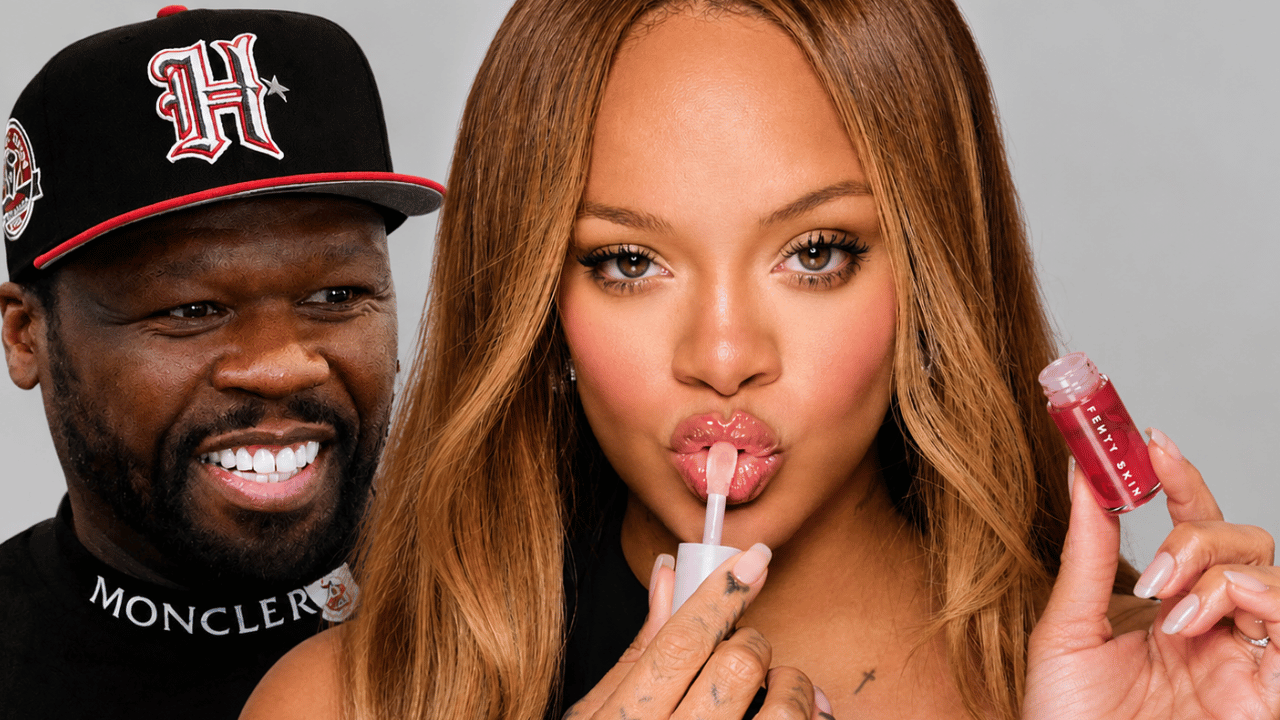
Rihanna’s Fenty Beauty is the clearest modern example of this philosophy in action. When she partnered with LVMH in 2017 to launch the brand, she did not license her name for a royalty check. She structured the deal as a 50 percent ownership stake, with LVMH’s Kendo Brands holding the other half.
Fenty Beauty generated $570 million in revenue within its first full year and has since been valued as high as $2.8 billion, with more recent estimates placing the company between $1 and $2 billion amid a cooling beauty market. Even at the lower end, Rihanna’s half of that valuation runs into the hundreds of millions, and it is the primary driver behind her estimated $1.4 billion net worth. LVMH has since moved to explore selling its stake, and reports this year confirmed Jay Z’s investment firm MarcyPen Capital Partners is actively pursuing that half, which would put husband and wife on opposite sides of the same boardroom table. Rihanna keeps her ownership regardless of who buys in, and that is the entire point. Ownership does not depend on who else is at the table.
View this post on Instagram
The contrast becomes even sharper when you compare Rihanna’s structure to a traditional celebrity licensing deal. Jessica Simpson built a fashion brand under her name that reportedly generated around $100 million over more than 15 years, which sounds impressive until you realize she never owned equity in the company behind it. She collected a royalty on sales but had no stake to sell, no asset to leverage, and no way to compound that wealth beyond the checks themselves. Rihanna’s stake, by comparison, compounds every time Fenty Beauty grows, launches in a new market, or gets valued higher by outside investors. One structure caps out. The other keeps climbing.
50 Cent’s Vitaminwater deal remains one of the most cited examples of this strategy in hip hop, and for good reason. In 2004, Glaceau offered him a standard $5 million endorsement fee to become the face of the brand. He turned it down and negotiated for a minority equity stake instead, along with the right to develop his own flavor, which became Formula 50. Sales at the company grew from $100 million to $700 million within three years, largely credited to his involvement. When Coca Cola acquired Glaceau for $4.1 billion in 2007, 50 Cent walked away with an estimated $60 to $100 million, a payout roughly 20 times larger than the flat fee he initially turned down. He later applied the same logic to EFFEN Vodka, taking an equity position in 2014 and selling his stake two years later for $60 million. Two deals, same blueprint, both proving that a smaller upfront number with real ownership attached will almost always outperform a bigger guaranteed check.
What ties these deals together is not luck. It is negotiation. Most brands would rather write a celebrity a flat check and keep all the upside for themselves. Equity deals only happen when the celebrity, or their team, recognizes their leverage and insists on keeping a piece of what they are helping build. Rihanna and her advisors understood that Fenty Beauty’s success would be driven by her name, her product instincts, and her cultural reach, and priced that value accordingly. 50 Cent’s team saw the same thing in a struggling sports drink company that most artists would have dismissed as a minor promotional gig.
This shift also reflects a broader change in how Black celebrities specifically approach business. For decades, entertainers were often steered toward endorsement checks while the companies behind those products kept full ownership and every dollar of long term upside. The generation building wealth today has flipped that model, treating brand partnerships as investment opportunities rather than payday appearances. It is the same instinct behind athletes negotiating ownership stakes in sneaker companies or artists demanding masters ownership instead of a bigger advance.
The lesson from Rihanna, 50 Cent, and every other celebrity who has taken this route is simple even if the negotiations behind it are not. A paycheck ends the moment it clears. An ownership stake is still working long after the ink dries, and for the celebrities willing to bet on their own leverage, that bet has paid off in the billions.