
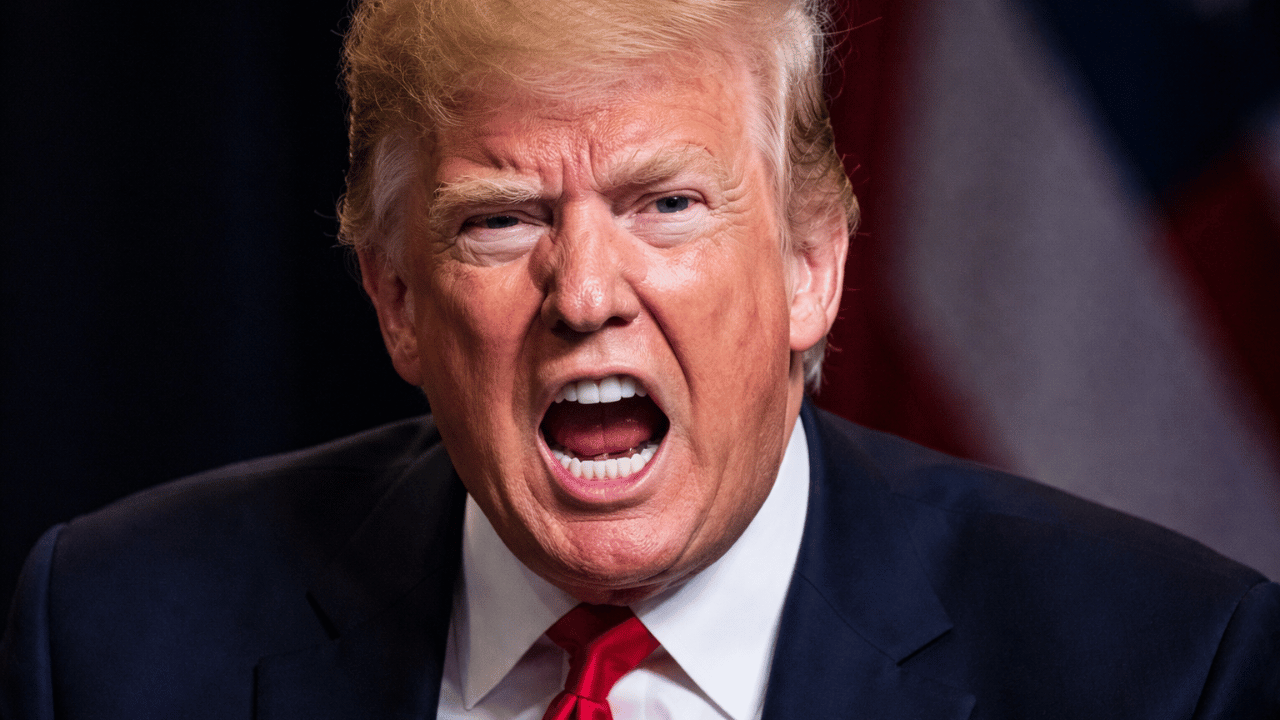
Donald Trump has ordered Smithsonian warning signs installed outside the National Museum of American History, telling visitors that the exhibits inside contain inaccurate information and should be renovated to reflect his view of the country’s past.
The executive order, titled “Restoring Trust in the Smithsonian Institution,” came down on Friday and directs Interior Secretary Doug Burgum to work with the National Park Service to put temporary signage along the public sidewalks and walkways people use to reach the museum. The signs will point visitors to a White House report released July 4 and to Trump’s demand that its findings be enforced under an executive order he signed back in March 2025. In plain terms, the federal government is now planting notices in the museum’s front yard to tell the public not to trust what they are about to see.
The complaint driving all of this is spelled out in the order. Trump wrote that Smithsonian leadership does not present American history as a shared national inheritance to be taught and celebrated, and instead treats it as a tool to advance social justice and what he called the radical transformation of society. He wrote that the institution cannot be trusted to tell America’s story with honesty and gratitude. On Truth Social he was blunter, posting that the Smithsonian is out of control because everything it discusses is how horrible the country is and how bad slavery was, with nothing about success or the future.
Slavery is not a side detail here. It sits at the center of what Trump wants changed. The Smithsonian warning signs are the newest move in a campaign that has repeatedly framed honest accounts of slavery and racism as a problem to be corrected, and the March report underpinning the order goes further, accusing the institution of failing to highlight the constructive role of Christian belief and claiming that white, male, and Christian Americans are regularly denigrated in its exhibits.
That same campaign has already reached beyond the Museum of American History. The March executive order, titled “Restoring Truth and Sanity to American History,” put Vice President JD Vance, who sits on the Smithsonian Board of Regents, in charge of working with Congress to cut funding for exhibits the administration says degrade shared American values, and it named the National Museum of African American History and Culture as a target. When that happened, the Congressional Black Caucus called the effort an attempt to whitewash the nation’s history, said the idea that the African American museum distorts the past is patently ridiculous, and stated flatly that Black history is American history.
So while the Smithsonian warning signs are physically going up outside one museum, the logic behind them has been aimed squarely at how the story of slavery and Black life in this country gets told.The Smithsonian itself declined to comment on the order. The people who run the museum have not stayed silent in general, though. In congressional testimony, National Museum of American History director Anthea Hartig defended the institution, saying it does not take sides in political debates and that its job is to preserve and document the evidence of American life in all its breadth so the public can encounter the past and reach their own conclusions. That is a direct rejection of the premise behind the Smithsonian warning signs, which assume there is a single correct version of history and that the government gets to decide what it is.
The fight has split along familiar lines. Republican congressman Tim Burchett said the Smithsonian has become infected by a woke ideology that highlights American oppression. Democratic congresswoman Melanie Stansbury countered that the administration has launched an unprecedented effort to interfere in how American history is told, researched, and taught, not only at the Smithsonian but across schools and universities and the federal government. Neither framing is new, but the signage order pushes the dispute into physical space in a way that earlier funding threats did not.
This is also not the first time Trump has moved directly on the Smithsonian’s leadership. In May 2025 he pushed out National Portrait Gallery director Kim Sajet, calling her highly partisan. The Smithsonian warning signs extend that pattern from personnel to the exhibits themselves, and now to the sidewalks outside them. The institution runs roughly two dozen museums and draws about 17 million visitors a year, which means whatever precedent gets set here reaches a massive audience and a huge share of how Americans learn their own history.
What makes this moment different is the target. Not a budget line, not a director, but the ground a visitor walks on to enter a museum. The government is claiming the right to greet the public with a disclaimer before a single exhibit is seen. Strip away the language about trust and accuracy and the message is simpler than that. The administration wants the last word on how slavery and Black history are remembered, and it is willing to stake signs in the dirt to get it.