

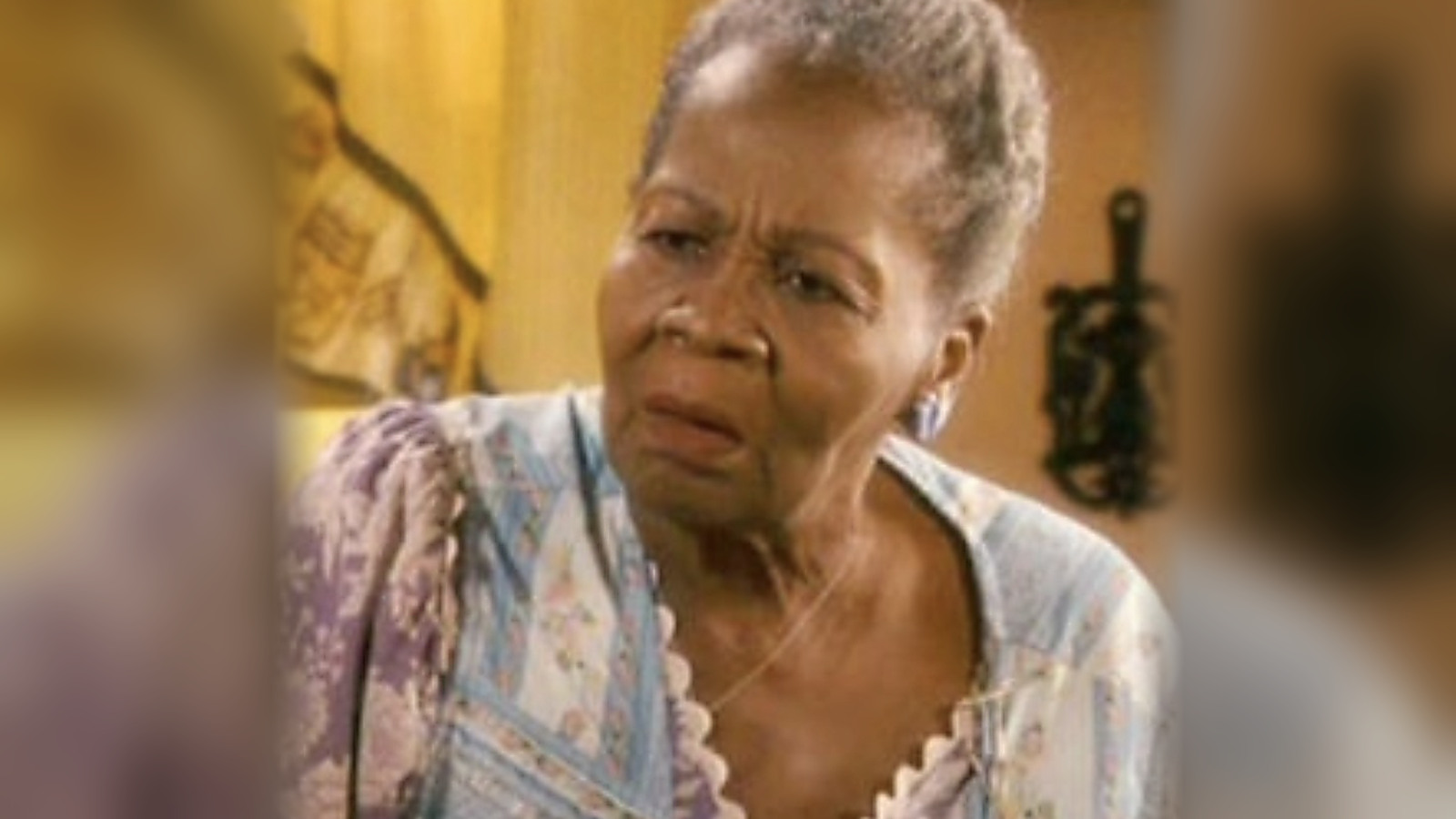
The “Soul Food” legacy has lasted nearly three decades, with Irma P. Hall’s portrayal of Big Mama becoming one of the most recognizable grandmother roles in movie history. Following Hall’s death at 91 in November 2026, her performance carries even more emotional meaning for audiences who grew up with the film and those discovering it years later.
Released September 26, 1997, “Soul Food” introduced viewers to the Joseph family, a Chicago household whose relationships were held together by Josephine “Big Mama” Joseph and her Sunday dinners. The film starred Vanessa Williams, Vivica A. Fox, and Nia Long as three sisters whose complicated lives repeatedly threatened the family peace.
Written and directed by George Tillman Jr., the movie captured something familiar in many households: relatives who argue all week but know exactly where they’re supposed to be when Sunday dinner is ready.
Big Mama, played by Hall, was the person who made that tradition possible. Her table welcomed everyone, including relatives who barely got along, neighborhood visitors, and people who needed somewhere to belong. She cooked, corrected grown adults, offered advice, and somehow kept up with everybody’s business.
But the character was more than a sweet grandmother who could cook.
Big Mama understood her family’s weaknesses because she had experienced hardship herself. During one memorable conversation, she reminded her relatives that her husband’s gambling nearly cost them their home and that she worked cleaning houses and doing laundry to keep the family afloat.
She also delivered one of the film’s defining lessons about unity, explaining how individual fingers become more powerful when brought together as a fist. Her message was simple: the family needed to stand together instead of constantly turning against one another.


Made to order and shipped to your door.
Hall made those moments believable without making Big Mama seem perfect. She could be stubborn, funny, demanding, and occasionally unwilling to follow the advice she freely gave everyone else.
One of the movie’s most memorable scenes begins with a frightening discovery in the kitchen.
“Big Mama, your arm!”
The line comes after Big Mama burns herself while cooking. Her family immediately becomes concerned, questioning whether she has been taking her insulin or seeing a doctor. She insists that home remedies can handle the problem.
The exchange introduces the seriousness of her diabetes. Later, complications lead to the need for a leg amputation, and she suffers a stroke that leaves her hospitalized.
For viewers, the character who seemed capable of handling everybody else’s problems suddenly needed someone to care for her.
Hall had a remarkable personal connection to that storyline. In a 1997 interview with The Virginian-Pilot, she revealed that her own mother was named Josephine and that her grandmother had also undergone a leg amputation and raised three daughters. Those similarities made Big Mama’s experiences unusually close to her own family history.
While Big Mama represented stability, her three daughters brought plenty of drama.
Teri, played by Vanessa Williams, was the successful attorney who regularly reminded her siblings how much financial help she provided. Her running joke about being an ATM, meaning “Automatically Teri’s Money,” captured her frustration with being expected to pay for everyone else’s problems.
Maxine, played by Vivica A. Fox, had a more settled home life with her husband Kenny, but her relationship with Teri was complicated by the fact that Kenny had dated Teri first.
Then there was Bird, played by Nia Long, who was trying to build her beauty salon while her husband Lem, portrayed by Mekhi Phifer, struggled to find steady employment after serving time in prison.
The sisters loved one another, but their jealousy, resentment, financial disagreements, and marital problems frequently turned family gatherings into confrontations.
And then came Cousin Faith.
Played by Gina Ravera, Faith remains one of the film’s most infamous characters after becoming involved with Teri’s husband, Miles, played by Michael Beach.
Her betrayal was especially painful because Teri had welcomed her into her home. Faith was also someone Big Mama had taken in after her sister died, making her history with the family much deeper than that of an occasional visitor.
The storyline brought infidelity and family loyalty into the same conversation. Teri was already dealing with old resentment toward Maxine, only to discover another betrayal involving someone close to her.
These conflicts gave the Soul Food legacy its staying power. The Josephs were financially comfortable in some areas and struggling in others. Their problems included marriage, unemployment, personal ambition, caregiving, and relatives who struggled to respect boundaries.
When Big Mama dies in the film, those unresolved problems become harder to manage.
Her grandson Ahmad, played by Brandon Hammond, watches the family fall apart and eventually devises a plan to bring everyone back to Sunday dinner. He claims Big Mama left behind hidden money, knowing the possibility of an inheritance will get his relatives into the same room.
His scheme works, although it exposes how much resentment remains beneath the surface. A kitchen fire eventually leads to the discovery that Big Mama really had hidden money inside Uncle Pete’s television.
The ending doesn’t magically repair every relationship. Teri and Miles separate, but the family begins finding its way back to one another.
Outside the story, “Soul Food” also challenged Hollywood’s assumptions about what audiences wanted to see.
Tillman drew inspiration from the regular family dinners he experienced growing up in Milwaukee. In interviews, he explained that studio executives initially questioned whether a story centered on family life could attract moviegoers without more action or violence.
The film, made for approximately $7.5 million, ultimately earned about $43.7 million at the domestic box office.
Its success helped demonstrate that everyday family relationships could carry a commercially successful drama featuring a predominantly Black cast.
Music also helped extend the movie’s reach. The soundtrack featured Boyz II Men’s “A Song for Mama,” written by Babyface, along with contributions from Dru Hill, Total, and other major R&B artists. The music became closely associated with the film’s themes of love, heartbreak, and appreciation for mothers.
The “Soul Food” legacy continued on television when Showtime launched a dramatic series in 2000. With a new principal cast, the show expanded the Joseph family’s story across five seasons, ending in 2004. Hall also returned as Big Mama in appearances that kept her character connected to the family’s journey.
Her influence extended beyond the screen.
In 2025, Brandon Hammond, who portrayed Ahmad, celebrated Hall’s 90th birthday by sharing memories and photographs from their reunion. He recalled how she treated him like a grandson during filming, and their affectionate connection remained decades after the movie’s release.
View this post on Instagram
Hall’s performance gave “Soul Food” its emotional center, while the rest of the cast brought family tensions that audiences could recognize in their own lives. The movie also left younger viewers with a different understanding of why family traditions matter and how quickly they can disappear when the people maintaining them are gone.
Nearly 30 years later, the Sunday dinner table, Cousin Faith’s betrayal, the sisters’ arguments, and Big Mama’s wisdom remain central to conversations about the film.
