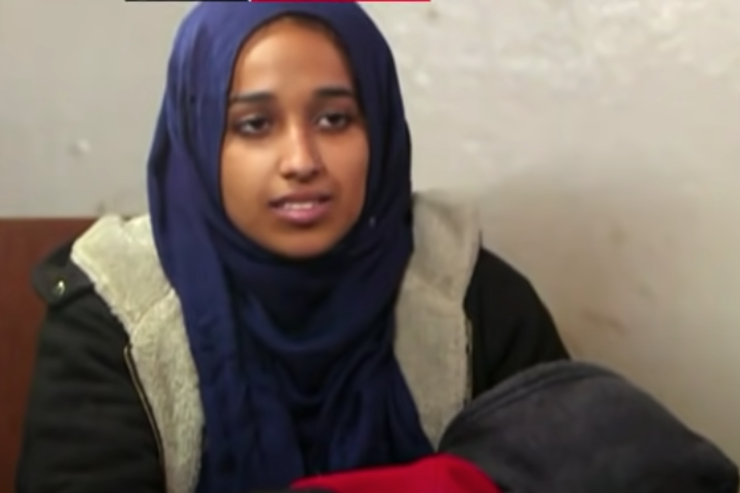
Hoda Muthana, the Alabama woman who left the United States as a college student to join the Islamic State in Syria, says she now wants to come home.
Muthana, now 26, makes her case in the documentary The Return: Life After ISIS by filmmaker Alba Sotorra Clua, which screened at the Human Rights Watch Film Festival in New York. According to PEOPLE, she was 20 when she left about six years ago, after telling her parents a story to cover the trip. She says life in Syria went badly almost right away and that she later married several of the group’s fighters, two of whom were killed. She has a young son.
“When you are brainwashed, you don’t realize it until you snap out of it,” she says in the film. She also describes her time with the group as a way of life she regrets and wishes she could erase.
Her past online posts are a big part of why her request is so controversial. PEOPLE reported that she shared thousands of posts supporting the group, including messages that called for violence against Americans. Muthana said in 2019 that she was never part of any fighting and never used a weapon, and she told NBC News that she expected to face jail time if allowed back.
Muthana says she fled the group with her son about two years ago, as its territory collapsed, and surrendered to Kurdish forces. She has been held at the Roj camp in northeast Syria since then, and the filmmaker says she spent more than a year visiting the camp. Roughly 1,500 women and children from more than 50 countries are in the same camp, according to the report.
The U.S. government has said Muthana is not a citizen and will not be allowed back, a position then Secretary of State Mike Pompeo stated publicly in 2019. Her lawyer has said they plan to take her case to the U.S. Supreme Court after an appeal failed in January.
Not everyone is sympathetic. Terrorism expert Max Abrahms of Northeastern University told PEOPLE in 2019 that women who joined the group had agency and knew what it stood for. Roughly 300 Americans tried or succeeded in joining militants in Syria, NPR reported in 2019.


Made to order and shipped to your door.