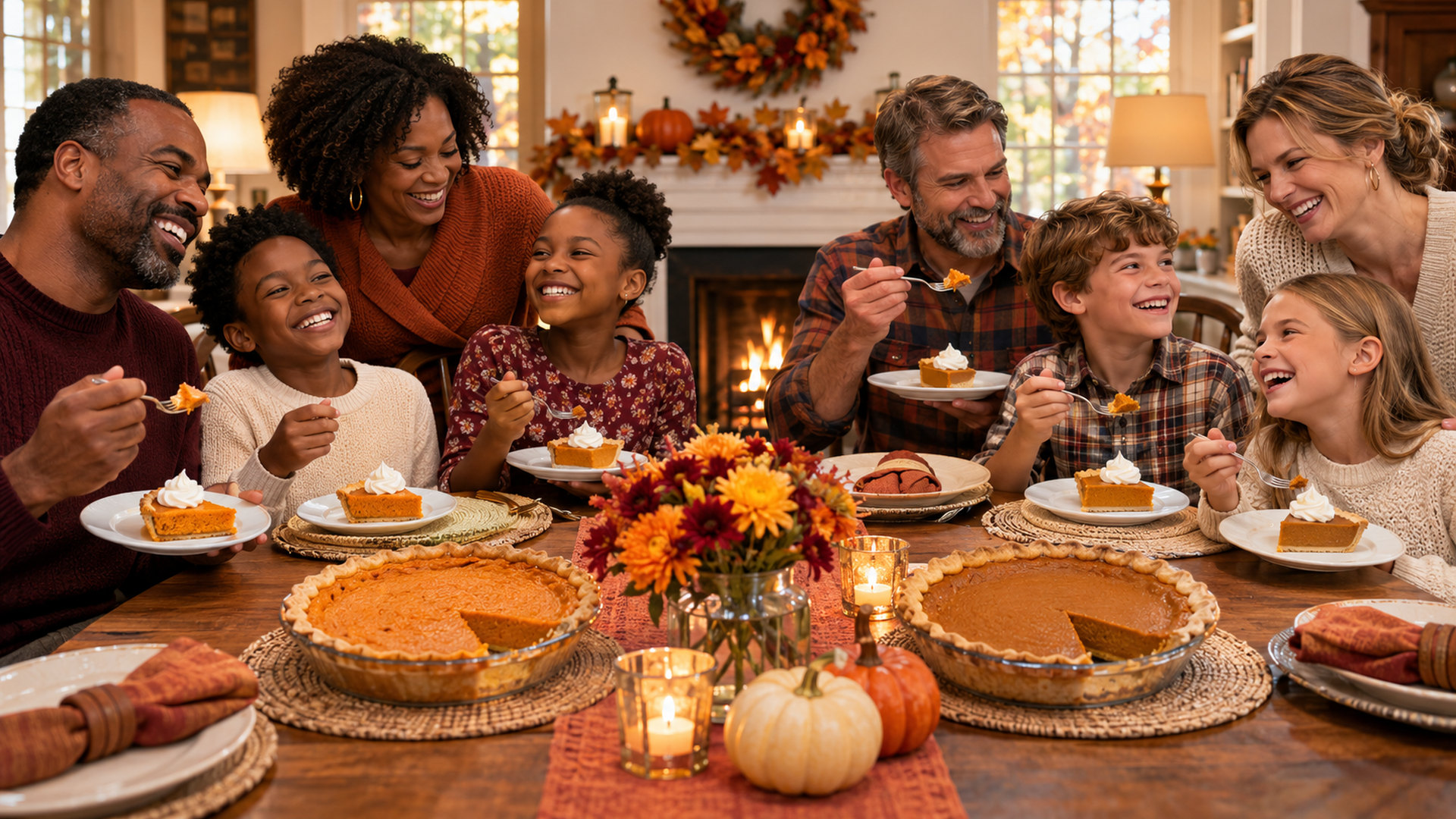
Thanksgiving dinner can bring families together, but put sweet potato pie and pumpkin pie on the same dessert table, and suddenly, everybody has an opinion. In plenty of Black households, sweet potato pie is practically a requirement, while pumpkin pie might get a serious side-eye. Although the desserts look similar, their ingredients, flavors, and cultural histories explain why one became a soul food staple and the other is often associated with white American Thanksgiving traditions.
The difference starts with what’s actually inside the pie. Sweet potato pie is typically made by baking or boiling sweet potatoes, removing their skins, and mashing the flesh until smooth. Bakers then mix in butter, sugar, eggs, milk or evaporated milk, vanilla, and spices like cinnamon and nutmeg before pouring the filling into a crust.
Pumpkin pie follows a similar process, except it uses pumpkin purée, often canned, mixed with eggs, sugar, milk or cream, and spices. Pumpkin has a milder natural flavor, meaning cinnamon, ginger, cloves, and nutmeg often do more of the heavy lifting. Sweet potato pie usually tastes richer, sweeter, and more buttery, while pumpkin pie tends to have a softer, more heavily spiced custard filling.
But how did sweet potato pie become such a big deal in Black culture?
The answer goes back centuries. Sweet potatoes originated in the Americas, but they reminded enslaved Africans of familiar West African foods, particularly yams. The crops also grew well in the American South, making them widely available.
Enslaved Black cooks helped transform sweet potatoes into the Southern dessert generations recognize today, adapting European pie-making traditions through their cooking skills.
Culinary historian Adrian Miller explained that connection during a 2023 interview with St. Louis Public Radio.


Made to order and shipped to your door.
“It’s really the expertise of these enslaved cooks, making something unfamiliar to them to please their slaveholders that eventually gets embraced and adopted,” Miller said.
As Black families carried Southern food traditions across the country during the Great Migration, sweet potato pie traveled with them. What began as a regional favorite became a holiday tradition passed down through generations.
The dessert also has an important place in Black history beyond Thanksgiving. During the Montgomery bus boycott, civil rights activist Georgia Gilmore sold homemade food, including sweet potato pies, to help finance transportation for Black residents refusing to ride segregated buses. Educator Mary McLeod Bethune also sold sweet potato pies to raise money and support her efforts to establish a school for Black girls.
So why is pumpkin pie considered a white Thanksgiving tradition?
Pumpkin pie became especially popular in New England, where pumpkins were readily available, and the dessert became closely connected to early American Thanksgiving celebrations.
In 1827, writer Sarah Josepha Hale featured pumpkin pie in her novel “Northwood,” helping establish its image as an essential holiday dessert. When Thanksgiving became a national holiday in 1863, Northern food traditions gained wider recognition. Commercially canned pumpkin later made the dessert even easier to prepare.
That history helps explain why pumpkin pie became associated with white Northern households, while sweet potato pie remained strongly connected to Black Southern cooking.
However, the racial divide is a cultural stereotype, not a rule. Black families eat pumpkin pie, white families eat sweet potato pie, and plenty of households serve both.
Culinary historian Michael W. Twitty addressed the rivalry in a 2025 Associated Press interview.
“We can have fun with good-natured ribbing between regions and cultures,” Twitty said. “At the same time, don’t let it get too serious to the point where it’s like hard, fast markers of who you are, who I am, who we are.”
Still, for many Black families, sweet potato pie represents something bigger than dessert. It’s Grandma’s recipe, somebody’s auntie guarding her ingredients, and a holiday tradition that connects generations.