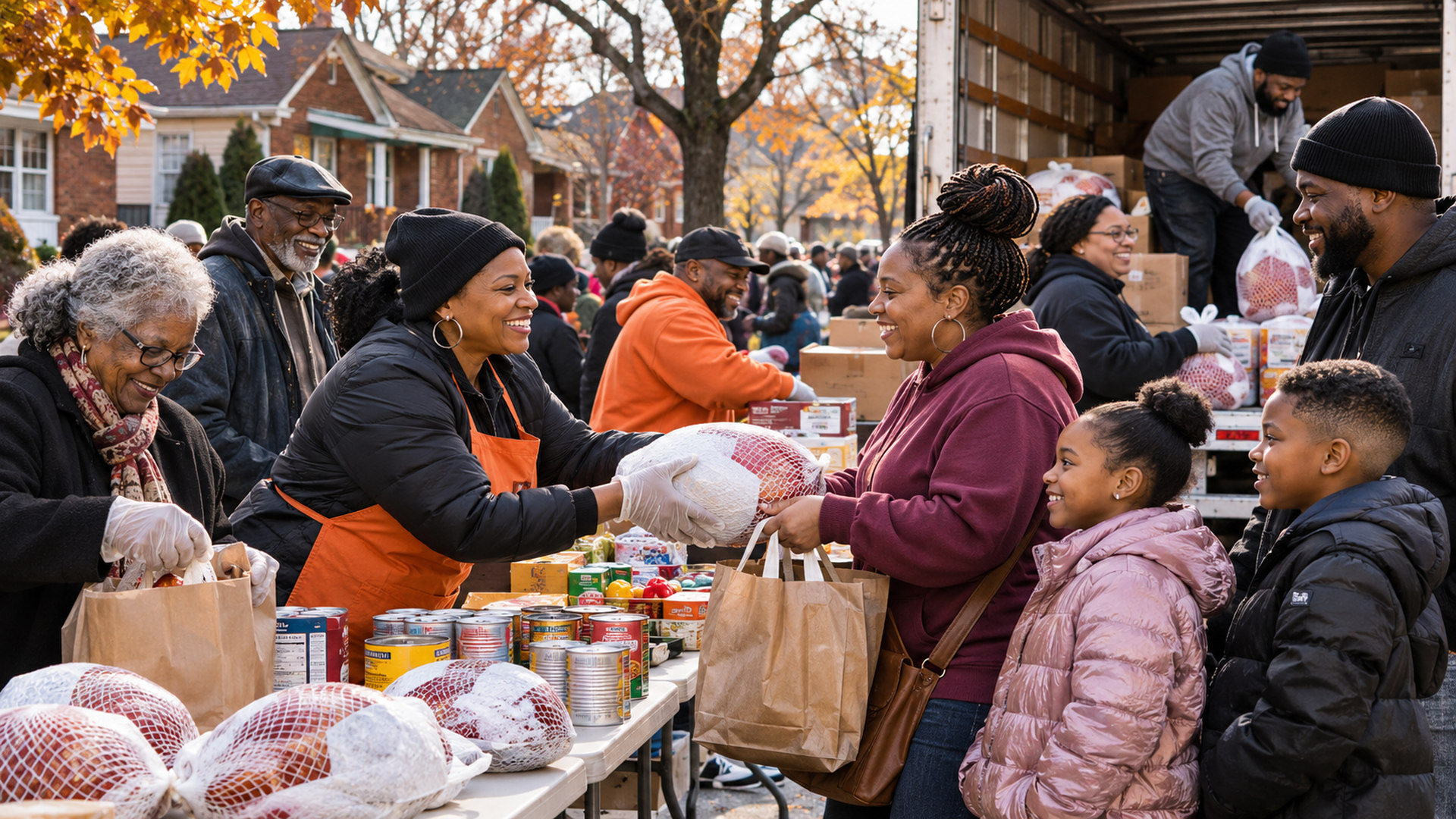
Turkey drives are at the center of a Thanksgiving argument after content creator Nick Love urged people to stop handing out frozen birds and start treating families to restaurant meals. His November 21 post set off a heated debate on social media about generosity, dignity, and whether the holiday tradition needs an upgrade.
“STOP DOING TURKEY DRIVES!” Love wrote on X, suggesting donors rent out steakhouses, soul food restaurants, or Italian spots. “Rent out a restaurant and let folks eat like you eat for a day,” he added. Love said he had organized that kind of meal himself, though he offered no details about the event.
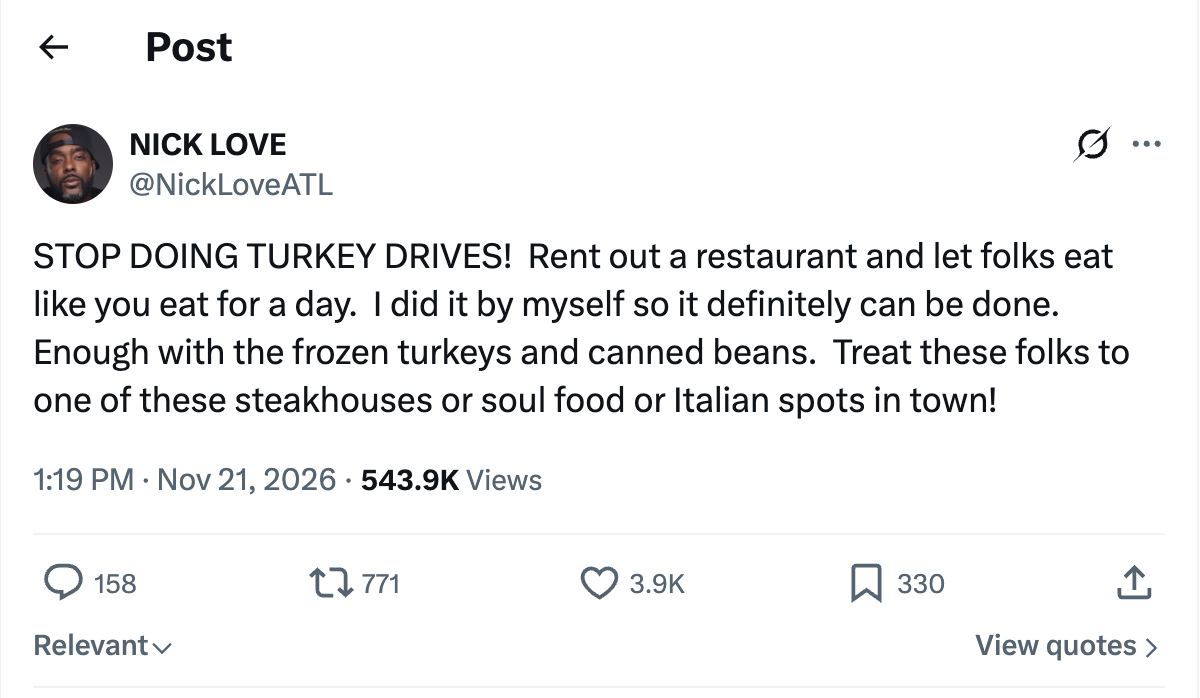
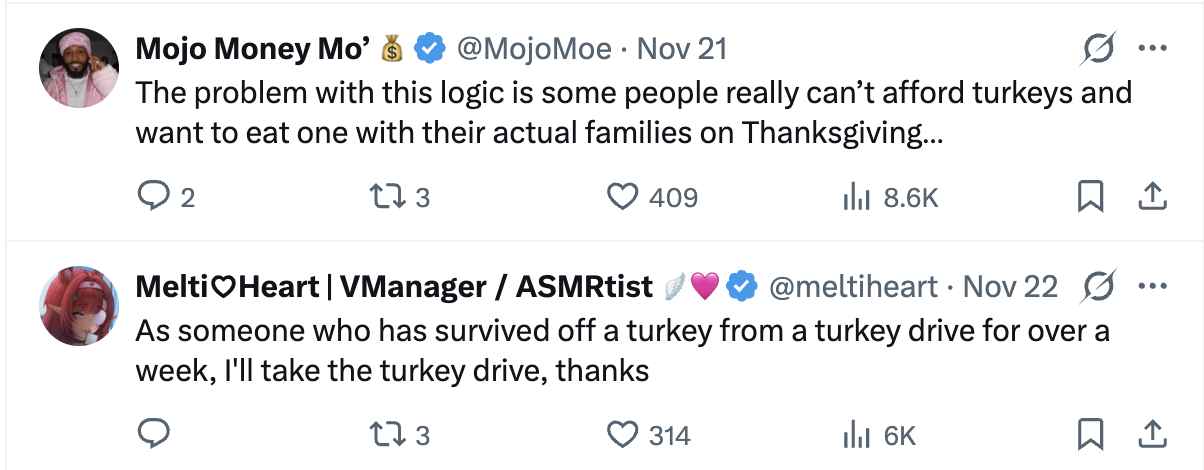
The responses came fast. X user @meltiheart said a turkey from a drive once fed them for more than a week. @MojoMoe pointed out that people struggling to buy groceries still want to enjoy Thanksgiving dinner with their families. Love later clarified that he wasn’t asking restaurant workers to give up Thanksgiving Day. His idea was to host meals before the holiday, when giveaways generally happen.
Thanksgiving food giveaways didn’t start with celebrities or Instagram photo ops. In 1872, New York’s Water Street Mission provided a holiday dinner for 150 struggling neighbors. Salvation Army groups were serving Thanksgiving meals by the 1880s, and records from 1893 describe free dinners in several American cities. Those early efforts focused on feeding people on the spot, much closer to Love’s restaurant idea than today’s drive-through handoffs.
The take-home turkey basket grew alongside America’s food bank network. The first modern U.S. food bank opened in Phoenix in 1967, and the model expanded during the 1980s. Churches, charities, and grocery stores organized holiday boxes so families could prepare meals at home. In Spokane, Washington, the Salvation Army was distributing Thanksgiving baskets with turkeys in the 1980s.


Made to order and shipped to your door.
In many neighborhoods, turkey drives became an extension of what churches, local businesses, and neighbors were already doing: sharing what they had. The Black Panther Party’s free breakfast program, launched in Oakland in 1969, was not a Thanksgiving giveaway, but it belongs to the longer history of community-led food programs that met immediate needs without waiting for somebody else to step in.
Hip-hop artists later made turkey drives a familiar part of Thanksgiving week. MC Hammer’s giveaways in Oakland inspired rapper Mistah F.A.B., who had reached his 19th annual giveaway by 2023. T.I. has hosted a turkey drive in Atlanta since 2005, involving his children and other relatives. His 2025 event included groceries such as collard greens, eggs, bread, and milk. For many artists, returning home with food has become a way to share their success with the neighborhoods that raised them.
And they’re still happening this year. On November 21, Busta Rhymes returned to his old Brooklyn elementary school for a community giveaway that included turkeys, winter coats, and resource workshops. A November 14 event backed by Flo Rida prepared 225 Thanksgiving food boxes in Miami Gardens. In Houston, 50 Cent’s G-Unity Foundation partnered with the Rockets and Kroger on an estimated 1,000 turkeys and holiday meal essentials in 2025.
The need has never been limited to one Thursday. The latest available USDA figures show 47.9 million people lived in food-insecure U.S. households in 2024. For many families, a free turkey means money can go toward rent, electricity, or other groceries. A special dinner offers something different, but it won’t necessarily fill the refrigerator the next morning.
Food banks also know that frozen birds aren’t always the easiest donation. Feeding America says some food banks can’t safely store individually donated turkeys and may be able to buy more food with cash contributions.
Loyola University Chicago professor Irem Sengul Orgut, who studies food distribution, explained, “Funding provides new flexibility to food banks, allowing them to buy high-demand items when donations don’t keep up.” She also encourages people to give throughout the year, not only during the holidays.
Then there’s the question of choice. A NORC at the University of Chicago evaluation found that letting pantry visitors choose their groceries improved satisfaction and reduced food waste. Researcher Kevin Brown said, “More choice at food pantries allows neighbors to pick culturally appropriate foods that better meet their family’s needs.”
Love’s steakhouse proposal speaks to one kind of care, while traditional turkey drives serve another. Some people would gladly sit down to a restaurant dinner. Others want the ingredients to make their own.