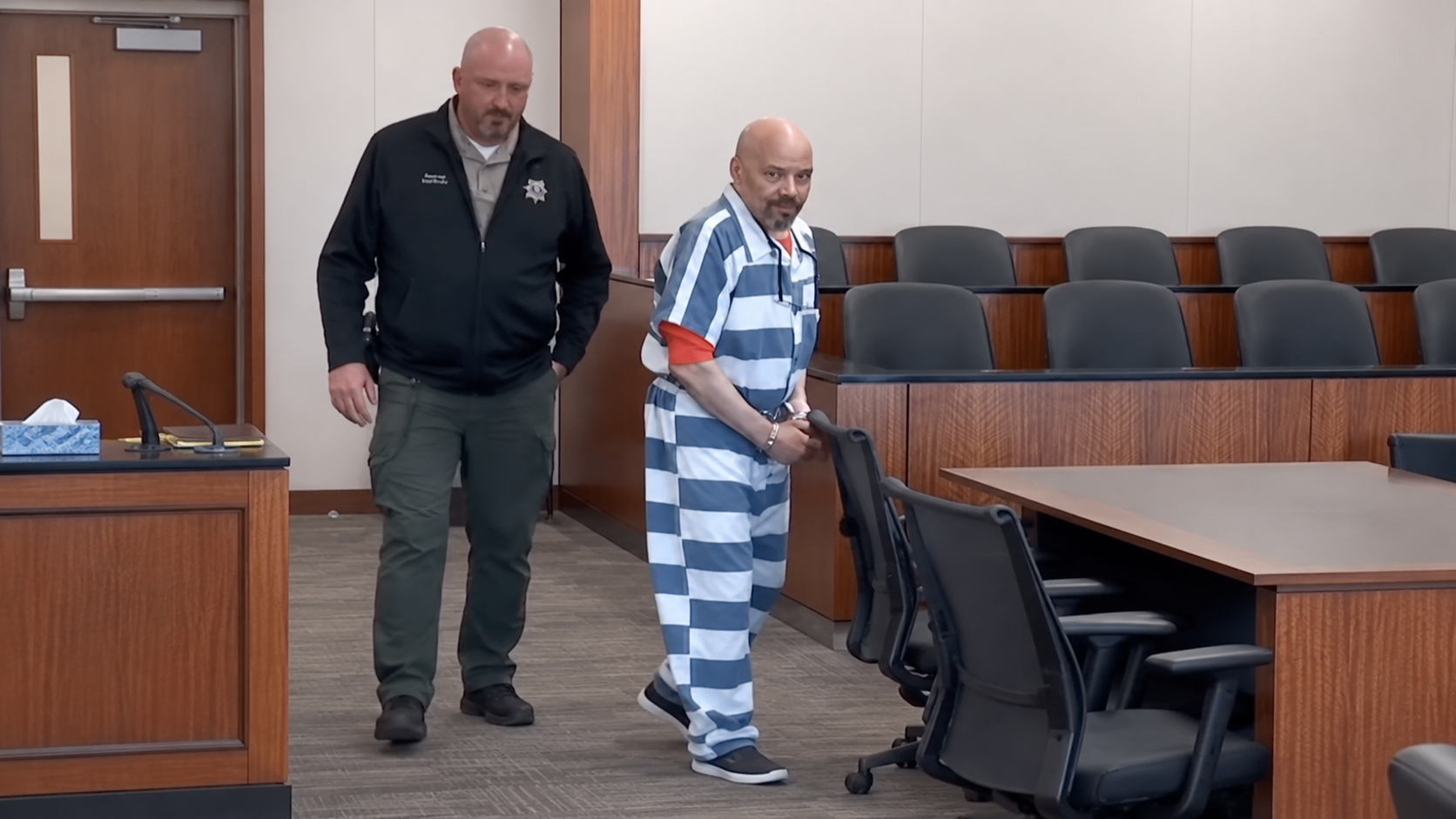
Douglas Stewart Carter walked out of a Utah jail Monday after spending roughly four decades behind bars, much of that time under a death sentence, as newly analyzed DNA evidence further weakened the murder case that once put his life on the line.
Video
According to the Associated Press, a judge granted Carter bail on September 28 while prosecutors reconsider the aggravated murder case against him in the 1985 killing of Eva Olesen. Carter, now 71, must wear a GPS monitor and cannot contact Olesen’s family while awaiting a new trial.
The Douglas Carter DNA evidence became a major development after prosecutors received results on September 22. According to the Associated Press, testing excluded Carter as a possible source of blood recovered from a doorknob and genetic material found on the handle of a knife used in the attack. Olesen was stabbed and shot inside her Provo home.
Fourth District Judge Derek Pullan said the DNA results further undermined the prosecution’s case, according to AP, although he also concluded that the remaining evidence could still allow a reasonable jury to find Carter guilty. Carter has maintained his innocence, and the pending aggravated murder charge has not been dismissed.
The release marks another dramatic turn in a case that has been unraveling for years.
According to the Utah Supreme Court’s 2025 decision in Carter v. State, Carter was convicted in 1985 even though there was no physical evidence tying him to the crime scene. Prosecutors relied heavily on a signed confession and testimony from Epifanio and Lucia Tovar, who said Carter made incriminating statements to them.
Carter has long maintained that police coerced the confession. According to AP, he was arrested in Nashville in June 1985 and signed the statement while being interrogated by a Provo detective. Carter later said officers repeatedly threatened him before he falsely confessed.
The Douglas Carter DNA evidence is especially significant because of what later emerged about the witnesses who helped prosecutors corroborate that confession.
According to the Utah Supreme Court, the Tovars eventually signed sworn declarations saying police threatened them, pressured them to make false statements, and instructed them to conceal financial assistance they received from law enforcement. The court found that officers instructed important prosecution witnesses to lie and that a prosecutor failed to correct testimony he knew was false.
In May 2025, the Utah Supreme Court unanimously upheld a lower court decision vacating Carter’s conviction and death sentence and granting him a new trial. The court described what happened as “multiple instances of intentional misconduct” involving two police officers and a prosecutor.
The court wrote that the constitutional violations were serious enough to undermine confidence in both Carter’s conviction and sentence.
The new DNA findings have now pushed prosecutors even further from the original case. According to KSL’s reporting on the prosecution filing, Utah County prosecutors withdrew their notice seeking the death penalty after receiving the DNA report and said they would reexamine whether the prosecution should continue.
At Monday’s hearing, Utah County prosecutor Erwin Petilos said reconsidering Carter’s bail was “necessary and fair,” according to AP, as prosecutors review what evidence remains.
Carter’s attorney Neal Hamilton is pushing for the case to end completely.
“If the state of Utah had their way, he would have been executed 15, 20 years ago before we discovered the misconduct,” Hamilton said, according to AP.
Carter’s release also begins an adjustment few people experience. According to AP, his son, Tyler Anger, was adopted by another family as an infant and did not learn about his father’s conviction until years later. Carter is expected to stay near his son while adjusting to life outside incarceration.
“This is going to be a lot for him,” Anger said while waiting for his father’s release.
Questions also remain about other possible suspects. According to AP, Carter’s defense attorneys have argued that witnesses reported seeing a white man fleeing the crime scene and alleged that investigators suppressed evidence involving other potential suspects, including Olesen’s husband, Orla Olesen, who died in 2009. Those claims remain defense allegations and have not resulted in another person being charged with Eva Olesen’s killing.
Olesen’s family, meanwhile, continues to seek answers and has expressed concern about Carter’s release.
“By golly we were hoping for a concrete match,” Theresa Olesen, Eva Olesen’s daughter-in-law, said during the bond hearing, according to AP. “It doesn’t mean he wasn’t there.”
“We just want justice for Eva. And if he had any part of it, we want that to be known,” she added.
For Carter, the Douglas Carter DNA evidence means he no longer has to wait for his next trial from behind jail walls. But his legal fight is not over. Prosecutors are still reviewing the case, the aggravated murder charge remains pending, and the question now facing Utah County is whether a prosecution already overturned because of serious misconduct can move forward after DNA from critical pieces of crime scene evidence excluded the man it once sought to execute.