

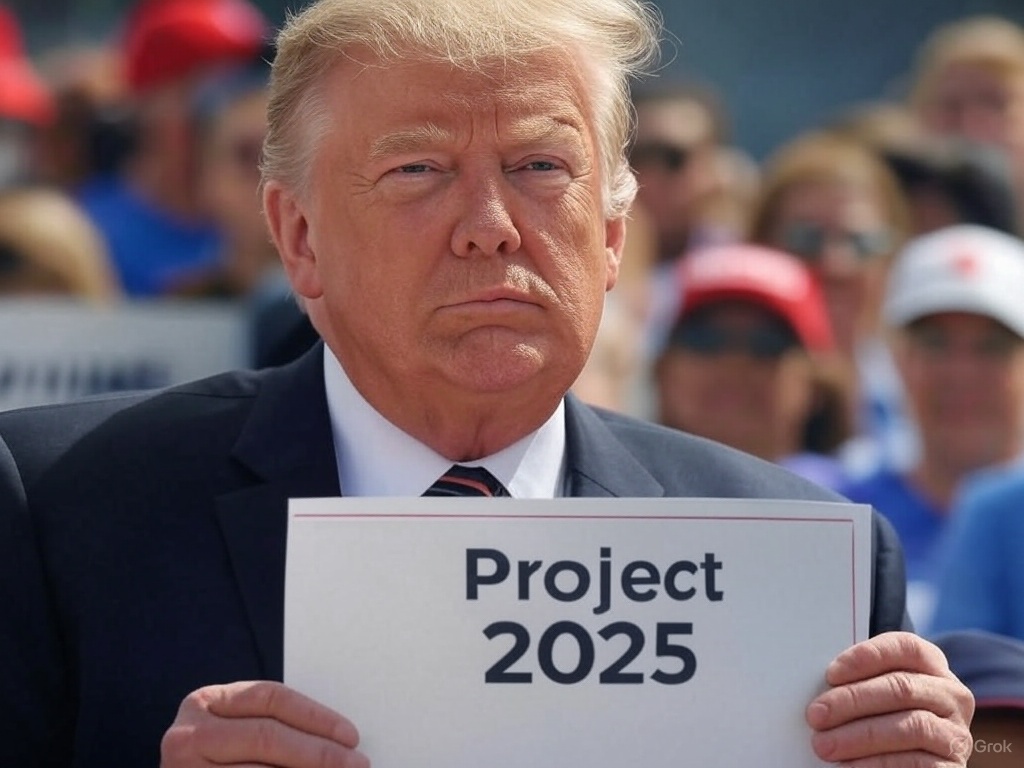
Project 2025 has moved much further than most people realize, and the groups keeping count agree on the direction even when they disagree on the math.
One tracker following the blueprint across 34 federal agencies counts 321 objectives, with 141 marked complete and another 70 underway. That is roughly 44 percent finished and about two thirds either done or in motion. The Center for Progressive Reform, working with Governing for Impact, tracks a different and larger list of 532 recommended executive actions across 20 agencies and found that 283 of them, about 53 percent, had been initiated or completed within the first twelve months. The numbers differ because the lists differ. The trend does not.
Start with what is already done, because that list is longer than the campaign coverage suggested it would be.
On food and household assistance, the reconciliation bill carried two items straight off the blueprint. It rolled back updates to the Thrifty Food Plan, which is the formula the government uses to calculate how much money a household actually receives in food stamp benefits. Adjusting it downward does not change who qualifies, it changes how much food a family can buy. The same bill imposed stricter work requirements on SNAP recipients. Separately, staff at the Low Income Home Energy Assistance Program, which helps families cover heating and cooling costs, were fired, and the program was sharply limited.
On the environment, the EPA finalized the rescission of the 2009 endangerment finding, which was the legal foundation for federal climate regulation. Interior finalized a rule narrowing critical habitat protections so drilling, mining and logging can proceed as long as animals are not directly killed. The Center for Western Priorities found that nearly 70 percent of the fossil fuel related actions in the blueprint have been implemented, with another 20 percent in progress.
On health and reproductive policy, Reproductive Freedom for All tracks 57 actions and counts 24 completed with 10 more in progress. HHS canceled 53 of the 67 grants in the Teen Pregnancy Prevention program and now requires recipients to teach abstinence as the only method. The National Institutes of Health stopped funding research using human fetal tissue.
On government structure, the administration stripped collective bargaining rights from federal workers across 18 departments, a move currently tied up in court. Treasury permanently halted collection of ownership data on private American companies that had been required under the Corporate Transparency Act. The military drew down forces in Europe, including 5,000 troops out of Germany. Four agencies have completed every objective on their list, including USAID.
The most underrated piece is personnel, and it explains the pace of everything above. Russell Vought, one of the blueprint’s architects, runs the Office of Management and Budget, which he has described as the nerve center a president uses to push influence across the entire federal government. Peter Navarro, who wrote the trade section, is a top trade adviser. Brendan Carr, who wrote the chapter recommending changes at the Federal Communications Commission, now runs the FCC. The people who wrote the plan are the people executing it.
Now what is in motion but unfinished. The Department of Education has been hollowed out with the groundwork laid to dismantle it, but it still exists, because eliminating a cabinet department requires Congress. The Department of Homeland Security’s Office of Intelligence and Analysis, which the blueprint accused of being weaponized for domestic political purposes, has been targeted for major downsizing but has not been eliminated. On federal land protection, less than 20 percent of the identified actions are done, but nearly 70 percent are in progress, including efforts to rescind the Public Lands Rule and the Roadless Rule.
And then there is the part that has not happened, which tells you where the limits are.
Almost everything still outstanding requires Congress rather than an executive order. The blueprint calls for a standalone cabinet level border and immigration agency built out of Customs and Border Protection and ICE. That has not been created. It calls for moving detention of immigrant children from HHS to DHS and repealing anti trafficking protections for unaccompanied children. Congress has not done either. It calls for amending the Fair Labor Standards Act so that work on the Sabbath requires time and a half. That has not moved.
On abortion, the blueprint calls for nationwide restrictions. That has not been enacted, and other reproductive items, including eliminating the emergency contraceptive sometimes called the week after pill, remain undone.
The wild horse item is the clearest illustration of how the split works, and it connects to a story Baller Alert covered this week. Project 2025 asks Congress to let the Bureau of Land Management humanely dispose of wild horses and burros. Every year Congress writes language into the Interior funding bill barring the agency from using federal money to kill healthy wild horses or sell them for slaughter. The fiscal 2026 budget proposal omitted that language, exactly as the blueprint recommended. The House Appropriations Committee put it back in. The protection survived because a committee reinserted a sentence.
That is the pattern across the whole thing. What one person can do with a signature has largely been done. What requires 218 votes in the House and 60 in the Senate has mostly not been. Which is why the midterms in November matter more to this agenda than any single policy fight, and why the remaining items are worth watching closely rather than assuming the window has closed.
Trump distanced himself from Project 2025 repeatedly during the 2024 campaign, saying he had not read it and did not know who was behind it. The Heritage Foundation produced it with contributions from people who now hold positions across his administration.
