
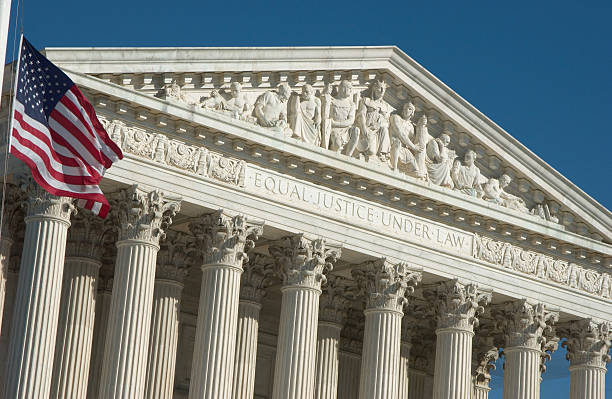
What happened today is the Supreme Court ruled 6 to 3 in Louisiana v. Callais and effectively gutted Section 2 of the Voting Rights Act without technically striking it down. Alito wrote the majority. Kagan wrote a blistering dissent saying Section 2 is now “all but a dead letter.” Both readings are accurate. The law still exists on paper. In practice it can no longer do the work it was passed to do.
Here’s the case in plain English. Louisiana is one third Black. After the 2020 census, Republican lawmakers drew six congressional districts and gave Black voters a real shot at electing their candidate of choice in only one of them. Black voters sued under Section 2, won, and the state was forced to redraw the map with a second majority Black district. Then a group of white plaintiffs (organized and bankrolled by the same conservative legal network that’s been chipping away at the VRA for over a decade) turned around and sued the new map, claiming the fix itself was unconstitutional racial discrimination against them. The Supreme Court agreed with the white plaintiffs.
What that means for actual voters is this. Section 2 used to say you could challenge a map if it had the effect of diluting Black or Latino voting power, even without a smoking gun. After today, the Court says you basically have to prove the people who drew the map intended to discriminate. Lawmakers don’t write that down. They never have. So the standard of proof is now something almost no plaintiff will ever meet. Every analyst (NAACP, ACLU, Brennan Center, LDF) is saying the same thing: the door to challenge a racially rigged map just closed.
The political math is brutal. NPR’s analysis says white candidates could end up winning around 15 House seats currently held by Black members of Congress. Fair Fight and Black Voters Matter say Republicans could flip up to 19 majority minority seats across the South. Texas, Missouri, North Carolina, and Ohio have already redrawn maps to squeeze out Black political power. Florida is in a special session doing it right now. This is being called the largest reduction in Black congressional representation since Reconstruction. Kagan said that out loud in her dissent.
For our audience the bigger picture matters. In 2013 the Court (Shelby County v. Holder) killed pre-clearance, which was the part of the VRA that made states with a history of racial discrimination get federal approval before changing voting rules. Section 2 became the last real tool standing. In 2019 the Court ruled (Rucho v. Common Cause) that federal courts can’t touch partisan gerrymandering at all. Stack those three rulings on top of each other and what you have is a Court that has dismantled almost every legal protection against rigged maps in 13 years. Today was the closing move.
The Trump administration sided with Louisiana in this case. The same administration that has been pushing red states to redraw maps mid-decade specifically to hold the House. This decision came too late to reshape November’s midterms in any major way, but the redistricting wave it unleashes is aimed at locking in House control through 2028 and beyond.
What’s the path forward. Litigation under Section 2 is mostly cooked. The realistic levers now are state constitutions and state courts (where Black voters in some states still have protections), congressional action (which requires flipping the House and Senate and ending the filibuster, none of which is happening soon), and old fashioned mobilization. Derrick Johnson at the NAACP said it bluntly today. The ballot box is now both the offense and the defense.
The bottom line for the audience. Your vote isn’t being taken from you. It’s being diluted by design, and the legal mechanism Black communities used to fight that dilution for 60 years just got disabled. Knowing how the map gets drawn in your state, which lawmakers are drawing it, and showing up in the off years when nobody is watching matters more now than it has in a generation.