

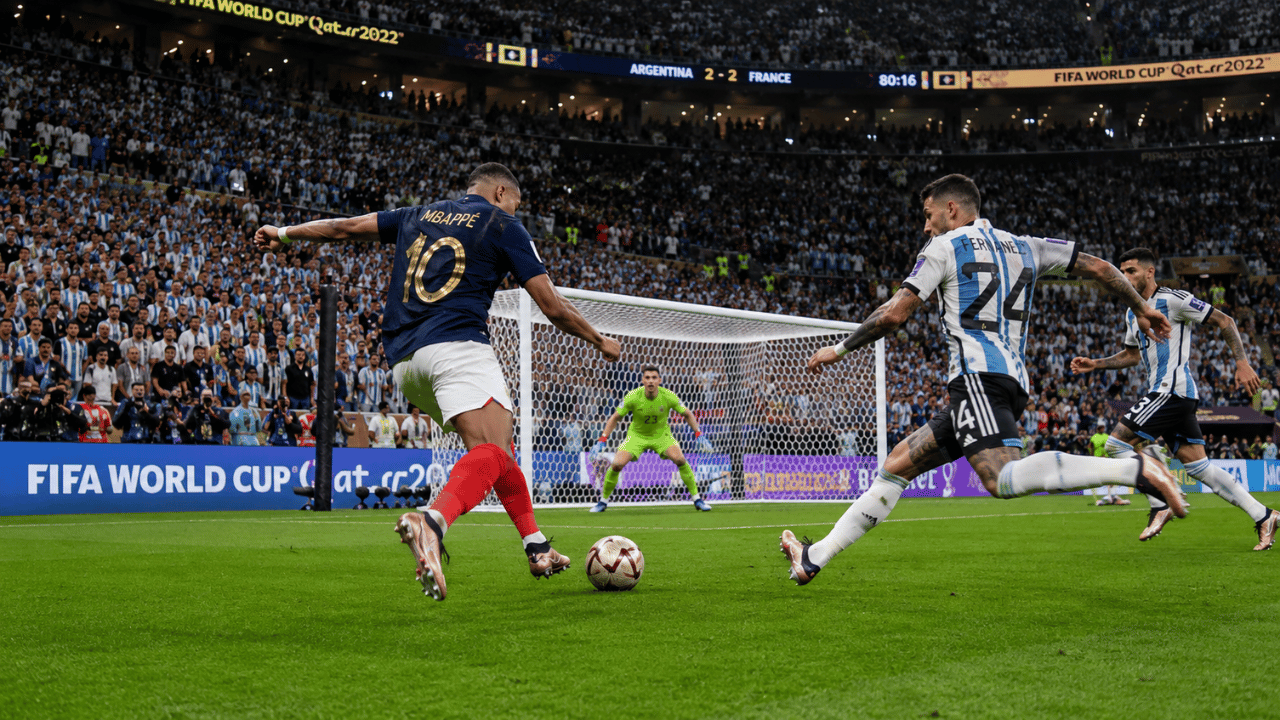
If you spent the last month glued to a World Cup match for the first time in your life, you are not alone, and you are definitely not the only one who assumed this only happens once a year. A lot of new fans got a crash course in soccer culture over the past few weeks, and now that Spain has claimed the trophy with a hard fought extra time win over Argentina, plenty of people are asking the same question. What now? The good news is that soccer does not just disappear until the next World Cup rolls around. In fact, it barely slows down at all.
First, let’s close the loop on how the tournament actually ended. Spain beat Argentina 1-0 in the final at MetLife Stadium in New Jersey, with substitute Ferran Torres scoring the game’s only goal deep into extra time. It was Spain’s second World Cup title, adding to the one they won back in 2010, and it came at the expense of a heartbreaking final chapter for Lionel Messi, who has said this tournament was his last World Cup appearance. The win also made history in a different way. With the Spanish women’s national team currently ranked number one in the world and reigning as Women’s World Cup champions, Spain became the first country ever to hold both the men’s and women’s World Cup titles at the same time.
Now, about the four year gap. Unlike a lot of American sports that crown a champion every single year, the World Cup only happens once every four years because it is built around a massive global qualifying process. Nearly every country with a national soccer program spends years playing qualifying matches just to earn one of the limited spots in the tournament. That long buildup is part of what makes the World Cup feel like such a massive event when it finally arrives, but it also means fans have to wait a while before the next one. Mark your calendar for 2030, when the tournament heads to Spain, Portugal, and Morocco, marking the first time the men’s World Cup has ever been played in either Portugal or Morocco. To celebrate the tournament’s 100th anniversary, a handful of opening matches will actually be played in Uruguay, Argentina, and Paraguay as a nod to where the very first World Cup took place back in 1930.
But here is the part most new fans do not realize. Soccer does not go quiet in the years between World Cups. If you are looking for something to follow closer to home, Major League Soccer is already back in action. MLS paused its 2026 season for seven weeks to let players report to their national teams, and the league resumed play on July 16, just days before the World Cup final. The regular season runs through early November, followed by the playoffs and a championship match, MLS Cup, expected in mid December. If you want to catch some of the sport’s biggest current stars without needing to fly overseas, Lionel Messi and Inter Miami are still very much part of that storyline heading into the back half of the season. There is also an MLS All Star Game coming up on July 29 in Charlotte, North Carolina, which is a fun, lower stakes way to see a bunch of the league’s top talent in one place.
For fans who fell in love with international competition specifically, there is more of that coming too. Copa América, the major tournament for South American national teams, is set to return in 2028, and there has already been chatter about whether Messi might make one more appearance there before fully stepping away from international play. On top of that, the biggest club teams in the world compete in their own domestic leagues every single year, not just every four years. Leagues like the Premier League in England, La Liga in Spain, and others typically kick off their new seasons in August and run through the following spring, which means fans looking to follow specific players they discovered during the World Cup will not have to wait long to see them again in club colors.
If all of this feels like a lot, the simplest way to think about it is this. The World Cup is soccer’s biggest stage because it only happens once every four years and puts entire countries, not just clubs, up against each other. But the sport itself runs year round, across leagues all over the world, with new seasons, new rivalries, and new storylines constantly unfolding. So if you caught yourself getting way too invested in a group stage match a few weeks ago, there is good news. You do not have to wait four years to feel that way again. You just have to know where to look.
