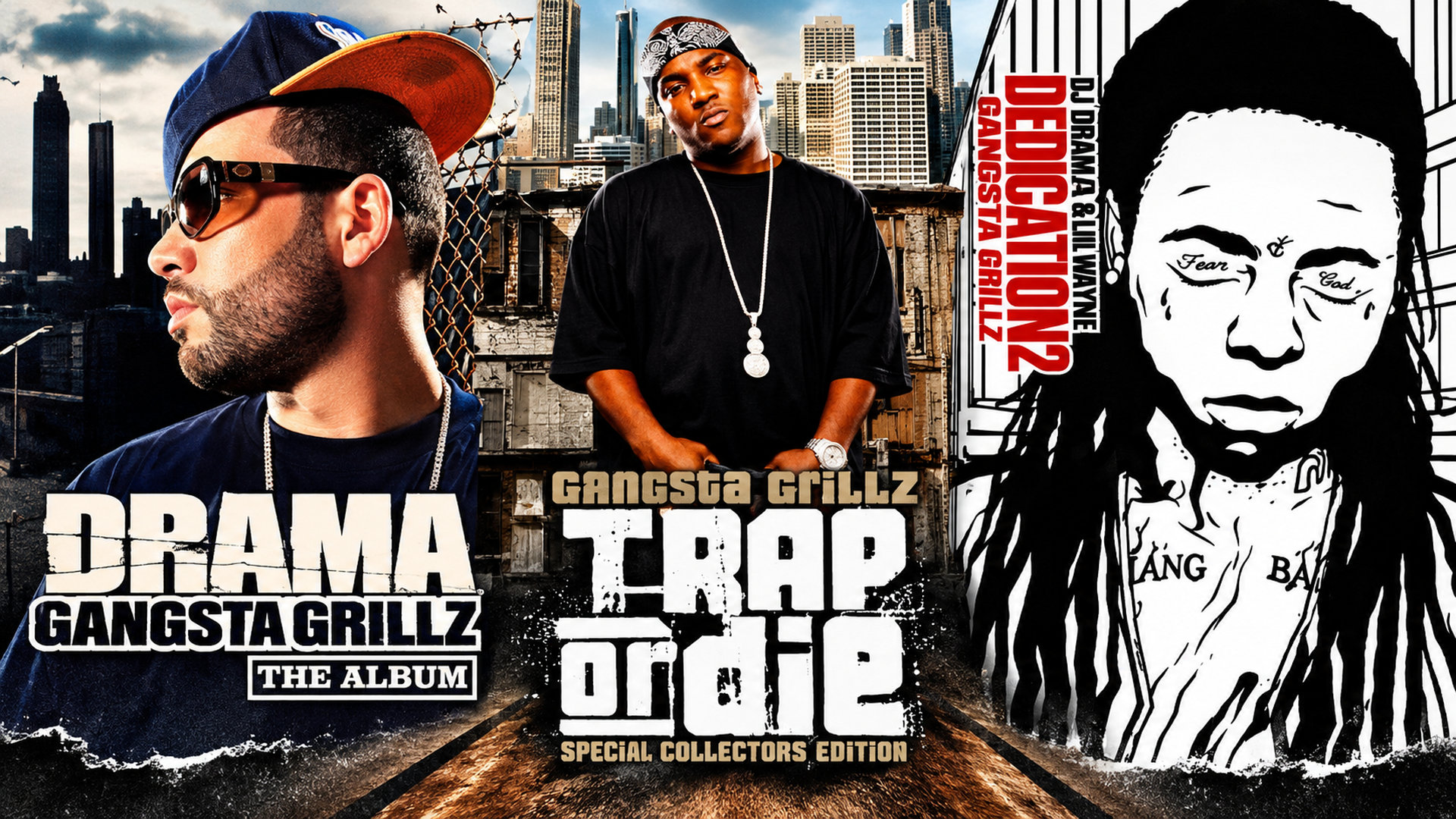
Before fans were arguing over first-week streaming numbers and rappers were previewing singles on TikTok, a DJ screaming “Gangsta Grillz” over a beat was enough to let everybody know something serious was about to drop.
Hip-hop fans were downloading ZIP files, burning CDs, refreshing DatPiff, and riding through their neighborhoods blasting songs that might never touch commercial radio. Mixtapes weren’t simply promotional projects. They could make careers, settle rap beefs, and give artists more credibility in the streets than a platinum-selling album.
But somewhere between copyright lawsuits, the disappearance of independent mixtape platforms, and the rise of streaming services, one of hip-hop’s most influential traditions lost its grip on the culture.
Before digital downloads became the standard, DJs like DJ Clue, DJ Kay Slay, DJ Whoo Kid, and DJ Drama helped turn mixtapes into essential listening. Getting an exclusive freestyle or unreleased record from a major rapper could make a DJ’s project one of the hottest commodities in the neighborhood.
DJ Drama took that formula to another level with his “Gangsta Grillz” series, helping Southern hip-hop command national attention. Jeezy’s “Trap or Die” and Lil Wayne’s “Dedication 2” became career-defining projects.
However, the business faced a major setback in January 2007 when authorities raided Drama’s Atlanta studio. Drama and fellow DJ Don Cannon were arrested in connection with allegations of bootlegging and racketeering, although neither was ultimately prosecuted.
The raid exposed a contradiction within the music industry. Mixtapes helped generate excitement around artists whose albums benefited record labels, yet distributing music without proper authorization presented serious copyright concerns.


Made to order and shipped to your door.
Instead of disappearing, mixtape culture found a new home online.
Launched in 2005, DatPiff became a digital headquarters for hip-hop fans. Alongside LiveMixtapes and eventually Spinrilla, the platform gave rappers direct access to listeners without depending entirely on traditional radio or major-label release schedules.
Gucci Mane flooded the streets with new music. Lil Wayne demolished other rappers’ instrumentals. Wiz Khalifa delivered “Kush & Orange Juice,” while Future’s run of projects, including “Monster,” “Beast Mode,” and “56 Nights,” helped cement his superstar status.
Artists could build enormous followings by giving music away and turning that popularity into touring opportunities, club bookings, merchandise sales, and eventually commercial releases.
Streaming changed those incentives.
With Spotify and Apple Music offering access to massive music catalogs, downloading individual mixtapes became less necessary. Artists could also generate royalties from projects that previously would have been distributed for free.
Drake’s commercially released 2015 project, “If You’re Reading This It’s Too Late,” exemplified how the distinction between albums and mixtapes was becoming increasingly blurred.
“The blogs took over as far as being the sources for mixtapes, and now we have playlists,” Drama told GQ in 2021.
When Lil Wayne’s 2009 classic “No Ceilings” arrived on streaming services in August 2020, ten original tracks and skits were absent. Similarly, Chance the Rapper’s “Acid Rap” initially arrived on major streaming platforms in 2019 without its original recording of “Juice” because of sample clearance complications.
The biggest warning signs came in 2023. DatPiff experienced major disruptions and subsequently announced a partnership with the Internet Archive to preserve its catalog. Meanwhile, Spinrilla was ordered to shut down following a $50 million copyright infringement judgment involving major record companies.
Even DJ Drama acknowledged the industry’s transformation during a 2021 interview with Rolling Stone.
“It had to take a backseat to streaming and playlists,” he said of traditional mixtape culture.
Still, the spirit of the mixtape hasn’t completely disappeared. Tyler, the Creator’s Grammy-winning “Call Me If You Get Lost,” featuring Drama’s signature narration, demonstrated that the format’s creative influence remains powerful.
What hip-hop lost wasn’t necessarily the ability to release mixtapes. It lost an independent ecosystem where DJs could break records, underground artists could compete with superstars, and fans could discover their next favorite rapper without an algorithm telling them who to listen to.
Streaming may have made music more accessible, but anybody who remembers refreshing DatPiff on release day knows that convenience doesn’t always come with the same excitement.