

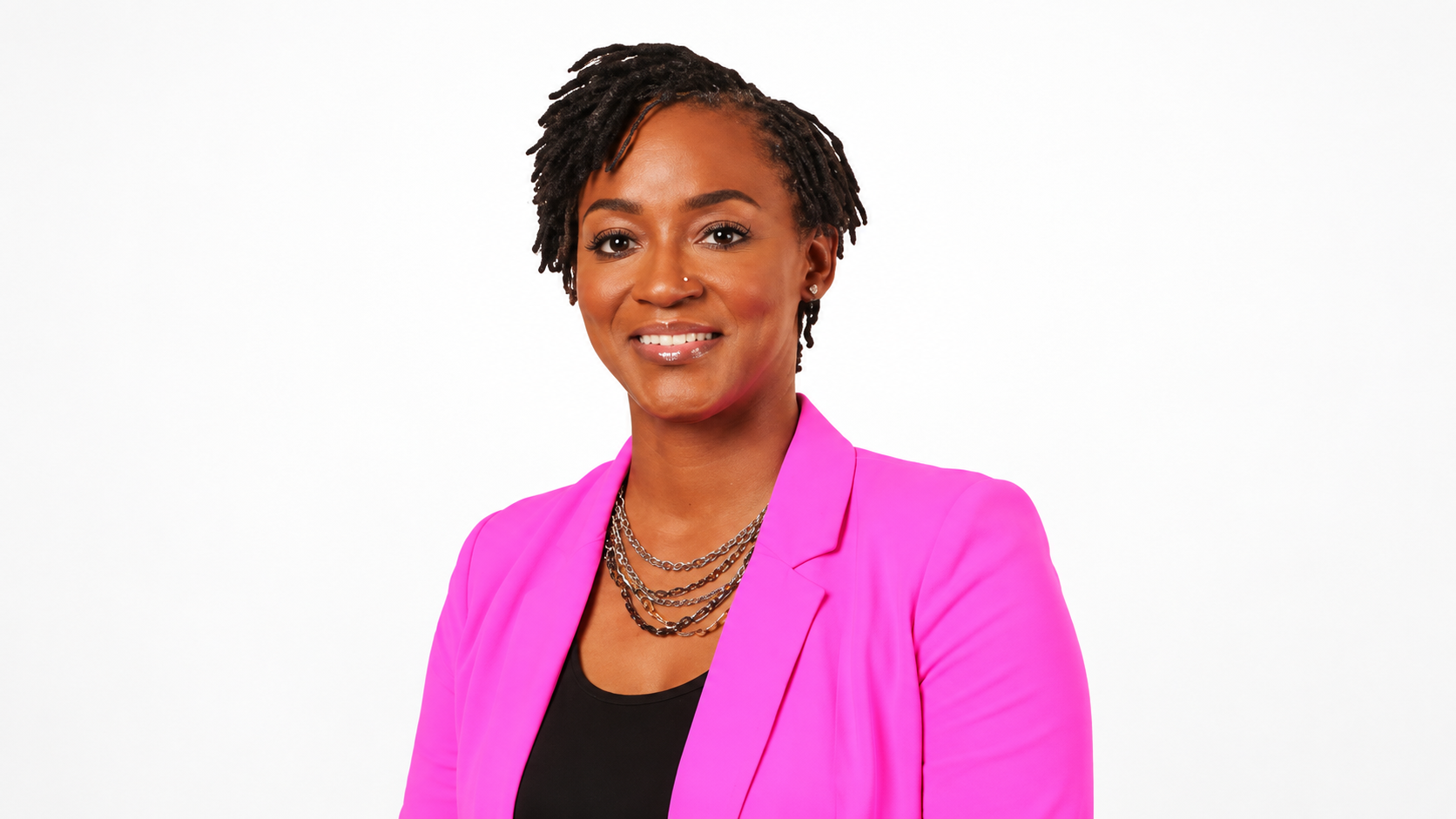
Angie Nixon lost Florida’s U.S. Senate race to Republican Ashley Moody on Tuesday night by less than three points, and she did it without a single dollar from the Democratic Senatorial Campaign Committee or the party’s biggest Senate super PAC.
Moody finished with about 50.9% of the vote to Nixon’s 48%. That margin would be a footnote anywhere else. In Florida, it is a warning. Trump carried the state by more than 13 points in 2024. Two years later, a Black woman from Jacksonville, a self described union organizer the GOP spent months calling a radical, cut that lead down to under three. That is roughly a 10 point swing toward Democrats in a state the party had basically written off.
That includes her own party’s Senate campaign arm. The Democratic Senatorial Campaign Committee, the official arm that funds the party’s Senate candidates, spent nothing on Nixon. Neither did Senate Majority PAC, the biggest Democratic super PAC focused on Senate races. Both poured hundreds of millions of dollars into Senate contests in other states. Florida’s Black Democratic nominee got zero. Chuck Schumer did give her money from his own PAC and hosted a virtual fundraiser for her in the final weeks, but the Senate campaign committee, chaired by Kirsten Gillibrand, whom Schumer selected, never followed with the kind of money it sent everywhere else.
So Angie Nixon built it herself. Her campaign raised nearly $11.5 million, and around $11 million of that came from individual donors. Regular people. Moody, meanwhile, had the money to flood television in a state of 23 million people where ad time is brutally expensive. She declined to debate Nixon and did far fewer public events. Nixon went everywhere, from Black churches in Palm Beach County to Little Havana to rallies with Alexandria Ocasio-Cortez in Kissimmee, and she still came up just short.
Nobody handed her this race. Angie Nixon grew up in the Moncrief neighborhood of Jacksonville and raised her daughter as a single mother for 12 years. Before politics, she worked as a union organizer and ran Florida for All, a statewide coalition of progressive groups that helped register tens of thousands of voters. She and her daughter opened a small shop in Jacksonville in 2019, and she cofounded the Melanin Market, a gathering spot for Black owned businesses. She also runs a bookstore and community hub in her hometown.
In 2020, she beat a sitting incumbent to win her seat in the Florida House, and she went on to serve three terms. In Tallahassee, she pushed to expand child care and fought Gov. Ron DeSantis’s redistricting maps. Redistricting is the process of redrawing voting district lines, and when one party draws them to lock in its own advantage, that is called gerrymandering. Nixon was one of the loudest voices against it.
When she launched her Senate run in January, most of Florida had never heard her name. In August, she beat Alex Vindman in the Democratic primary by double digits, even though he outspent her. That win made her the second Black woman ever to win a major party Senate nomination in Florida and the first member of the Democratic Socialists of America, a progressive political organization, to win a Democratic Senate nomination anywhere in the country. Had she won Tuesday, she would have been the first Black person ever elected to represent Florida in the U.S. Senate.


Made to order and shipped to your door.
Angie Nixon ran on money in people’s pockets. She backed Medicare for All, a government health plan that would cover everyone with no premiums, deductibles or copays, including dental, vision, hearing, mental health care and prescriptions. She called for a national rent freeze and a halt on evictions, paid family and sick leave, a $25 minimum wage and a universal jobs program. She supported a wealth tax that would only apply to net worth above $1 billion, which hits fewer than 1,000 people in the entire country. And she promised to protect Social Security, Medicare and SNAP, the food assistance program, from cuts.
Now look at what Florida chose instead.
Moody was never elected to this seat. DeSantis appointed her in January 2025 after Marco Rubio left the Senate to become Trump’s secretary of state. Trump then gave her his “Complete and Total Endorsement,” and her campaign leaned hard on loyalty to his agenda. Her record shows it.
She voted for Trump’s so called “Big Beautiful Bill,” which passed the Senate 51 to 50 only after JD Vance broke the tie. That law carries roughly $1 trillion in Medicaid cuts over the next decade on top of cuts to SNAP, while handing out trillions in tax breaks that mostly benefit the wealthy. She was part of the Republican Congress that let enhanced Affordable Care Act subsidies expire, the extra help that kept health insurance premiums affordable. About 440,000 Floridians dropped their coverage this year, more than any other state. She also voted to confirm Emil Bove, Trump’s former personal defense lawyer, to a lifetime federal appeals court seat. The AFL-CIO, the country’s largest federation of labor unions, gave her a 0% score on votes that affect working people.
Then there is Hope Florida. When Moody was Florida’s attorney general, the state reached a Medicaid settlement with Centene, a company that runs Medicaid health plans. As part of that deal, $10 million went to the Hope Florida Foundation, a charity tied to first lady Casey DeSantis. Some of that money was later moved to political committees fighting citizen led ballot initiatives. A Leon County grand jury found the $10 million was “misappropriated” and that Moody knew of the plan and authorized her top deputy to sign the settlement. The grand jury brought no criminal charges, and a court later ordered its report expunged, ruling the money was never public funds.
On election night, Moody called the race “freedom versus socialism” and said Florida chose freedom. What Florida actually chose was a senator nobody elected, who voted to cut health care for the state’s poorest families and kept her seat by outspending a grassroots campaign the party’s Senate committee left on its own.
Nixon conceded in Jacksonville, pointing to the money gap and Florida’s Republican voter registration advantage. She did not close the door on 2028. Florida got this one wrong, and Democrats in Washington helped it happen.
