

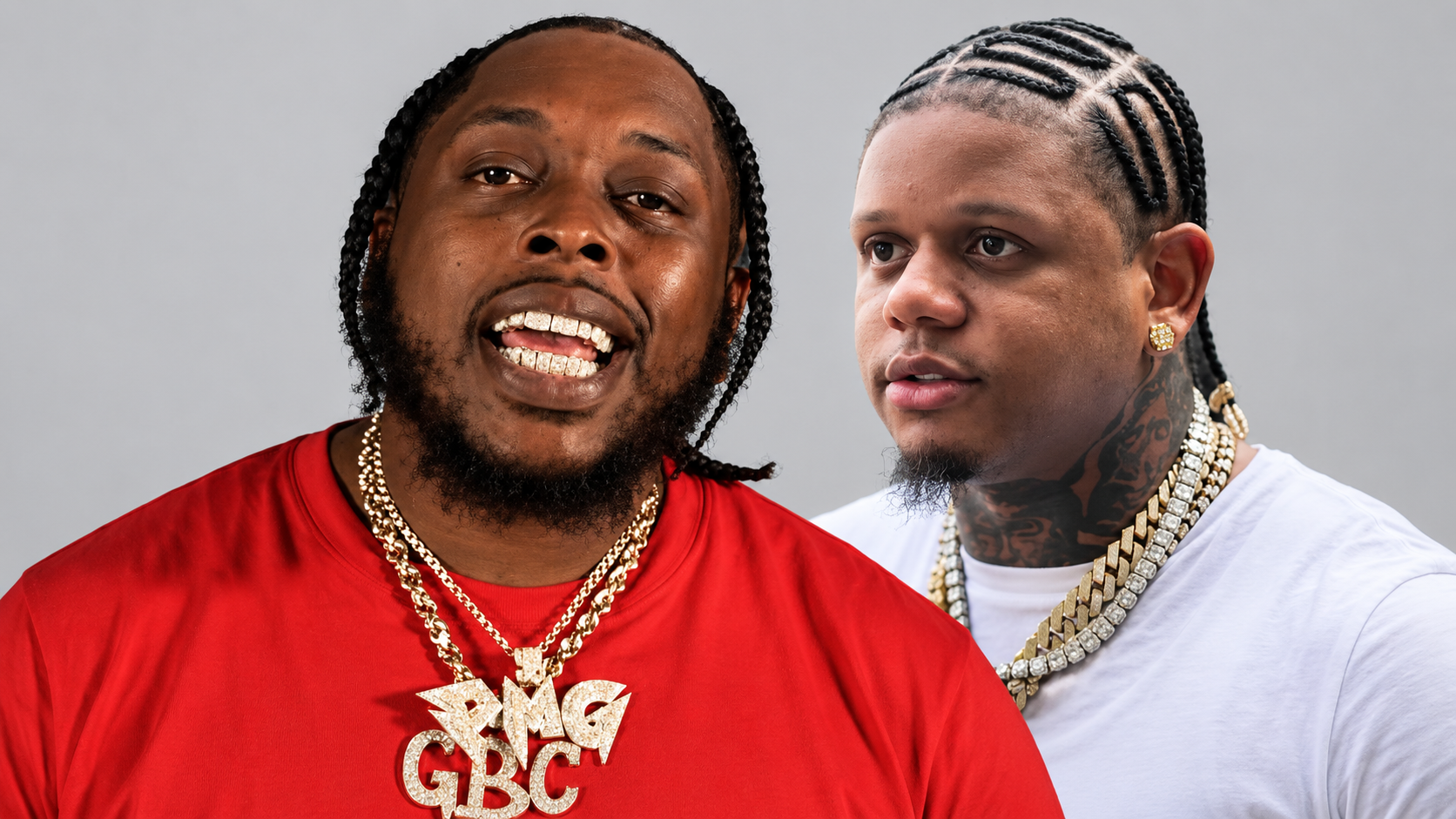
Yella Beezy’s murder trial took an unexpected turn Monday, November 2, when his childhood friend Theodore Thomas admitted that he lied to a grand jury about an alleged feud between the Dallas rapper and Mo3.
Video
Thomas, who also performs under the name Jose Bodega, returned to the witness stand after previously invoking his Fifth Amendment right against self-incrimination. This time, he answered questions about statements he made during a February 2025 grand jury proceeding that preceded Beezy’s capital murder indictment.
When prosecutors questioned Thomas about his previous testimony concerning tensions between the two rappers, he responded, “I made it up.”
His admission became a central development in the trial of Yella Beezy, whose real name is Markies Conway. Prosecutors accuse Conway of arranging the November 11, 2020, killing of fellow Dallas rapper Mo3, born Melvin Noble, on a Dallas highway.
Conway has pleaded not guilty and denied involvement in the killing.
Before Thomas testified Monday, prosecutor Tommy Adams confirmed that he had received immunity for his courtroom testimony. The judge also permitted prosecutors to question him as a hostile witness after he contradicted statements previously made under oath.


Made to order and shipped to your door.
During cross-examination, defense attorney Toby Shook challenged the reliability of Thomas’s earlier allegations, repeatedly asking whether he had fabricated details connecting Beezy to the murder investigation.
Thomas repeatedly answered, “Right.”
According to the defense, Thomas provided investigators with information they wanted because he was facing serious federal consequences of his own.
Shook explained that Thomas had spent approximately 18 months in federal custody and faced up to 25 years on drug and firearm charges. He also allegedly faced threats of additional RICO and VICAR charges, which can carry severe penalties.
RICO refers to federal laws targeting racketeering activity, while VICAR addresses violent crimes committed in connection with racketeering enterprises.
“You learned that they were threatening you with RICO and VICAR and a life sentence, right?” Shook asked.
“Right,” Thomas answered.
The defense argued that Thomas had an incentive to cooperate because he wanted to avoid additional prosecution and secure admission into the federal STEPS diversion program.
Thomas eventually entered that program, and his federal indictment was dismissed after he completed its requirements.
However, prosecutors offered a different explanation for his changing story.
Adams suggested Thomas was attempting to protect Conway because of their decades-long friendship. Prosecutors presented photographs showing the two together during their high school years, at baby showers, and aboard private jets traveling to Miami.
Prosecutors also questioned why Thomas had maintained his earlier allegations for an extended period before recanting.
Another disputed portion of his grand jury testimony involved an alleged conversation outside a barbershop belonging to Jerry Johnson.
According to prosecutors’ account of the earlier testimony, Thomas previously described a conversation involving money allegedly owed following Mo3’s murder. The prosecution has alleged that approximately $40,000 was connected to the killing.
On Monday, Thomas maintained that his account of the conversation was fabricated.
He also disputed earlier statements involving convicted gunman Kewon White, portraying White as an unpredictable individual seeking street credibility rather than someone simply following orders within Beezy’s circle.
Thomas testified that he never personally witnessed White receiving payment and did not know beforehand that Mo3 would be killed.
White was convicted of capital murder in September 2026 and sentenced to life in prison. Another defendant, Devin Brown, also faces a capital murder charge in connection with the case.
The conflicting accounts prompted Judge Chika Anyiam to give jurors a specific instruction about Thomas’s previous grand jury testimony.
Jurors were told they could consider those earlier statements when determining whether Thomas was credible, but they could not treat them as direct evidence that Conway was guilty or that the statements themselves were true.
The trial has also included forensic evidence, cellphone records, surveillance footage, and testimony concerning money recovered during the investigation.
Earlier testimony from a firearms examiner established that 44 cartridge cases recovered from the murder scene came from the same unidentified firearm. None of the firearms submitted for comparison was identified as the weapon that fired those cartridges.
Despite Thomas’s recantation, prosecutors have continued pursuing their case against Conway, who faces a possible life sentence if convicted.
With one of the case’s prominent witnesses now disputing his own sworn statements, jurors must evaluate competing accounts of what Thomas knew, why he originally spoke to investigators, and why his testimony changed.
Yella Beezy’s capital murder trial is scheduled to continue Tuesday, November 3, in Dallas.
