

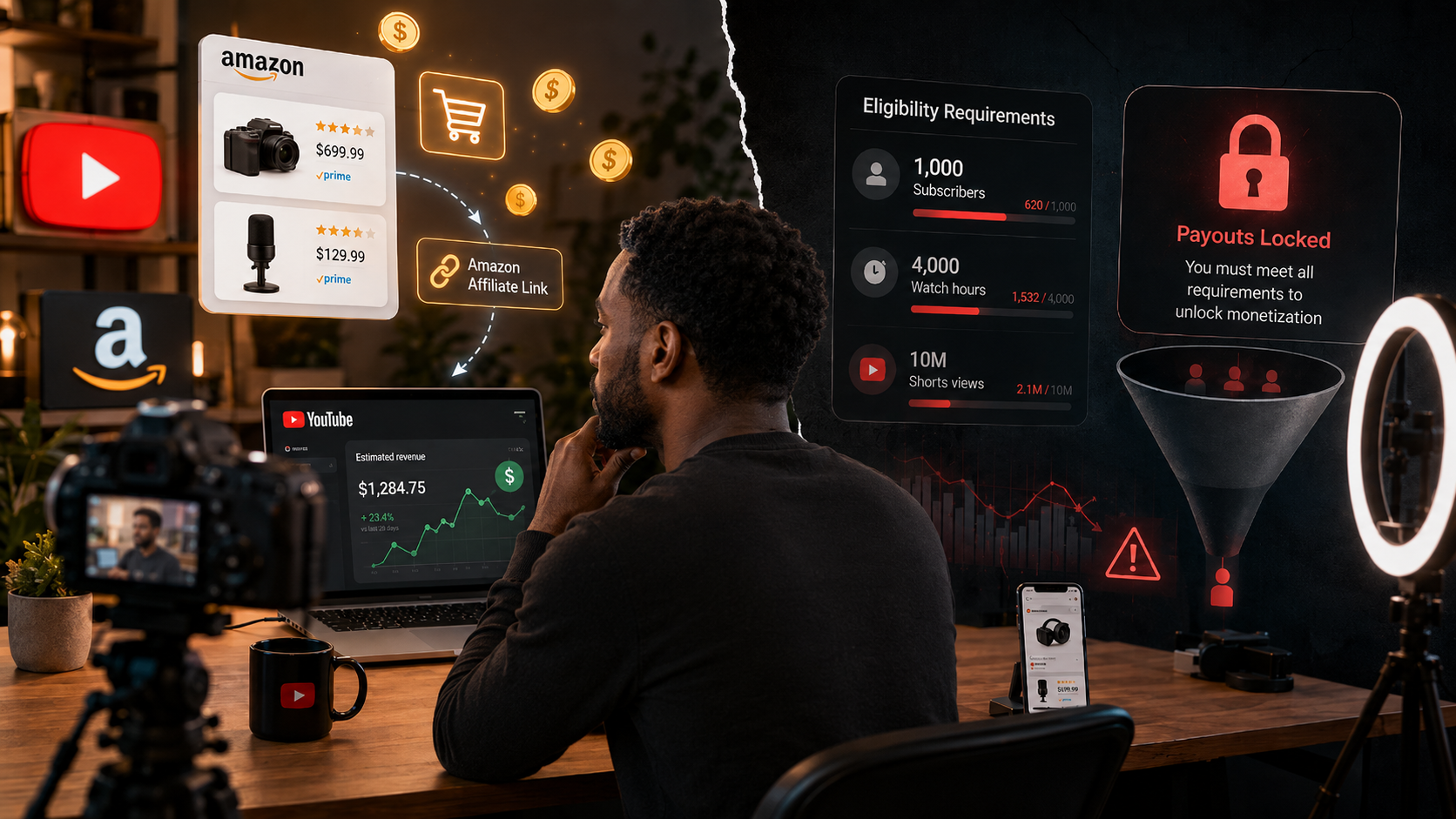
YouTube just introduced its new YouTube Amazon program, and for creators who have felt the platform squeezing their bag lately, the timing reads almost like a peace offering. Announced Thursday, the feature lets eligible creators in the United States tag Amazon products directly inside their videos, Shorts and livestreams, then collect a commission every time a viewer clicks through and buys. The update folds Amazon into YouTube’s existing Shopping affiliate program, meaning creators no longer have to drop an Associates link in a description box and hope someone actually copies it before scrolling past.
The mechanics are built for scale. YouTube CEO Neal Mohan confirmed the partnership himself, calling Amazon’s entry into the Shopping affiliate lineup one of the biggest ecommerce gets the platform has landed yet. Amazon is feeding YouTube a curated catalog of trending and frequently requested products that creators can search and tag on the spot. If a creator wants a specific item that is not already loaded into the system, they can flag it to YouTube Support and ask for it to be added.
Auto tagging is where the YouTube Amazon program gets interesting for creators who do not want to babysit every upload. According to YouTube’s own help documentation, creators who enable auto tagging let the platform’s systems scan recent uploads and automatically attach eligible Amazon products, a setting that also applies going forward to new content. Finalized earnings land in a creator’s AdSense account alongside their existing affiliate payments, and Studio shows one combined daily total rather than a breakdown by product or video. If a customer returns an item, that commission gets clawed back from the balance. To qualify at all, a creator needs to be enrolled in both the YouTube Partner Program and the Shopping affiliate program, plus hold an active Amazon Influencer or Associates account linked to their channel.
The reach of the YouTube Amazon program goes beyond American borders too. Tags placed by eligible United States creators can still show up for viewers worldwide, and YouTube says it may automatically match a tagged product with a trusted local seller so international fans generate a commission as well. Without a local match, the tag simply routes shoppers to Amazon’s United States site, and a completed purchase there still counts toward the creator’s payout.
The rollout lands at a tense moment for the creator economy, though. Just weeks before this announcement, YouTube confirmed it was doubling what new creators need to unlock ad and Premium revenue in the first place. Starting February 1, 2027, channels will need 8,000 watch hours or 20 million Shorts views within the prior 90 days to enter the YouTube Partner Program, double the current 4,000 hours or 10 million Shorts views, even though the 1,000 subscriber floor stays exactly where it is. The same update raises the Shorts-specific threshold too, requiring 10 million qualified Shorts views in 90 days just to keep collecting ad and subscription revenue from that content. The change will not touch creators already earning through YPP, but for anyone still trying to break in, the bar just got a lot higher.
That announcement followed a string of other monetization headaches. Dexerto also points to YouTube’s expanded crackdown on videos it now flags as unsatisfying or off-putting, plus a flawed AI detection system that mistakenly targeted respected channels like Kurzgesagt. Add last year’s rewrite of the platform’s repetitive content rules into what is now branded the inauthentic content policy, and creators have spent months watching the ad revenue door get harder to walk through even as YouTube keeps propping open new side doors like Shopping, memberships, and now Amazon tagging. Rival platform Kick wasted no time using the frustration as a recruiting pitch to displaced small creators.
For creators who already have the audience and the affiliate accounts in place, the YouTube Amazon program is a genuine upgrade, turning casual product mentions into trackable income without extra links or extra steps. For everyone else still climbing toward that Partner Program threshold, it is one more reminder that on YouTube, the fastest-growing revenue streams and the steepest new hurdles keep arriving in the same breath.
