

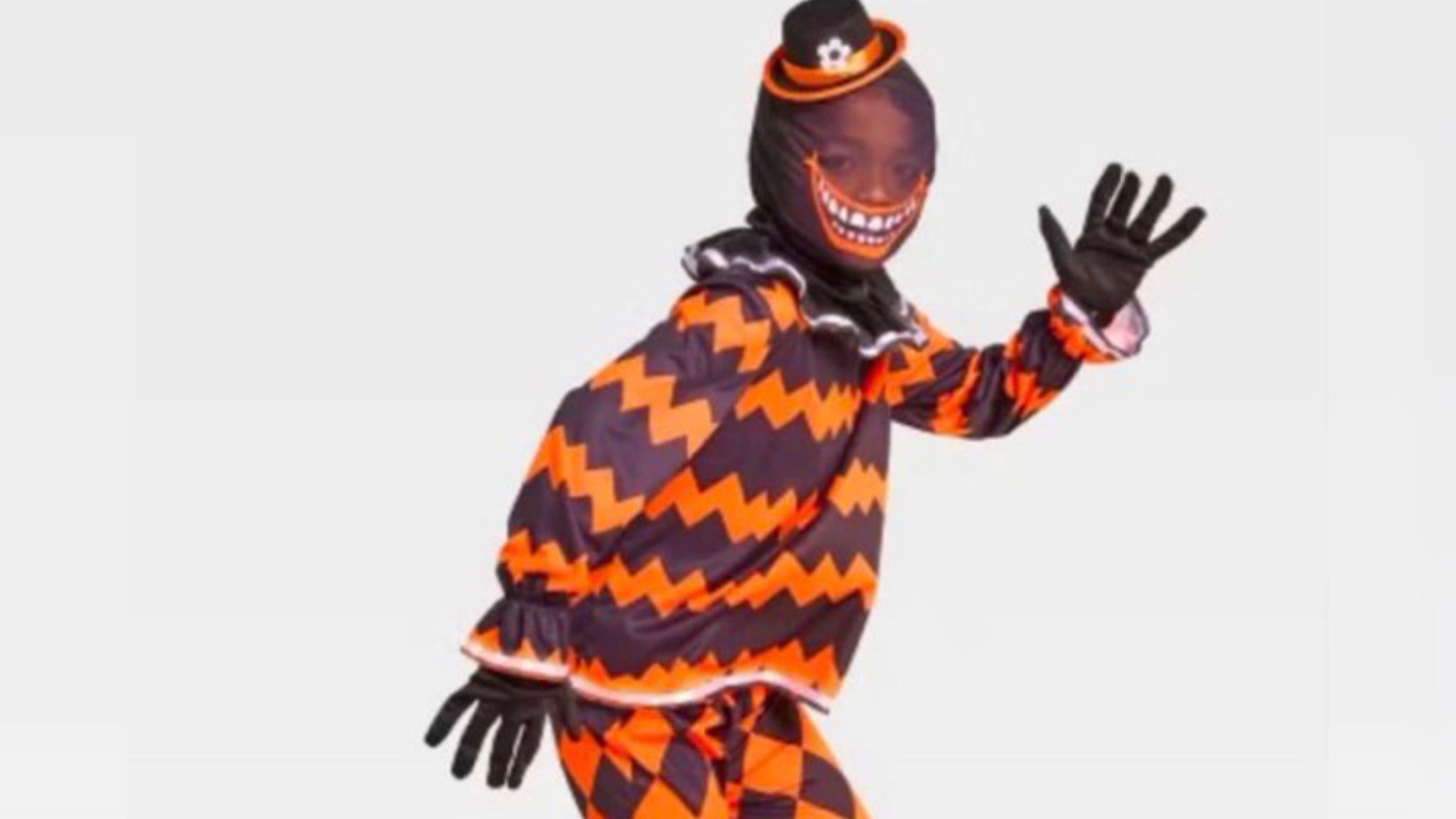
Target apologized Monday and pulled a children’s Halloween costume that was blackface, plain and simple.
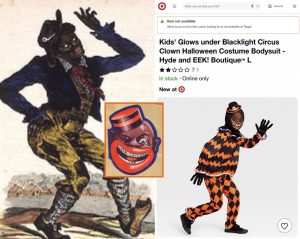
The product was listed as the “Kids’ Glows Under Blacklight Circus Clown Halloween Costume Bodysuit,” sold for $25 through Target’s Hyde & EEK! Boutique collection. It featured a black hood with a large exaggerated smile printed across it, paired with orange and black striped pants, a small hat, and black gloves. That is the visual language of minstrelsy, the blackened face and the oversized grinning mouth that white performers used to caricature Black people for more than a century.
Shoppers started circulating screenshots over the weekend. By Sunday, the product page was gone and Target’s site returned a message saying it was currently unavailable. The apology came Monday.
The company posted the statement to its corporate site and its own news account. Target said it got this wrong as a company and is deeply sorry, that the costume is offensive and should never have been part of its assortment, and that it is no longer for sale. It also said it knows this is especially hurtful for its Black guests, team members, and partners, and that removing the costume is a first step while the company looks at how this happened and what needs to change.
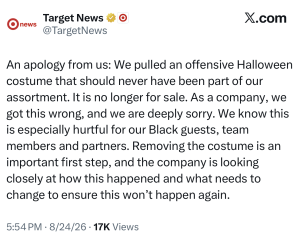
Give them this much: the statement names who was hurt. A lot of corporate apologies do not.
But the question the apology does not answer is the one people are actually asking. This was not a listing someone typed up in five minutes. It was designed, manufactured, photographed, written up, priced, and merchandised into a seasonal collection. It had promotional images shot for it. Every one of those steps involved a person, and none of them stopped it.
There is no evidence anyone at Target set out to make a racist product. That is somehow the worse version. It means the imagery moved through an entire retail pipeline without registering as a problem to a single person along the way.
And that is exactly the point Black shoppers made when they walked away from this company.
Black consumers boycotted Target after it rolled back its diversity, equity, and inclusion commitments following Trump’s return to the White House. The argument then was that DEI was not a press release, it was infrastructure. It meant people in the building whose job included looking at a product before it shipped and saying this is a problem.
Target dismantled that, and this is what came through the gap. A costume like this does not survive a room with people in it who recognize minstrel imagery on sight. It got to the website because nobody in the process was positioned to stop it, and the company had already made clear that being positioned to stop it was no longer a priority.
The boycott worked, at least on the balance sheet. Executives publicly acknowledged that customer traffic and sales came under pressure. Earlier this year Target announced it was cutting roughly 500 positions across distribution centers and regional offices. Before all of this, the company had already taken criticism over its handling of its 2023 Pride Collection.
So here is where Target stands. It cut the function designed to catch things like this, lost the customers who warned them what would happen, spent a year and a half trying to win them back, and then put a minstrel costume on its website for children.
Target says it is looking closely at how this happened. Everybody already knows how it happened.
