

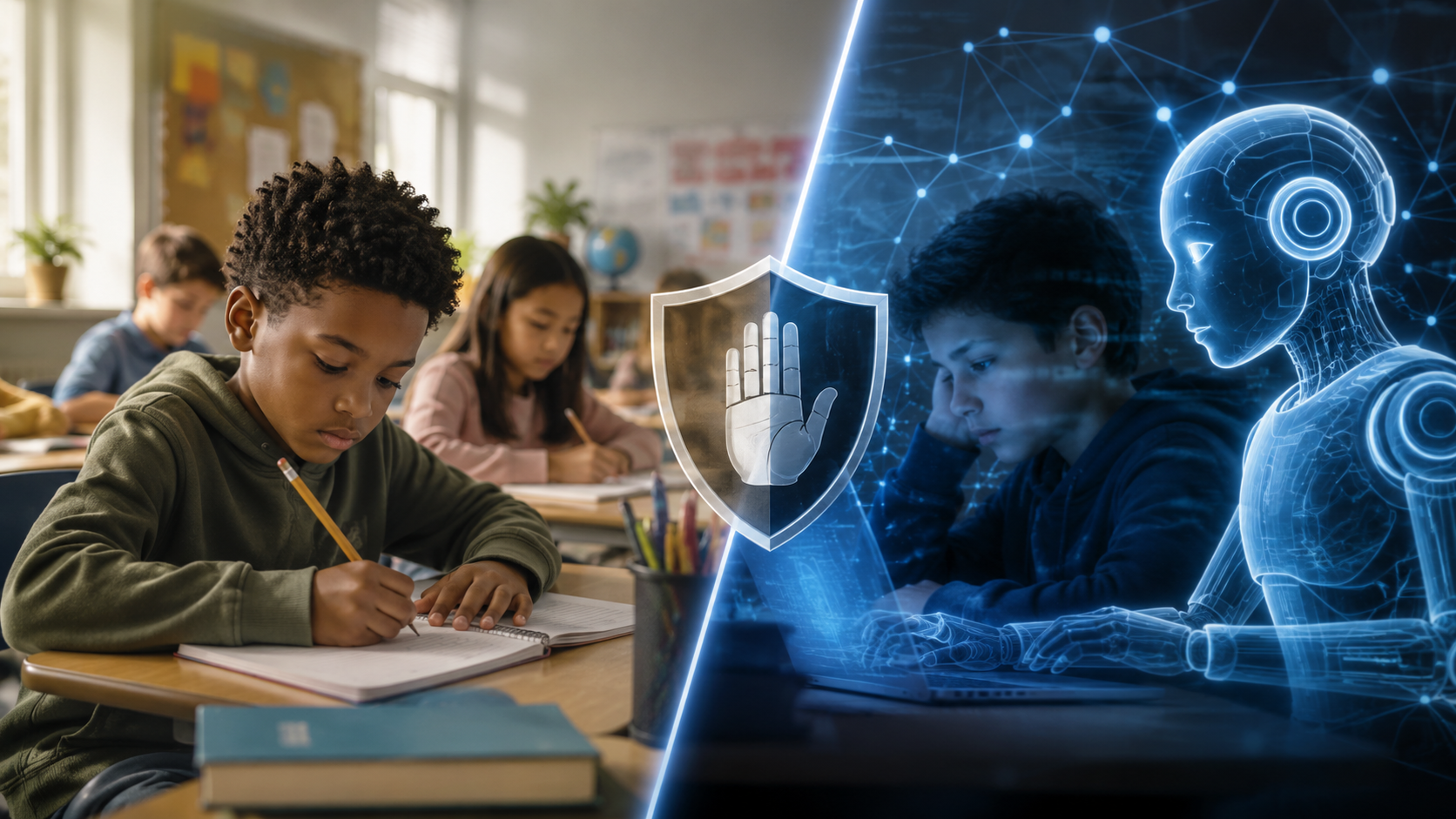
New York City is telling its youngest students that some homework still needs to happen without a chatbot doing the heavy lifting. New York City Public Schools will impose an AI ban covering students from 2-K through eighth grade during the 2026-2027 school year, temporarily shutting generative AI out of classrooms for more than half a million students while city officials study what the technology is doing to learning, development and critical thinking.
The restriction does not extend to high school students, creating a sharp line between younger children and teenagers in the nation’s largest public school system.
Mayor Zohran Mamdani said the city will use the coming year to examine the technology rather than rushing to make it part of childhood education.
“The tech industry wants us to believe that A.I.-powered early education is not only inevitable, but necessary.”
“We do not see it that way,” he added.
The policy goes beyond telling students not to use ChatGPT for an essay. According to the district, student-facing generative AI software and companion chatbots will be restricted for students through eighth grade.
That marks a significant shift for a school system that had already spent years figuring out where artificial intelligence belongs.
NYC Public Schools issued formal AI guidance in March 2026 describing education as a human-centered process where technology should support teachers instead of replacing them. The district also established an internal review process for AI tools that evaluates student privacy, security and vendor practices. Its guidance specifically warns that generative AI can produce false information, biased responses and convincing answers that students may mistake for fact.
Schools Chancellor Kamar Samuels framed the new moratorium as an educational decision, not an anti-technology campaign.
“We’re standing firmly in our decision to not conflate innovation with more tech, and we’re going to lead over the next year with evidence and make sure technology serves learning — not the other way around,” Samuels wrote in a statement.
High school students will get a different approach. Rather than facing the same prohibition, they are expected to receive AI literacy instruction twice a year aimed at teaching them how to evaluate the technology critically before becoming dependent on it.
That distinction puts NYC directly inside a much larger argument playing out across American education: Should schools limit AI while students develop foundational skills, or teach children to work with the technology as early as possible?
Washington has been leaning toward the second approach.
President Donald Trump signed an executive order in April 2025 directing the federal government to promote AI literacy and encourage appropriate AI integration in education. The order also called for expanded teacher training and research into how artificial intelligence can be used in classrooms.
Teachers are already testing that reality for themselves.
I use AI for nearly everything in the classroom right now,” Texas teacher Lori Garrett told ABC News during the previous school year.
Garrett said her students also use AI to “help themselves learn.”
Still, NYC’s decision fits into another trend that has been gaining ground in schools: intentionally reducing students’ dependence on technology.
New York implemented statewide bell-to-bell restrictions on smartphones and other personal internet-connected devices beginning with the 2025-2026 school year. The policy covers classroom periods as well as lunch, study halls, and other parts of the school day, although schools maintain exemptions for medical, educational, and other approved needs.
Now, AI is joining the conversation.
International education officials have raised similar concerns. UNESCO’s guidance on generative AI calls for age-appropriate restrictions, stronger privacy protections and human-centered policies while governments determine how the technology should be incorporated into education.
The questions are getting harder because AI itself keeps getting better.
Students can increasingly use chatbots to explain math problems, summarize readings, brainstorm essays, translate material, and generate polished assignments within seconds. Those capabilities can make AI an unusually powerful learning tool. They can also make it easier to outsource the exact thinking schools are supposed to teach.
Health officials have raised concerns about separating beneficial uses of technology from harmful ones.
“There’s certain aspects of technology that are educational, and then there are certain ones that actually can be harmful,” Dr. Stephanie Haridopolos of the Office of the Surgeon General told ABC News.
“We need to delineate between the two,” she said.
For New York City, that line is now clear for younger students, at least for one school year.
The city is not pretending AI is disappearing. It is betting that children should learn how to think before schools start asking them how well they can prompt a machine.
