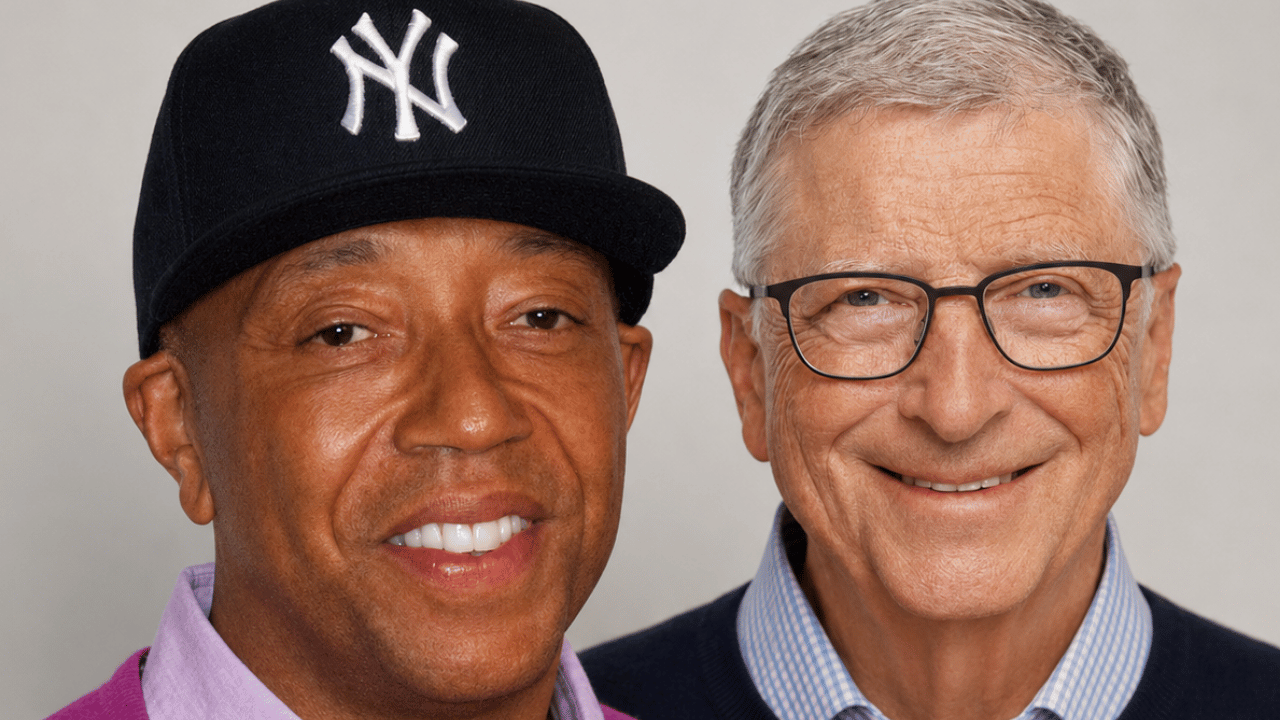
Russell Simmons is making a sweeping case for Bill Gates at a time when the billionaire philanthropist remains one of the internet’s favorite targets. The Def Jam co-founder defended Gates by pointing to his global health work, arguing that Bill Gates philanthropy has done more to save Black lives than the public conversation gives him credit for. Simmons went even further, reportedly framing Gates as someone who has saved more Black lives than anyone in history.
Video
That is an enormous claim, and it needs context.There is no reliable historical measurement that can establish Gates as the person who has saved more Black lives than anyone else. Comparing one philanthropist’s impact with doctors, scientists, governments, activists, public-health programs and generations of other contributors would be nearly impossible. Still, the scale of Gates’ global health spending helps explain why Simmons would make such an aggressive argument.
The Gates Foundation says it has paid out roughly $100 billion during its first 25 years. Bill Gates and Melinda French Gates contributed $60.2 billion to the foundation through 2024, while Warren Buffett contributed another $43.3 billion. In 2025, Gates announced plans for the foundation to spend $200 billion over the following 20 years before closing in 2045.
Much of that work centers on diseases and health conditions that disproportionately affect lower-income countries. The foundation has invested heavily in vaccines, malaria prevention, HIV and tuberculosis programs, polio eradication, maternal and child health, nutrition and other initiatives.
The numbers are significant. The foundation says programs supported through partners including Gavi and the Global Fund have contributed to saving tens of millions of lives. Gates has also said that Gavi and the Global Fund together have helped save more than 82 million lives.
That does not mean Gates personally saved every one of those people. Those outcomes involve governments, health workers, researchers, nonprofits, donors, and international organizations working together. But it does explain the foundation of Simmons’ argument: he appears to be judging Gates by measurable investment and health outcomes rather than his popularity online.
Simmons’ own history also gives the comments some context. He has publicly advocated veganism for years and previously connected plant-based eating with health disparities affecting Black Americans. That makes his support for Gates’ environmental and dietary interests less surprising.
Simmons also highlighted Gates’ support for alternatives to conventional meat production. Gates has invested in companies developing plant-based and cultivated meat products, although claims that he is attempting to eliminate livestock altogether have not been supported by evidence. Simmons characterized plant-based meat as the “superfood of the future,” connecting the issue to climate change and sustainability.
Then came the comparison that makes his argument even more provocative: Elon Musk.
Simmons questioned why Musk and Tesla receive widespread admiration while Gates faces intense criticism, particularly when Simmons believes Gates’ money has produced major humanitarian benefits in Africa. His framing effectively asks whether celebrity, innovation, and cultural popularity are being valued more heavily than public-health outcomes.
That comparison is where the conversation gets messy.
Gates’ influence in Africa has itself faced serious criticism. Scholars and advocates have questioned the extraordinary power wealthy private philanthropists can wield over public health, agriculture and development priorities. Critics have also challenged technology-driven approaches to African agriculture and questioned whether communities and governments should have greater control over decisions affecting their food systems.
So Simmons’ statement is controversial for reasons beyond Gates’ polarizing public image. Saying one wealthy American has saved more Black lives than anyone in history compresses centuries of Black medical advancement, political struggle, community organizing, and public-health work into a single comparison that cannot realistically be proven.
It can also blur an important distinction between funding an initiative and single-handedly producing its outcome.
Still, Simmons appears to be deliberately making a results-based argument. Instead of debating every controversy attached to Gates, he is pointing toward vaccines, disease prevention, medical infrastructure, and billions of dollars directed toward global health.
And the timing makes that argument especially pointed. Global health organizations have warned about declining aid funding, while the Gates Foundation is preparing to dramatically increase its spending before its planned 2045 closure.
Whether that makes Gates history’s greatest saver of Black lives is not a claim the available evidence can prove.
But Simmons clearly wants people arguing about a different question: if tens of billions spent fighting deadly diseases does not shape how the public judges a billionaire, what exactly does?