

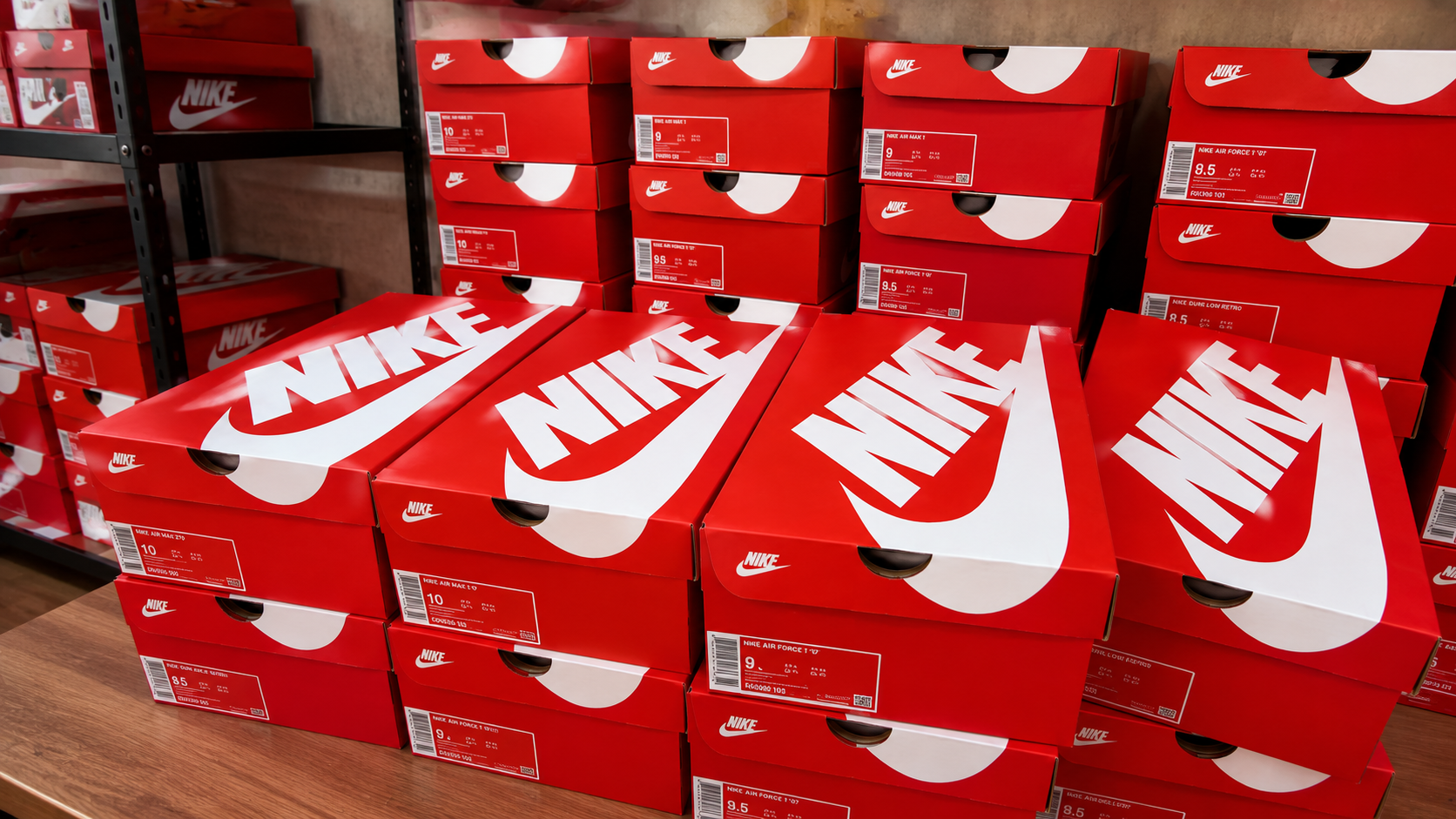
Federal prosecutors have indicted 12 people in a Nike theft ring that allegedly moved more than $2 million in product out of the brand’s Memphis warehouse, and six of the accused worked inside that building.
The indictment was returned by a federal grand jury in the Western District of Tennessee on May 21 and unsealed Tuesday, laying out a conspiracy that prosecutors say ran from July 2021 to June 2024 at Nike’s North American Logistics Center, the company’s primary distribution hub in the country.The scheme described by investigators did not involve broken locks or getaway trucks. It involved paperwork. The group would first decide which product they wanted, usually styles with real resale value, then locate those specific cartons inside the warehouse. Shipping labels were generated ahead of time and addressed to predetermined drop points around the country. Those labels were then placed on the chosen boxes so that when UPS made its regular pickup, the stolen product left through the front door looking exactly like a legitimate outbound shipment. Co-conspirators collected the packages on the other end and pushed them into the resale pipeline.
That is what makes this Nike theft ring different from the smash-and-grab retail crime stories that dominate headlines. Nothing about it looked like a crime while it was happening. The product was scanned, loaded, and tracked through the same system Nike uses for every order it fulfills. According to LAPD, the operation only started to unravel when a 2024 snowstorm shut down deliveries and halted activity at the Memphis warehouse.
According to the indictment and LAPD, Roy Lee Harvey Jr. created the UPS shipping labels and resold some of the stolen shoes himself. Michael Perkins, a floor manager at the Memphis facility, is accused of bringing those labels into the building and distributing them to other employees. Julian Baker, Cortez Spencer, Roderico McClellan, and Damon Johnson are all accused of working inside the warehouse and physically placing the labels on the selected cartons. Marquesio Robinson, who worked at a Nike Employee Store, allegedly sent money to other members of the group. Keith Cannon is accused of creating shipping labels and directing where the stolen shipments went. Cadarian Mack, also named, is accused of listing shoes for sale on StockX and GOAT.
That last detail is the part the culture should be paying attention to. Those platforms have spent years selling authentication as their core value proposition. Authentication confirms a sneaker is real. It does not confirm anyone had the right to sell it. A stolen pair of Jordans coming straight off a Memphis pallet passes every check those platforms run, because it is genuinely, verifiably Nike product.
Three sneaker resellers round out the list. Joel Deluna of Chicago, who operated Chicago Emporium. Jorge Cuellar of Los Angeles, 30, an online reseller known on social media as horehead_sales, who ran Horhead Investments. And Bereket Abraham, 39, whom LAPD identifies as a co-founder and co-owner of Coolkicks, the Melrose Avenue shop that has built a massive following off celebrity walkthroughs and consignment volume.
The Coolkicks allegation is the most specific in the LAPD release. Investigators say Harvey and Abraham printed the fraudulent UPS labels using equipment and a UPS account tied to Abraham and Coolkicks, and that after the shipments arrived, Abraham and Cuellar paid Harvey and other co-conspirators more than $900,000 for the stolen shoes, which were then sold online or through Coolkicks to customers who had no idea.
Coolkicks has responded, and the response is worth reading closely. In a statement posted to its social accounts, the company confirmed Abraham was indicted in Memphis for purchasing items allegedly stolen from Nike and said Abraham denies the charges. It said that while Abraham owns stock in Coolkicks, the indictment contains no allegations of wrongdoing by Coolkicks or anyone else associated with the company. It then announced it had terminated Abraham’s relationship with the business, and said it remains focused on its customers and community and on the integrity of its products.
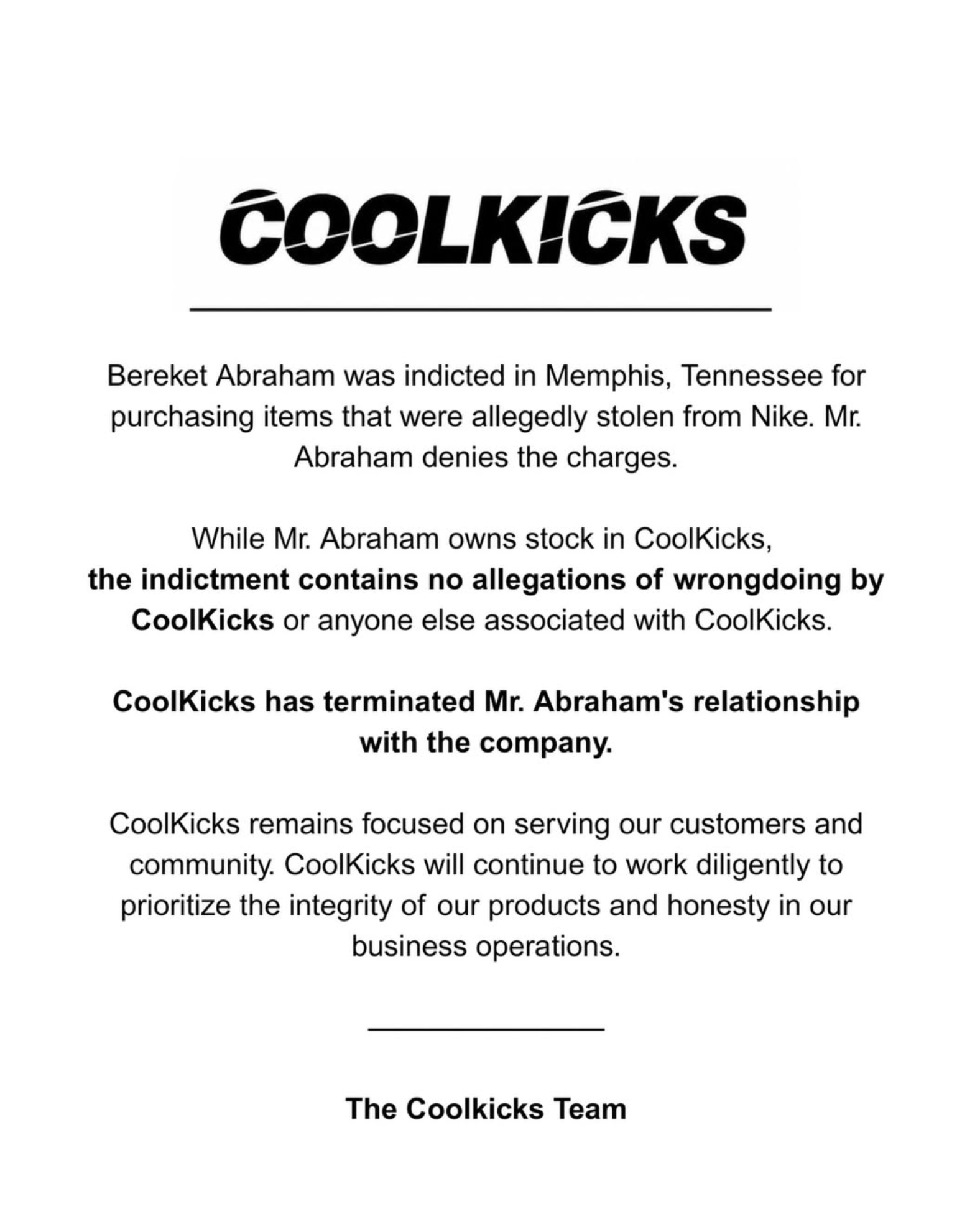
Two things in that statement deserve scrutiny. The company describes Abraham as a stockholder. LAPD describes him as a co-founder and co-owner. And the claim that no wrongdoing by Coolkicks is alleged may be technically correct, because the entity charged is Abraham, not the shop, and the LAPD press release is not the indictment. But the release does describe the company’s UPS account and equipment as the mechanism, and its sales floor as one of the destinations. Terminating the relationship with a co-founder the same week is not the move a business makes when it believes it has been cleared.This is also not the first federal or local attention Coolkicks has drawn. In October 2025, LAPD raided the store over allegations it was selling counterfeit sneakers, and owner Adeel Shams was arrested. The company denied those claims.
Harvey has his own history here. LAPD arrested him in January 2024 on state charges of receiving stolen property connected to Nike shoes, and that arrest is what pushed LAPD and the FBI’s Memphis Field Office to merge their investigations. Harvey, Abraham, and Cuellar were arrested on federal warrants on June 22 and 23 of this year and appeared in federal court in Los Angeles on June 23. They face three federal counts including aiding and abetting, conspiracy, and interstate transportation of stolen property, and could face up to 15 years in federal prison, fines up to $500,000, and three years of federal probation if convicted.
Memphis sits at the center of this for a reason. The city calls itself America’s Distribution Center, and U.S. Attorney D. Michael Dunavant leaned on that identity in announcing the charges, framing organized cargo theft as an attack on the region’s economic infrastructure. Nike has been absorbing hits like this repeatedly. Earlier this year, thieves pulled off a train robbery that took roughly $300,000 in Jordans. Cargo theft targeting the brand has moved from opportunistic to organized, and this case is the clearest example yet of what happens when outside operators get people on the inside. Six employees is not a security lapse. It is a network.
Every person named is presumed innocent unless a conviction is reached, and Abraham has denied the charges through Coolkicks. But for anyone who buys sneakers on the secondary market, the case raises a question the industry has never answered honestly. Resale runs on volume that has to come from somewhere, and shops with consistent quantity on hard-to-get product have always drawn quiet questions about sourcing. A federal indictment naming warehouse workers, a floor manager, and shop owners in the same document is the first time that question has been asked in a courtroom with this much detail behind it.
