

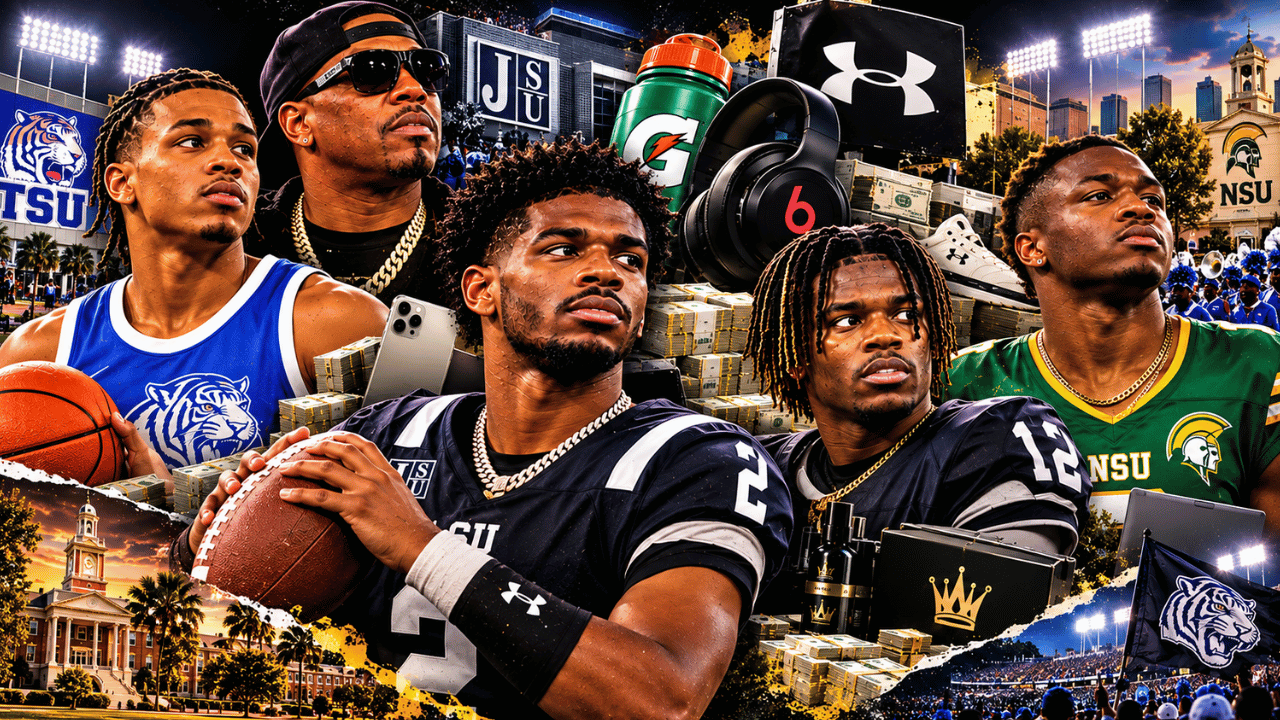
The Senate just passed the Protect College Sports Act, a bill that would set national rules for how college athletes get paid, and HBCU NIL deals sit right in the middle of the fight over it. Five years after college athletes won the right to profit from their name, image and likeness, known as NIL, HBCU athletes own some of the most memorable deals of the era. The question now is whether their schools can keep top talent on campus.
Hercy Miller, Tennessee State: The Reported $2 Million Deal
In July 2021, Hercy Miller, the son of Master P, signed a reported four year, $2 million endorsement deal with tech company Web Apps America before playing a single college basketball game. Miller had offers from USC, UCLA, LSU, Missouri and Howard but chose Tennessee State. Master P held up the deal as proof that NIL could change where athletes go to school, and Miller talked about giving back through a youth camp and a school supply giveaway. The $2 million was the announced value of a multiyear contract, not a verified amount paid to Miller.
Shedeur Sanders, Jackson State: From HBCU Quarterback to National Brand Ambassador
Before Colorado and the NFL, Shedeur Sanders was building an endorsement portfolio at Jackson State, where he played quarterback for his father, Deion Sanders. In August 2021, he became the first college athlete to sign an NIL deal with Beats by Dre. Brady Brand followed in December 2021, Gatorade in January 2022, and Under Armour by November 2022. Those deals proved national advertisers would chase an HBCU quarterback the same way they chase stars in the biggest conferences.
Travis Hunter, Jackson State: A Major Recruit With Major Endorsements
Travis Hunter stunned college football when he chose Jackson State as one of the top ranked recruits in the country. In July 2022, he signed a two year NIL deal with Greenwood, a financial technology company built for Black communities. Two months later, he became the first brand ambassador for Michael Strahan Brand, the clothing line from the former NFL star and TV host, appearing in its digital, print and social campaigns. Strahan, a Texas Southern alum, praised Hunter for choosing an HBCU.
Rayquan Smith, Norfolk State: The NIL King
Norfolk State football and track athlete Rayquan Smith took a different route. Instead of chasing one big check, he stacked smaller deals and built a business around his personal brand. Known as the “NIL King,” Smith said he had landed more than 50 deals by December 2021. That list included Eastbay, making him the first HBCU athlete to partner with the athletic retailer, along with Black owned businesses like B Condoms.
Antwan Owens, Jackson State: The First Deal of the NIL Era
On July 1, 2021, the first day of the NIL era, Jackson State defensive lineman Antwan Owens signed with 3 Kings Grooming, a Black owned grooming company, at a midnight signing event in New York City. It was widely reported as the first NIL endorsement deal signed by any college athlete. The terms were not disclosed. Other HBCU athletes followed quickly, including Johnson C. Smith wide receiver Ky’Wuan Dukes, who partnered with Bojangles.
HBCU Teams Land Group Deals
Brands also started signing whole rosters. College HUNKS Hauling Junk and Moving offered NIL deals to players on Howard’s men’s basketball team, and Grambling State launched an initiative offering endorsement opportunities across its athletic programs. Team wide offers do not mean every athlete got the same amount or completed a paid deal, but they created chances for players without star name recognition.
The Rules Changed in 2026
College sports now runs on three things. There are endorsement deals and revenue sharing, which means schools paying athletes directly. There is also new oversight of NIL money coming from outside companies. Division I athletes generally have to report outside NIL deals worth $600 or more through NIL Go, a platform run by the College Sports Commission, so those deals can be reviewed for compliance. That system favors schools with big budgets, and HBCU NIL programs are working with far less.
The Fight in Congress
In May 2026, the four major HBCU athletic conferences, the CIAA, MEAC, SIAC and SWAC, urged Congress to protect smaller programs as lawmakers rewrite the rules. Together they represent 48 schools and about 15,000 athletes. The commissioners worried that making athletes employees or changing pay rules could put more financial pressure on HBCU athletic departments. They backed federal legislation they believed would bring stability.
The Congressional Black Caucus took a different position. That same month, it came out unanimously against the SCORE Act, a college sports bill in the House.
On September 28, the Senate passed the Protect College Sports Act 77 to 22. The bill would set national rules for NIL, athlete pay and other parts of college sports. It still has to pass the House and be signed before it becomes law. The Congressional Black Caucus opposes this bill too, saying it falls short on rights and economic opportunities for Black athletes and does not guarantee support for HBCUs.
HBCUs Are Finding New Money
In July 2026, Alabama A&M became the first HBCU football program to land a corporate jersey patch sponsor. The deal puts Omni2Max’s logo on the Bulldogs’ jerseys. It is a school sponsorship rather than an athlete NIL deal, but it opens a new revenue stream.
At Howard, former NBA All Star and No. 1 overall pick John Wall was named president of basketball operations on April 30, 2026. He works on the roster, player mentorship, NIL and revenue sharing. Howard also has its longtime Jordan Brand partnership.
Keeping HBCU Talent on Campus
The transfer portal lets athletes leave for bigger programs with more money, more exposure and better facilities, and HBCUs are feeling it. In the 2026 NFL Draft, not one player was drafted directly from an HBCU program, according to NCAA reporting. It was the second time in three years that happened. At least two players who started at HBCUs were drafted, but only after transferring to bigger schools.
What’s Next for HBCU NIL
HBCU athletes proved on day one of the NIL era that national brands will pay them. The next test is on the schools: building enough money and resources that their best players can get paid without transferring out.
