

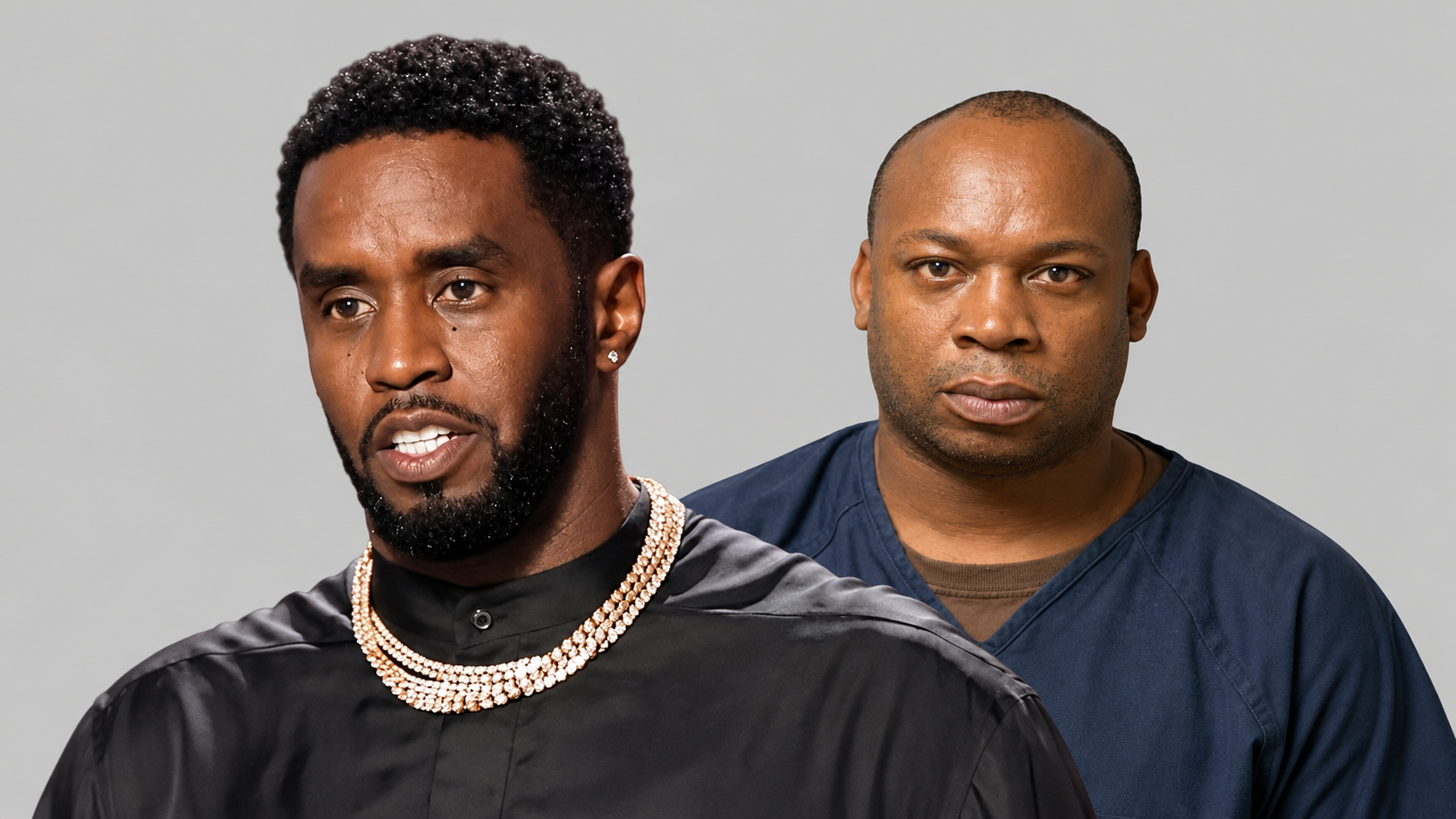
Christopher “Dudus” Coke was once among Jamaica’s most powerful criminal figures, running an international drug trafficking organization from a Kingston neighborhood where his influence extended far beyond the streets. Now, the convicted drug lord is back in the headlines after reports linked him to an alleged prison fight involving Sean “Diddy” Combs.
According to TMZ, sources inside New Jersey’s Federal Correctional Institution Fort Dix claim Coke and Combs fought on October 9, 2026. The outlet reported that Combs suffered a head injury and was transported to an outside medical facility early the following morning.
TMZ’s sources alleged that tensions erupted after an NBC News investigation into Combs’ reported privileges behind bars prompted prison searches and the confiscation of prohibited cellphones. Coke was allegedly among the inmates affected.
The reported confrontation has not been independently confirmed by prison officials, and the precise circumstances remain unclear.
Media personality DJ Akademiks also weighed in on the allegations, questioning why Combs would get into a confrontation with someone carrying Coke’s violent criminal history. The reaction has drawn renewed attention to a man whose name is deeply connected to decades of organized crime in Jamaica.
Diddy fighting Christopher “Dudus” Coke??? Yeah.. any Jamaican would tell u… he wasnt finna win that
Bro allegedly butchered a man infront of his whole community w a chainsaw .. and lived in a community that police was banned from entering. He not tolerating Diddy nonsense
— DJ Akademiks (@Akademiks) October 14, 2026
Christopher Michael Coke, also known as “Dudus,” “Shortman,” and “Prezi,” led the Shower Posse, a Jamaican criminal organization with operations extending into the United States. Federal prosecutors also identified his enterprise as the Presidential Click.
His connection to organized crime began with his father, Lester Lloyd Coke, better known as “Jim Brown,” who led the Shower Posse during the 1980s.
According to CBS News and the Associated Press, the elder Coke died in a fire inside a Jamaican prison cell in 1992 while awaiting extradition to the United States. Christopher subsequently took control of the organization.
Under his leadership, Tivoli Gardens in West Kingston became the center of his operations. The neighborhood functioned as a stronghold where armed men reportedly guarded entrances, protected criminal activities, and enforced Coke’s authority.
Yet his reputation among residents was complicated. CBS reported that supporters credited him with helping struggling families, providing school supplies, organizing community events, supporting youth activities, and assisting residents with medical expenses.
Those activities helped establish loyalty in a community where residents faced poverty and limited resources. Federal prosecutors, however, described a fundamentally different operation built around intimidation, weapons, and the threat of violence.
According to the U.S. Drug Enforcement Administration, Coke directed an international network that distributed marijuana, cocaine, and crack cocaine across Jamaica and the United States.
The organization operated in locations including Kingston, Miami, and New York City. Members distributed drugs, sent proceeds back to Coke, and obtained firearms in the United States that were trafficked into Jamaica.
Federal investigators said the criminal enterprise had operated since the early 1990s, with drug trafficking activities documented from at least 1994.
Prosecutors also connected Coke to violence used to enforce the organization’s business interests. In May 2007, Coke and associates agreed to have a drug trafficker assaulted in the Bronx after a narcotics debt went unpaid.
The scale of the organization eventually made Coke a major American law enforcement target. The Justice Department placed him on its Consolidated Priority Organization Target list, reserved for significant international narcotics traffickers.
His legal troubles escalated in August 2009 when American authorities sought his extradition from Jamaica on drug and weapons charges.
The request created a political crisis. According to Associated Press reporting published by CBS News, then Jamaican Prime Minister Bruce Golding resisted the extradition for approximately nine months, citing concerns involving the evidence and legal procedures.
Golding’s position generated scrutiny because Tivoli Gardens was within his parliamentary constituency, and longstanding political connections to powerful neighborhood organizations had already raised concerns about organized crime’s influence.
In May 2010, Golding reversed course and authorized proceedings to extradite Coke. Armed supporters responded by barricading sections of West Kingston and resisting security forces.
On May 24, approximately 800 Jamaican soldiers and 370 police officers entered Tivoli Gardens in an operation intended to restore government control and capture Coke.
The resulting violence devastated the community.
According to a published forensic examination of the Tivoli Gardens operation, approximately 70 civilians and three members of the security forces died. Investigators reviewed an official list documenting 76 deaths connected to the state of emergency.
The deaths also raised serious questions about the actions of Jamaica’s security forces. Residents reported that unarmed civilians had been shot, while authorities maintained that personnel encountered heavily armed resistance.
The subsequent commission of inquiry identified evidence of at least 15 extrajudicial killings. Its findings exposed failures surrounding the operation and prompted recommendations for accountability, reparations, and security reform.
Despite the bloodshed, Coke initially escaped capture.
Jamaican authorities eventually arrested him on June 22, 2010, near Kingston. Two days later, he arrived in New York to face federal prosecution.
His criminal case ultimately ended without a trial.
On August 31, 2011, Coke pleaded guilty to racketeering conspiracy and conspiracy to commit assault with a dangerous weapon in aid of racketeering.
According to The Guardian’s court reporting, Coke admitted responsibility for trafficking more than three tonnes of marijuana and approximately 30 pounds of cocaine into the United States. His admissions also included involvement in arranging an attack on a New York drug dealer.
On June 8, 2012, U.S. District Judge Robert P. Patterson sentenced Coke to 23 years in federal prison.
The U.S. Department of Justice confirmed that his sentence included four years of supervised release and a $1.5 million forfeiture order.
Coke has remained in federal custody as his name resurfaces in connection with Combs.
Separately, NBC News reported in September 2026 that former inmates described Combs receiving special services, alcohol, and access to prohibited items at Fort Dix. Combs’ representatives have disputed allegations surrounding his treatment in prison.
TMZ subsequently claimed the publicity triggered a crackdown that angered other inmates, including Coke. The outlet also alleged that both men faced disciplinary isolation following their reported confrontation. Those specific claims have not been independently established.
Meanwhile, a separate development has emerged concerning Coke’s sentence. On October 14, 2026, the Jamaica Observer reported that his projected federal prison release date had changed from January 29, 2028, to January 28, 2029, according to Bureau of Prisons records. The publication did not establish why the date changed.
