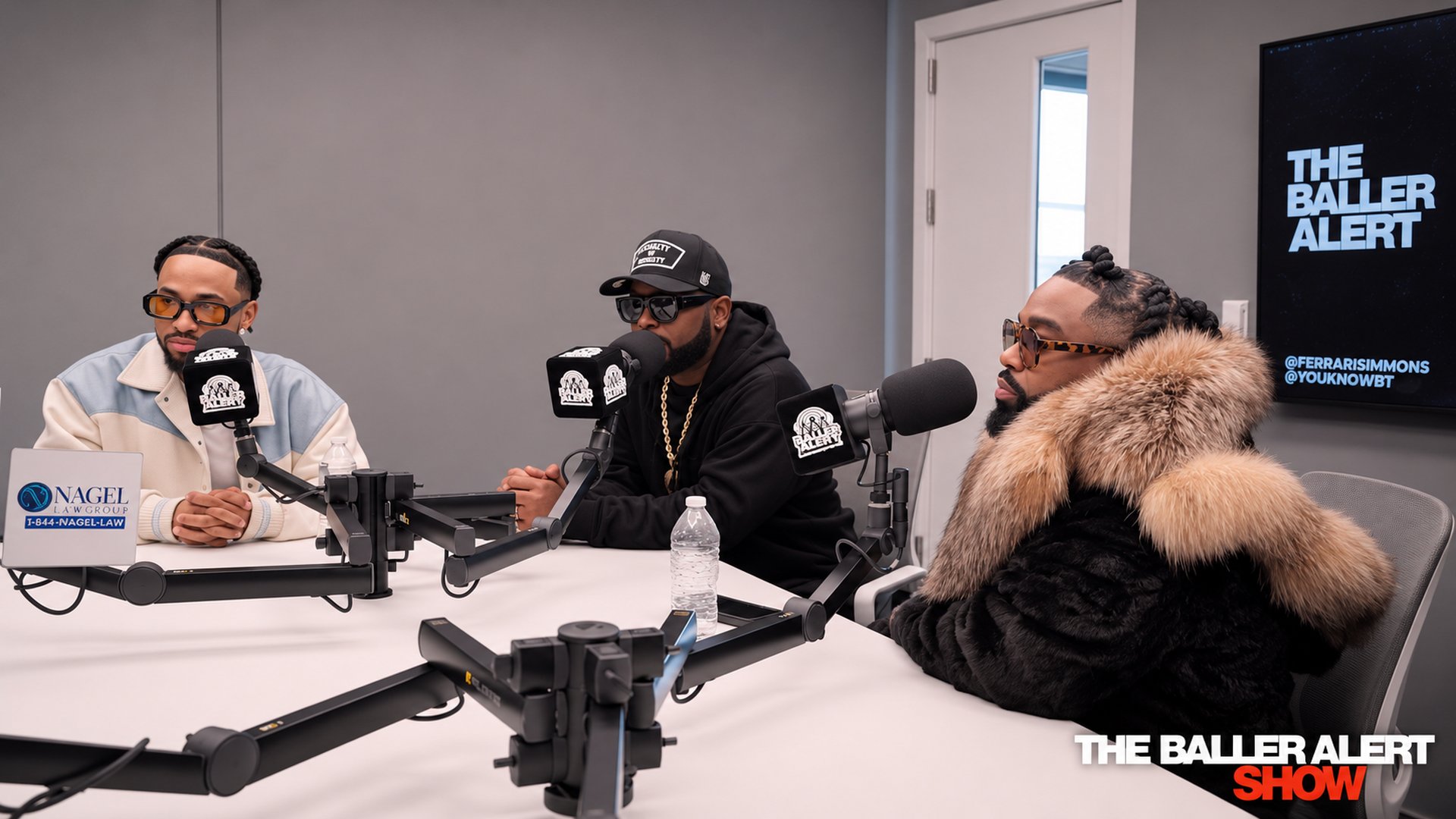
Pretty Ricky’s Baby Blue believes AI music deserves a place in the recording industry, but he does not think it should compete in the same category as music created by traditional recording artists. During Pretty Ricky’s recent appearance on “The Baller Alert Show,” the rapper shared his thoughts on the growing presence of artificial intelligence in entertainment and where he believes the industry should draw the line.
Video
“I like the ability for artists or somebody that’s using this technology, this AI, to actually be able to create music. I just don’t think that it should be in the same category as artists that actually go and make the music,” he told hosts BT and Ferrari Simmons.His fellow Pretty Ricky member and brother, Spectacular, appeared to share a similar perspective, suggesting that artificial intelligence could receive its own classification within the music industry.
“Just like they got R&B, hip hop, AI, different categories,” Spectacular chimed in.
For Baby Blue, who rose to fame in the 2000s alongside his groupmates with records such as “Grind With Me,” “Your Body,” and “On the Hotline,” there is room for technological innovation without overlooking the work that recording artists put into developing their craft.
The conversation surrounding AI music has become increasingly complicated as technology allows users to generate vocals, instrumentals, and entire songs without stepping inside a recording studio. Some creators use artificial intelligence to bring their original lyrics to life, while others rely on the technology to generate nearly every component of a record.


Made to order and shipped to your door.
Artificial intelligence has already produced commercially successful acts. In November 2025, virtual R&B artist Xania Monet made her debut on Billboard’s Adult R&B Airplay chart with “How Was I Supposed to Know?” The project was developed by songwriter Telisha Jones, who uses artificial intelligence to bring her written material to life.
In August 2026, Billboard announced that it was working toward greater transparency in identifying records created using artificial intelligence across its charts and editorial coverage. The publication also expressed interest in emerging technology capable of identifying such recordings.
Streaming platforms have also begun changing how listeners discover AI music. Spotify introduced labels identifying artificially generated artist personas and began excluding those acts from its recommendations by default.
Meanwhile, the Recording Academy has established its own boundaries. Under Grammy eligibility guidelines, recordings incorporating artificial intelligence can qualify for consideration, provided a human creator makes a meaningful contribution relevant to the award category. Entirely computer-generated works are ineligible.
Creating a separate category, as Baby Blue and Spectacular suggested, could introduce another challenge for the industry. Recordings featuring artificially generated vocals but human-written lyrics would need to be distinguished from songs produced entirely by software.
Pretty Ricky’s perspective comes after more than two decades of making music and performing for audiences who helped turn their signature blend of rap and R&B into a commercial success.
While Baby Blue expressed appreciation for the creative possibilities that AI music offers, his support comes with a condition.