

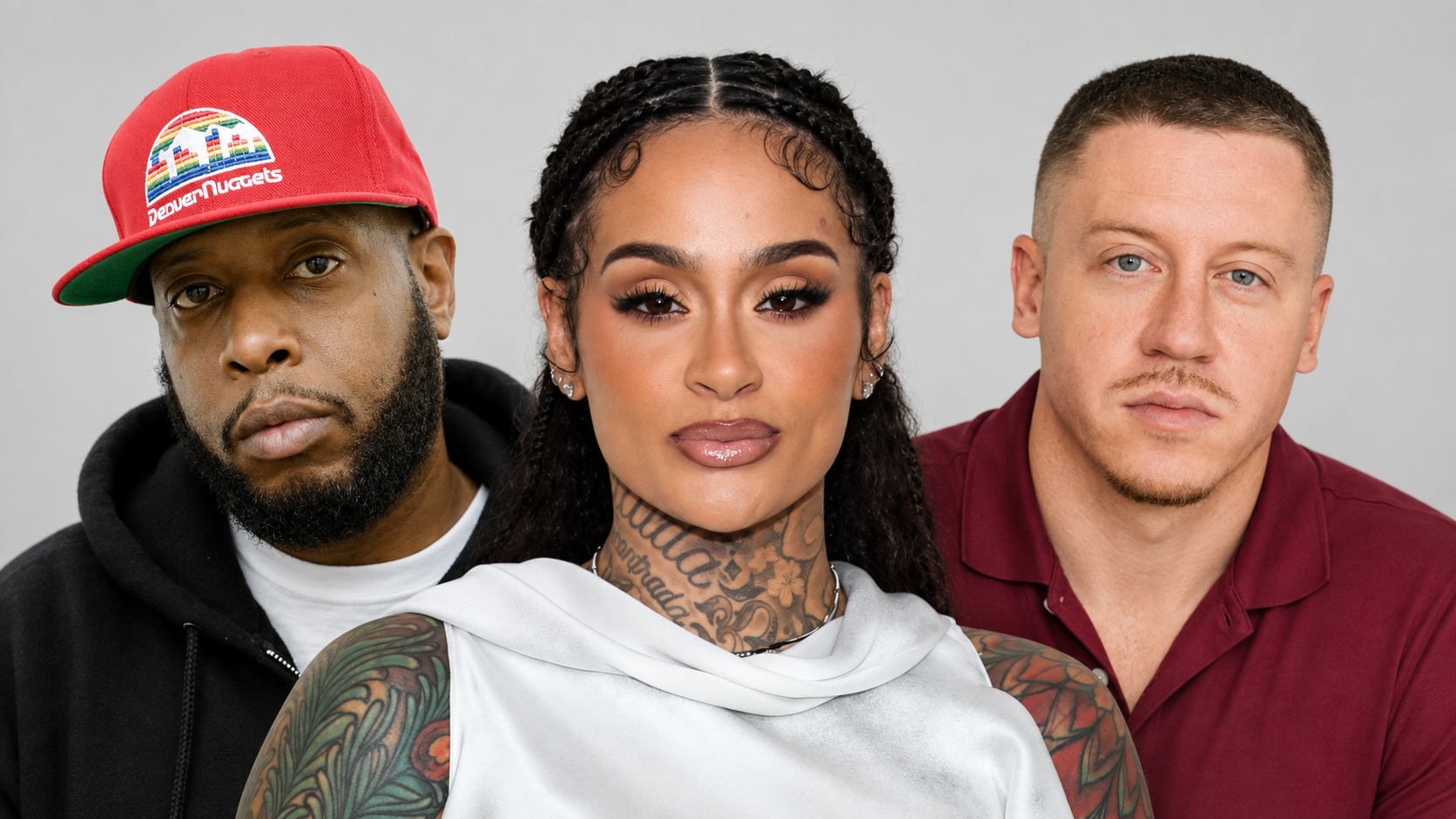
Macklemore’s removal from Ed Sheeran’s U.S. stadium tour has put a fresh spotlight on a question the music industry has been wrestling with for years: what can speaking publicly about Palestine cost an artist?
Macklemore was removed from the remaining U.S. dates of Sheeran’s Loop Tour in September 2026 after making pro-Palestine statements during a September 4 performance at MetLife Stadium. The rapper had been scheduled to open eight of the tour’s remaining 10 U.S. shows. Tour promoter Messina Touring Group said venue owners would not host concerts with Macklemore on the lineup.
The controversy followed Macklemore telling the MetLife crowd, “Free Palestine,” before performing “Hind’s Hall,” his protest song supporting Palestinians and student demonstrators. Robert Kraft, whose company owns Gillette Stadium, confirmed that he opposed Macklemore performing at the venue, citing what he described as rhetoric and imagery offensive to Jewish people. Macklemore has denied that his criticism of Israel is antisemitic.
View this post on Instagram
It was not Macklemore’s first time saying that supporting Palestine affected his business. After his 2024 appearance at the Palestine Will Live Forever benefit in Seattle, organizers removed the rapper from Las Vegas’ Neon City Festival, citing only “unforeseen circumstances.” In a subsequent statement reported by Billboard, Macklemore said, “I’ve lost endorsements, I’ve lost shows, I’ve lost business ties.” He did not publicly identify every company or event involved.
Kehlani has described similar professional consequences. During a June 2024 interview with “The Breakfast Club,” the R&B singer said their Palestine advocacy had resulted in lost opportunities involving brands and media.
“I have experienced a lot of pushback,” Kehlani said. “I’ve experienced a lot of loss.”
A year later, one of those consequences became public. Cornell University rescinded Kehlani’s invitation to headline its 2025 Slope Day concert after university president Michael Kotlikoff said community members had objected to what he characterized as Kehlani’s “antisemitic, anti-Israel sentiments.” According to The Cornell Daily Sun, Kehlani responded, “I am not antisemitic, nor anti-Jew,” while maintaining their opposition to Israeli government actions in Gaza. Cornell later booked rapper Gunna as the replacement headliner.
Palestinian Canadian pop singer Nemahsis, born Nemah Hasan, has also said supporting Palestine dramatically changed her career. NME reported that her record label dropped her days after the October 7, 2023 Hamas attack on Israel, and described the split as one of several professional blows that Nemahsis says followed her continued advocacy for Palestinians.
Nemahsis ultimately released her debut album, “Verbathim,” independently in September 2024. In subsequent interviews, she said the loss of label support forced her to rebuild her release plans without the financial and industry infrastructure she expected to have.
Talib Kweli faced similar consequences years earlier after refusing to distance himself from the Boycott, Divestment and Sanctions movement for Palestinian rights. In 2019, Germany’s Open Source Festival removed the Brooklyn rapper from its lineup after organizers asked him to clarify his position on BDS and he reaffirmed his support. The festival said its decision followed a German parliament resolution condemning the movement. The fallout did not stop with one performance. Kweli said he had five shows booked in Germany at the time, while an open letter published by The Guardian said his removal from Open Source led to the cancellation of his German tour. Kweli refused to change his position to preserve the booking, writing, “I would like to perform in Germany, but I don’t need to. I’d rather be a decent human being and stand up for what’s right than censor myself and lie about BDS for a check.”
Irish rap group Kneecap faced another version of the same industry tension after its 2025 Coachella appearances. The trio displayed pro-Palestine and anti-Israel messages during its performances. Days later, Independent Artist Group stopped representing the group in the United States. According to RTÉ, IAG confirmed the split but did not provide a reason, making it inaccurate to state as fact that Palestine advocacy alone caused the decision.
The consequences expanded beyond the agency relationship. The Irish Times reported that IAG had also been the sponsor for Kneecap’s U.S. work visas, forcing the group to seek a new sponsor. Two German festivals also removed Kneecap from their lineups after the Coachella controversy. Separate scrutiny later centered on older footage involving statements about Hamas and Hezbollah, which Kneecap said had been taken out of context and did not reflect support for either organization.
These cases are not identical, and the reasons offered by universities, promoters, agencies and venues differ. What the documented record does show is that supporting Palestine has repeatedly intersected with real career consequences for artists, whether through canceled bookings, lost representation, abandoned deals, or strained industry relationships.
