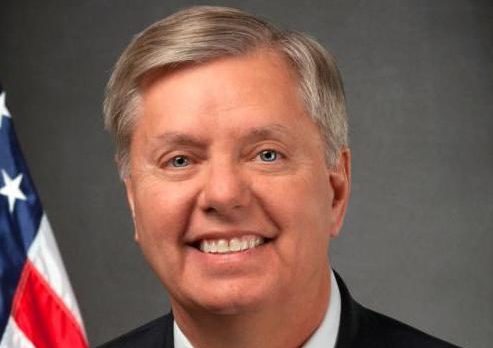
Lindsey Graham, the South Carolina Republican who spent more than two decades in the United States Senate and became one of the most recognizable and most argued about figures in American politics, has died at 71. His office confirmed the news Sunday morning and said he died Saturday night from what it described as a brief and sudden illness, asking for privacy for his family. Emergency personnel responded to a cardiac arrest call at his Capitol Hill home Saturday night, according to police scanner audio obtained by NBC News. He had just returned from Kyiv, where he met with Volodymyr Zelenskyy on Friday, and he was scheduled to appear on Meet the Press hours after he died. He was chairman of the Senate Budget Committee and was running for a fifth term this November.
The tributes came fast, and so did the receipts. That is the thing about Lindsey Graham. There was never a version of his death that was going to produce a quiet news cycle, because there was never a version of his career that produced a quiet week. He was a Judge Advocate General lawyer who rose to colonel in the Air Force Reserve, a House impeachment manager against Bill Clinton, a failed presidential candidate, an immigration dealmaker who once worked alongside Ted Kennedy and John McCain, and eventually the single most reliable public defender of a man he had spent a year telling America was a danger to the Republican Party.
That reversal is the first line of the record. In 2015 and 2016, Lindsey Graham called Donald Trump a kook, said he was unfit for office, and warned that if the party nominated him it would be destroyed and would deserve it. He predicted the immigration posture would cost Republicans a generation of Hispanic voters. Then he lost, Trump won, and Graham became his golf partner, his most quoted Senate ally, and the man who told the country in 2018 that he had never heard Trump say anything racist. Nothing in his public life explained the turn better than proximity to power, and he rarely pretended otherwise.
The judicial record is the second line. In 2016, when Barack Obama nominated Merrick Garland, Lindsey Graham told the country to use his words against him and said that if a vacancy opened in the final year of a Republican presidency, the seat should wait for the voters. In September 2020, with Ruth Bader Ginsburg barely buried and an election weeks away, he ran Amy Coney Barrett through his own Judiciary Committee. He never seriously attempted to reconcile the two positions.
Then there is how he behaved inside those hearings. During the Brett Kavanaugh confirmation, Lindsey Graham delivered the red faced outburst that became the defining image of the proceedings, and he made clear he was unmoved by Christine Blasey Ford’s testimony. Four years later, at the confirmation hearing for Ketanji Brown Jackson, the first Black woman nominated to the Supreme Court, he spent his time airing grievances about Guantanamo Bay detainees and walked out. He argued the prison should stay open indefinitely, a position he held with total consistency across four presidencies, including his support for provisions allowing indefinite detention without trial.
On race, the quotes speak for themselves and he never took them back. In 2020, days after the death of John Lewis, Lindsey Graham went on Fox News and said that a young African American or an immigrant could go anywhere in South Carolina, they just needed to be conservative and not liberal. Caught on audio at a private event years earlier, he joked that white men in male only clubs would do great under a Graham presidency, and then called it a joke. In 2010, discussing birthright citizenship, he pushed the idea that people were coming to the country to have babies and leave, and he floated amending the Constitution to end it. He blocked a Senate resolution recognizing the Armenian genocide in 2019 after a White House meeting with Recep Tayyip Erdogan.
The foreign policy is where Lindsey Graham was most himself and most dangerous, depending on who you ask. He was the loudest voice in the Senate for the Iraq War, then for strikes on Iran, then for escalation in Syria and Libya. This year he told Sean Hannity that he was not with the isolationists, he was with Israel, and that he was going home to South Carolina to ask families there to send their sons and daughters into the Middle East. Even MAGA turned on him for it. Megyn Kelly and Anna Paulina Luna both went at him publicly, and Luna noted that if he wanted a war so badly he could be the first to volunteer.
And there is Georgia. In November 2020, Lindsey Graham called Georgia Secretary of State Brad Raffensperger about absentee ballots. Raffensperger’s account was that Graham floated tossing legally cast votes. Graham denied it. Fulton County District Attorney Fani Willis pulled him into the criminal investigation into efforts to overturn the state’s results, and he fought the subpoena to the Supreme Court before finally testifying before the special grand jury. On January 6 he stood on the Senate floor and said enough was enough and counted himself out. He was back within weeks, telling Jonathan Swan that Trump was still his friend.
His defenders will tell a different story, and they are not lying either. Lindsey Graham served 33 years in uniform. He was a genuine dealmaker on immigration before the party made that career ending. He was one of the few Republicans who broke with Trump on the Saudi arms deal and on abandoning the Kurds in northern Syria. He drove sanctions on Russia at moments when almost no one in his party would touch the issue, and his last act as a public servant was a trip to Kyiv. South Carolina kept sending him back for a reason.
But a man is entitled to a fair accounting, not a flattering one, and the fair accounting of Lindsey Graham is that he was a serious legislator who chose, again and again, to spend his seriousness in service of whoever was holding the gavel. He announced a federal abortion ban at 15 weeks in September 2022, weeks before the midterms, after spending years insisting the issue belonged to the states, and blindsided his own leadership doing it. He knew exactly what he was doing every time. That is what makes it a record and not a mistake. He was 71.