

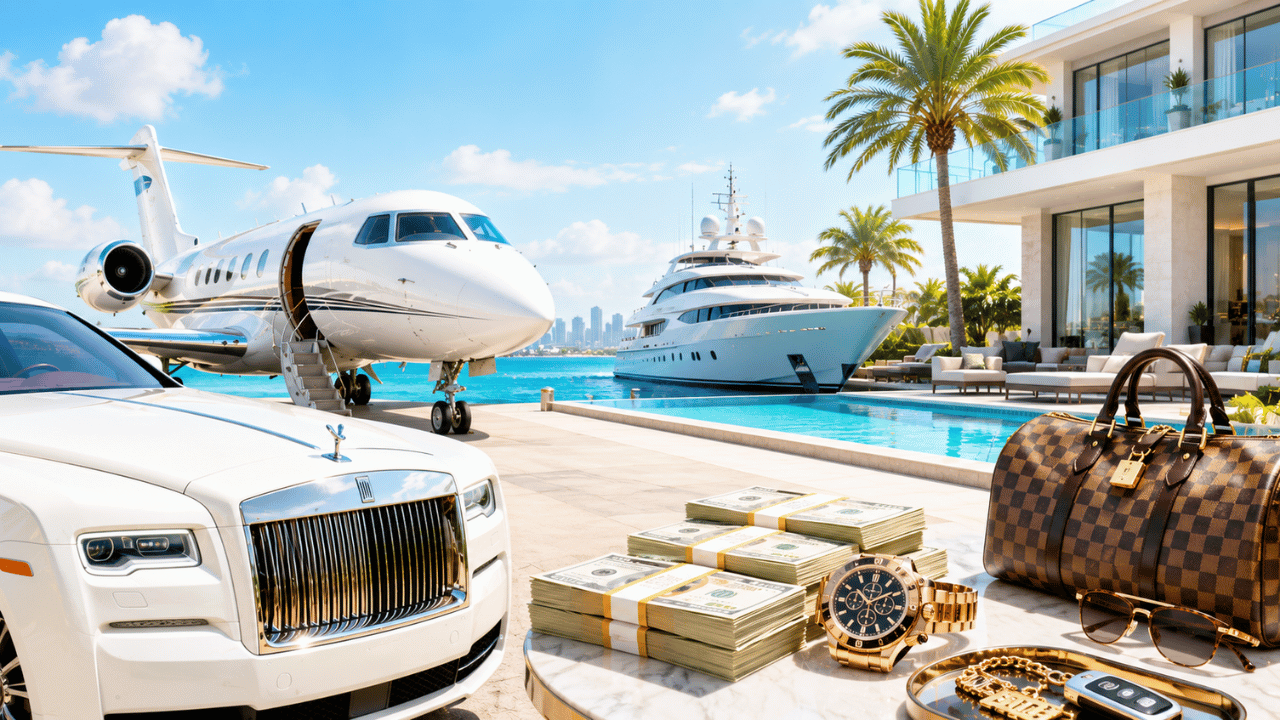
Billionaire spending is not really about buying bigger versions of the things everybody else wants. At that level, money becomes a tool for control. Control over time. Control over privacy. Control over access. Control over who gets close, who gets information, and how easily life can move without interruption.
A billionaire is not sitting around comparing vacation packages or worrying about the wait at baggage claim. They are not building their lifestyle around public schedules, crowded lobbies, or restaurant reservations that can disappear with one phone call. That does not mean every billionaire lives the same way, but among the ultra rich, the pattern is clear. The real luxury is not just having expensive things. It is having a life designed so the outside world has as little friction as possible.
That is why billionaire spending often starts with mobility. Private jets may look like the ultimate flex from the outside, but for people moving between board meetings, estates, investment opportunities, family obligations, and events across the world, private aviation is also a time management system. Commercial airports come with delays, security lines, public exposure, and schedules that belong to someone else. A private flight turns travel into something closer to an extension of the office.
The same logic applies to yachts. A superyacht is not just a floating party. It can function like a mobile estate with staff, security, chefs, guest suites, meeting space, entertainment areas, and privacy built into every level. For the ultra wealthy, billionaire spending on a yacht is not always about being seen. Sometimes it is about being unreachable unless they choose otherwise.
Then come the homes. Not just one mansion, but homes in different markets for different parts of life. A penthouse in the city where deals happen. A beach estate where family can disappear for a week. A mountain property for winter. A private compound with enough space for staff, security, extended family, guests, and the kind of privacy that a luxury hotel cannot always provide.
At a certain point, the house is not just a house. It is infrastructure. It has chefs, estate managers, drivers, personal assistants, housekeepers, security personnel, landscapers, and people whose entire job is to make sure nothing feels difficult. Billionaire spending is built around removing the everyday tasks most people have no choice but to manage themselves.
The public usually notices the visible luxuries first. The jet. The yacht. The cars. The watch collection. The rare handbag. The private island. Those things are real, but they are only the front facing part of a much larger machine. The spending nobody sees is often the spending that matters most.
Security is one of the biggest examples. When someone’s net worth, address history, family names, travel habits, or business moves are public, protection becomes more than a nice to have. The ultra wealthy may rely on residential security, travel teams, cybersecurity experts, risk consultants, and advance planning before major events. The goal is not just safety. It is control over exposure.
Privacy has become its own luxury category. Billionaire spending includes lawyers who handle nondisclosure agreements, crisis teams that know how to respond before a story spreads, reputation advisers, privacy consultants, and digital security experts who work to protect personal information. In a world where one photo, one leak, or one hacked account can become a headline, privacy is not passive. It has to be managed.
That is where family offices enter the picture. For many billionaire families, wealth is too complex for a basic accountant or one financial adviser. A family office can coordinate investments, taxes, philanthropy, estate planning, staffing, real estate, legal matters, and lifestyle logistics. It is not just about keeping money organized. It is about keeping the entire empire from getting messy.
This is also where the line between spending and investing starts to blur. Fine art, rare watches, vintage cars, wine collections, and other luxury assets are not always purchased only for enjoyment. Some wealthy collectors treat them as part of a broader portfolio, with advisers helping manage provenance, insurance, storage, valuation, and resale strategy. The market can move up or down, and no collectible is guaranteed to appreciate, but the ultra rich often understand how culture, rarity, and access can become part of long term wealth planning.
That is the part of billionaire spending that separates fantasy from strategy. A painting hanging in a private residence may also be an asset. A wine cellar may be built with climate control, inventory management, and long range value in mind. A vintage car collection may sit in a private garage that looks more like a museum than storage. These purchases say something about taste, but they can also say something about power.
The biggest difference between millionaires and billionaires, though, is not always the lifestyle. It is proximity to opportunity. A person worth millions may invest well. A person worth billions may sit in the room before the next massive company becomes a household name. They may back a founder early, join a private deal before the public ever hears about it, or put money into infrastructure, technology, real estate, energy, sports, media, or hospitality plays that take years to mature.
That access changes everything. Billionaire spending is often less about a single purchase and more about positioning. The right private equity deal, early stage investment, or real estate acquisition can create more wealth while the lifestyle machine keeps running. To the average person, it may look like constant consumption. Behind the scenes, much of it is a system designed to protect and grow what already exists.
Even the experiences are different. The ultra wealthy do not just book a table. They may buy out the room. They do not just take a vacation. They may bring the chef, the trainer, the security team, the nanny, the stylist, and the assistant. They do not just attend events. They enter through private doors, sit in controlled spaces, and leave before the crowd can close in.
That is the real headline. Billionaire spending is not simply about being flashy. It is about making the world bend around your preferences. It is about never needing to wait, explain, compete, or ask twice. It is about having enough money to make inconvenience optional.
Still, the most valuable thing may be the quietest purchase of all. Not the jet. Not the yacht. Not the island. Not the watch. Privacy is the thing most people cannot buy in any meaningful way, and it may be the thing billionaires protect the hardest. The ability to move without being tracked, watched, photographed, or easily reached is a privilege that only becomes more valuable as fame, wealth, and public curiosity grow.
That is the luxury nobody has to post. At the highest level, the flex is not always what people can see. Sometimes the real flex is making sure they cannot see you at all.
