

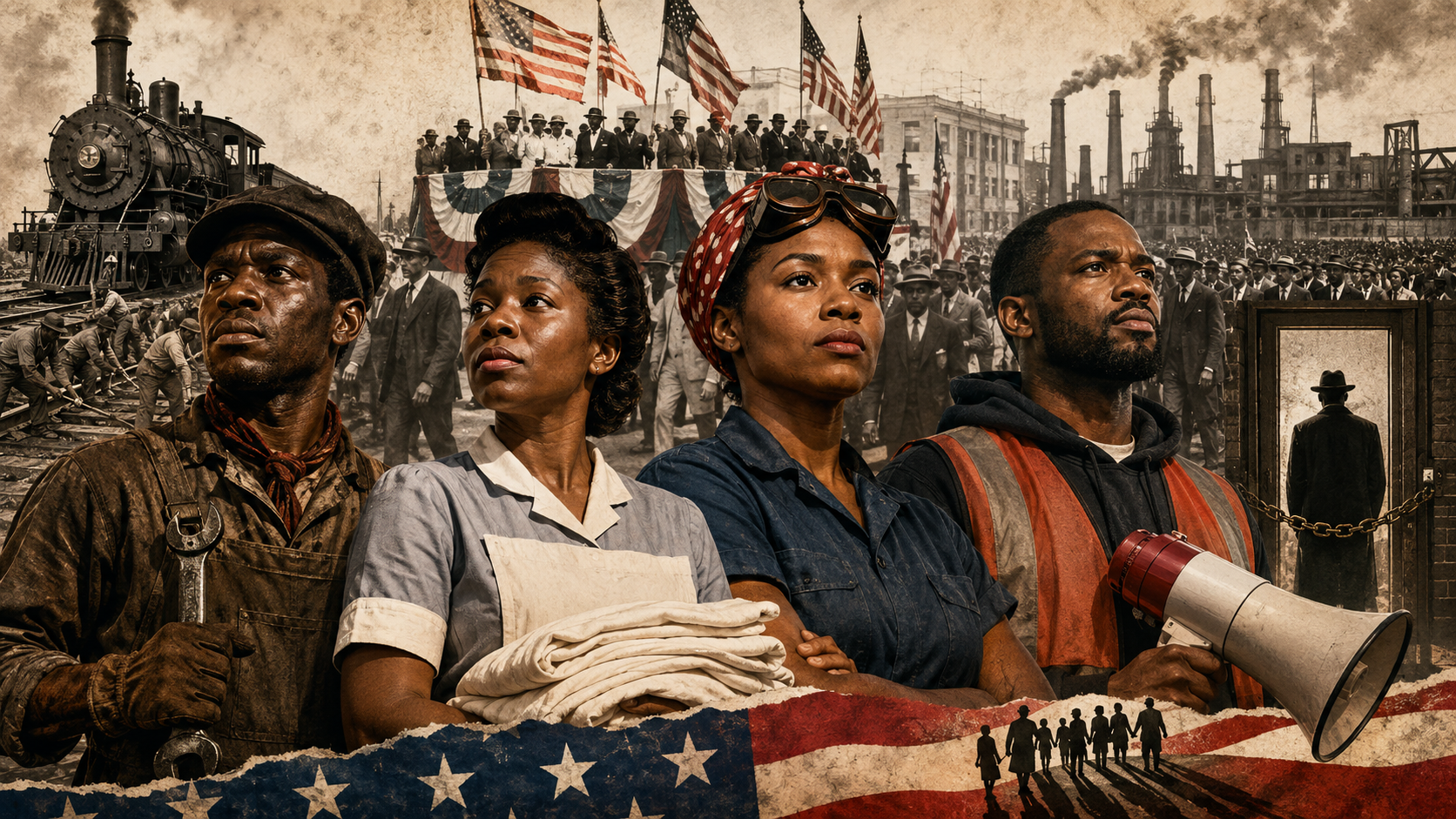
Labor Day may come with cookouts, sales and one last long weekend before fall, but the holiday was born from a much harder fight over who worked, who profited and who had power. For Black Americans, the Black labor history connected to that fight is especially complicated. Black workers helped build American industries and communities, yet for generations many were denied access to the very unions organizing for better wages and working conditions.
The federal holiday traces its roots to the organized labor movement of the late 1800s. The first Labor Day celebration took place in New York City on September 5, 1882, after the Central Labor Union planned a parade and gathering for workers. By 1894, more than 20 states had adopted Labor Day observances, and President Grover Cleveland signed legislation making the first Monday in September a federal holiday.
That timeline, however, sits inside a much bigger American labor story.
For Black people, forced labor had shaped life in the United States for centuries before workers were marching through New York demanding recognition. Enslaved Black people generated enormous wealth through agricultural, domestic, skilled, and industrial labor without wages or freedom. After the Civil War, emancipation technically transformed millions of formerly enslaved people into free workers, but freedom did not automatically create fair working conditions.
During Reconstruction, the federal Freedmen’s Bureau supervised labor contracts between freedpeople and landowners, showing how central employment was to the transition out of slavery. Black workers were negotiating wages and working arrangements while facing a Southern economy determined to retain control over their labor.
Then came another obstacle: organized labor itself.
Although unions were fighting employers over wages, hours, and workplace power, racial equality was hardly guaranteed inside the labor movement. By the early 1900s, the American Federation of Labor largely represented skilled trades and discouraged participation by Black workers, immigrants, and women. Other railroad brotherhoods also barred nonwhite workers from membership.
So Black workers often found themselves squeezed from both directions. Employers could exploit racial discrimination to keep wages low, while some unions fighting those employers still refused to organize Black workers equally.
The railroad industry became one of the clearest examples.
After the Civil War, the Pullman Company hired large numbers of Black men, including formerly enslaved men, to serve passengers aboard its luxury sleeping cars. The jobs provided opportunities for Black families during an era of widespread discrimination, but porters worked under demanding conditions and depended heavily on tips. Pullman eventually became one of the nation’s largest employers of African Americans.
And there is an especially striking Labor Day connection.
In 1894, workers at the Pullman Company went on strike after wages were reduced while rents in the company-owned town remained high. The conflict expanded into a nationwide railroad boycott led by the American Railway Union. President Cleveland’s administration later sent federal forces during the crisis. That same year, Cleveland signed the law establishing Labor Day as a federal holiday. The Library of Congress notes that the holiday’s federal recognition came during the explosive Pullman labor conflict.
But the American Railway Union involved in that fight was itself restricted to white railroad employees, according to the National Park Service. Black railroad workers were standing inside the same industry while being shut out of one of its most powerful organizing movements.
Decades later, Black Pullman workers built power on their own terms.
In 1925, Pullman porters organized the Brotherhood of Sleeping Car Porters under the leadership of A. Philip Randolph. The fight was long. Pullman resisted the organization, but in 1937 the Brotherhood secured a major labor agreement with the company that improved pay, job protections, and working conditions. The victory became a landmark moment in Black labor organizing.
Randolph did not stop with railroad workers.
He connected economic rights directly to civil rights. In 1941, Randolph threatened a massive march on Washington to protest discrimination against Black workers in defense industries. President Franklin D. Roosevelt responded by issuing Executive Order 8802, which prohibited discrimination in defense employment and created a federal fair-employment mechanism. Randolph later became one of the central organizers behind the 1963 March on Washington for Jobs and Freedom.
That history changes the way Labor Day looks.
Black workers were not simply participants in America’s labor story. They repeatedly had to fight for recognition inside a movement supposedly built around the dignity of workers.
So when Labor Day celebrates the people whose labor built the country, Black history belongs in the center of the conversation. From formerly enslaved workers negotiating their first labor contracts to Pullman porters organizing against one of America’s most powerful companies, Black Americans spent generations pushing the meaning of worker freedom further than the country was initially willing to take it.
The cookout may be the tradition now. The fight over who gets dignity, protection, and a fair piece of what their labor creates is the history underneath it.
