

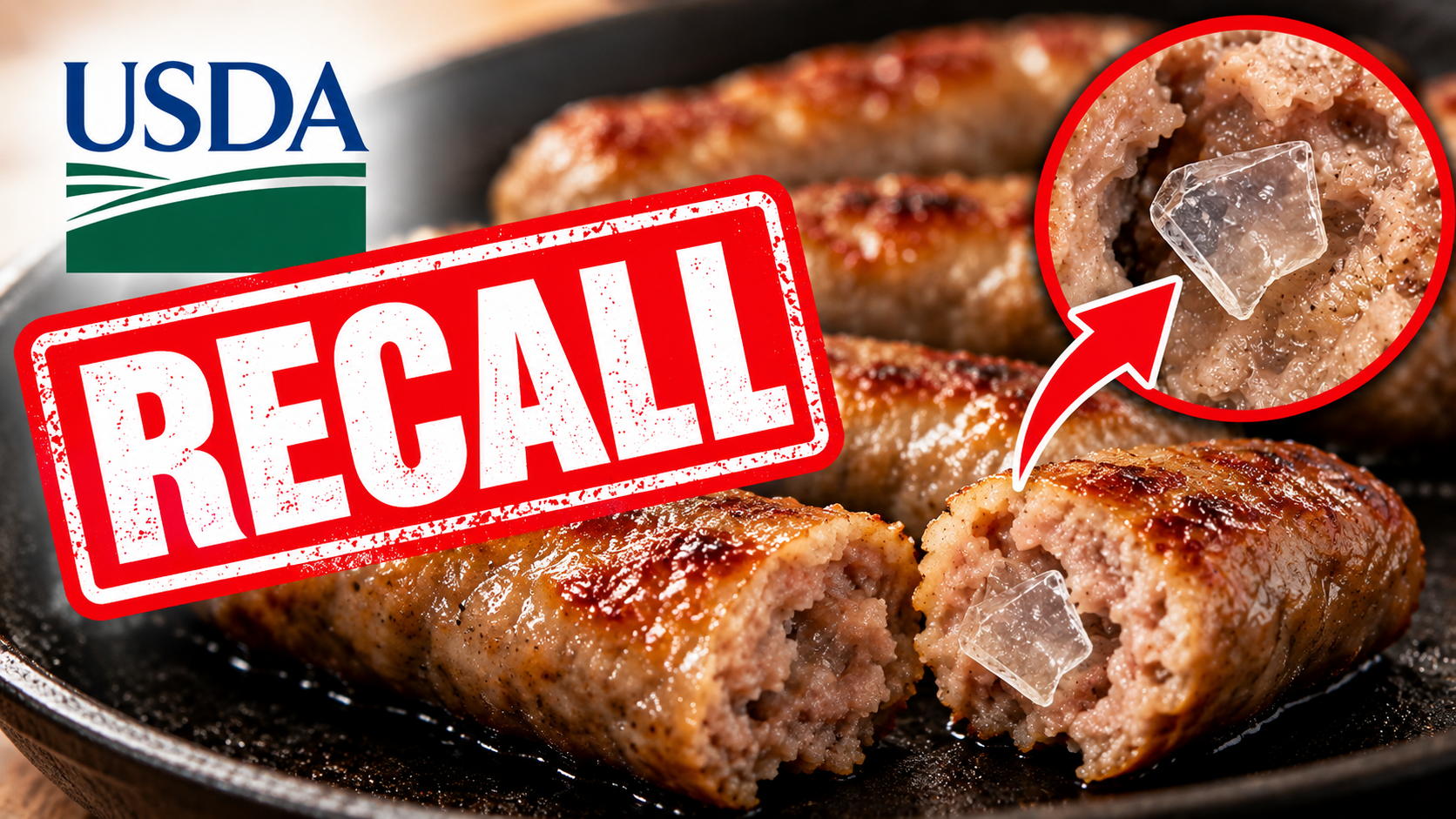
More than a ton of breakfast sausage is being pulled from foodservice kitchens after customers reported finding pieces of hard plastic inside the product.
According to the U.S. Department of Agriculture’s Food Safety and Inspection Service, Fontanini Foods LLC recalled approximately 2,320 pounds of raw, frozen pork breakfast sausage because it may contain foreign material, specifically clear, hard plastic. The agency announced the breakfast sausage recall on September 25.
The affected sausage was produced on June 23, 2026, according to FSIS. The recall covers 10-pound cardboard cases containing Fontanini Pork Sausage Links. The boxes have “ITEM 393” printed on them, while the shipping labels read “PACKED ON 06/23/2026.”
FSIS said the recalled cases also carry the establishment number “EST. 6944” inside the USDA mark of inspection. The products were shipped to distributors in California, Florida, Michigan and Nevada for use at foodservice establishments, including restaurants.
The breakfast sausage recall began after Fontanini Foods received two customer complaints involving “clear, hard plastic found in the sausage product,” according to the federal agency.
Despite the serious nature of the recall, FSIS said there have been no confirmed reports of injuries or adverse reactions connected to the affected sausage. Anyone who believes they may have suffered an injury is advised by the agency to contact a healthcare provider.
The USDA classified the action as a Class I recall. Under the agency’s recall classification system, Class I applies to “a health hazard situation where there is a reasonable probability that the use of the product will cause serious, adverse health consequences or death.”
That classification makes identifying and removing the affected sausage especially important for restaurants and other businesses that may still have cases stored away.
“FSIS is concerned that some product may be in food service and restaurant freezers,” the agency said in its recall notice.
FSIS is urging restaurants and other foodservice establishments not to serve any of the recalled sausage. According to the agency, affected products should instead be thrown away or returned to the place of purchase.
The recall is different from many food recalls consumers encounter because these sausage links were not stocked for direct purchase in grocery stores. According to Fontanini Foods’ parent company, Hormel Foods, the affected product was sold only to foodservice customers. The company said 232 cases, totaling 2,320 pounds, are involved and that no other Fontanini products are affected.
“This product was sold exclusively to foodservice operators and was not available for direct purchase by consumers in retail stores,” a Fontanini Foods spokesperson told PEOPLE. “All foodservice customers that received the affected product have been directly notified.”
Fontanini’s own recall announcement also states that customers who received the product have been notified and that no illnesses or injuries have been reported in connection with the recall.
FSIS said it routinely conducts recall effectiveness checks to verify that companies notify customers who received recalled products and take appropriate steps to make sure those products are no longer available.
The agency’s recall notice specifically identifies distribution to California, Florida, Michigan, and Nevada. That means restaurant operators and other foodservice businesses in those states should pay close attention to stored frozen inventory, particularly cases that may have been sitting in freezers since the June production date.
The most important identifiers are the Fontanini Pork Sausage Links name, “ITEM 393,” the June 23, 2026 packing date, and establishment number “EST. 6944.”
For consumers, the foodservice-only distribution means there is no indication from FSIS that shoppers need to search their grocery purchases for the recalled cases. The concern centers on restaurants and other foodservice operators that received the sausage through distributors.
The recall serves as a reminder that products kept frozen can remain in circulation long after their original production date. Months after these sausage links were produced, federal officials are still warning businesses to check their freezers and remove any affected cases before they reach customers.
