

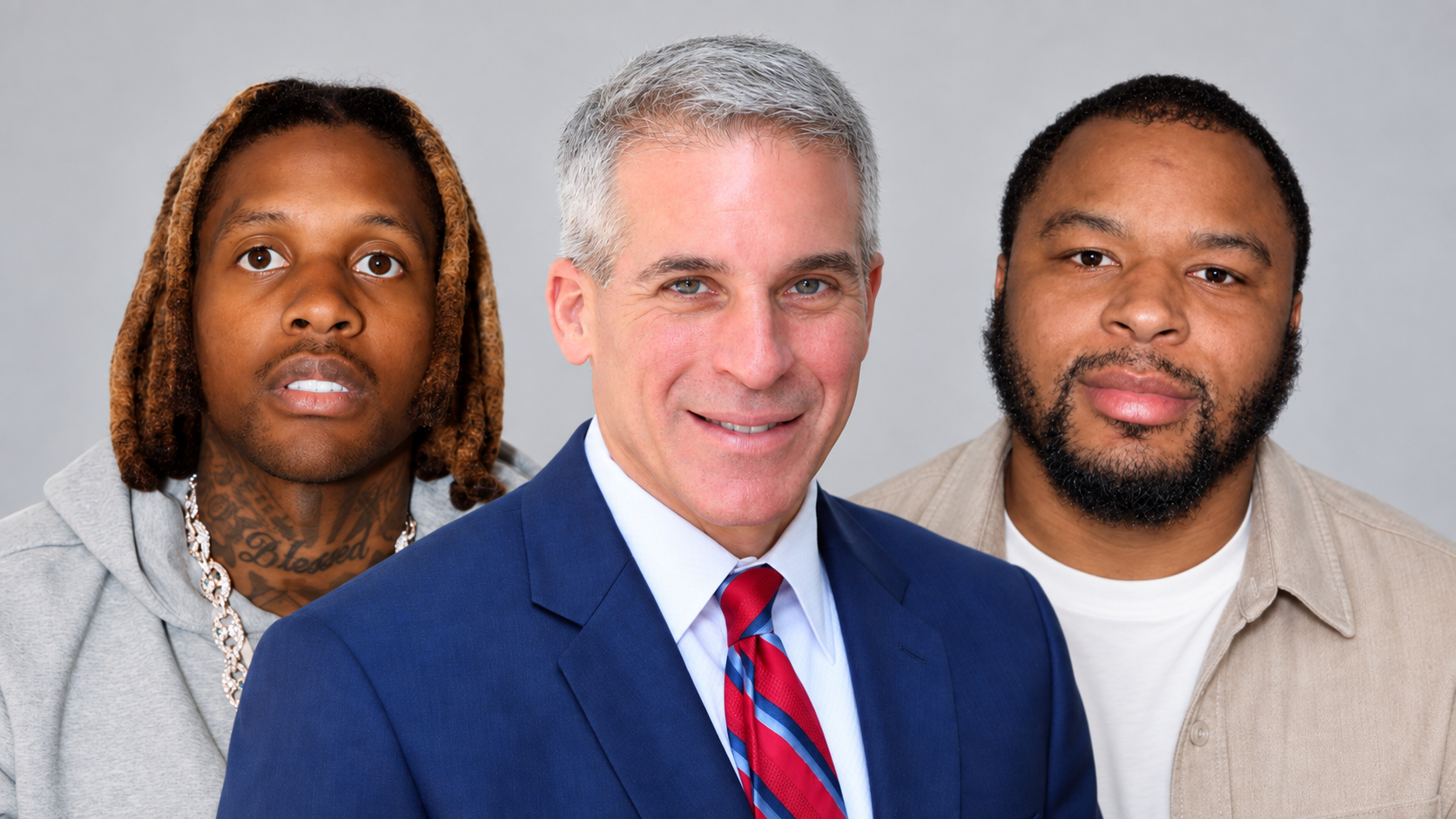
Lil Durk’s defense used closing arguments Tuesday to make Kacey “OTF Jam” Hester’s credibility one of the biggest questions standing between the rapper and a possible conviction. The OTF Jam testimony has been a centerpiece of the government’s case against Durk, whose legal name is Durk Banks. Defense attorney Brian Steel opened his September 8 closing argument by urging jurors to look closely at the man prosecutors relied on to connect Durk directly to the alleged plot against Quando Rondo.
“He has been incarcerated more in his lifetime than he has been out,” Steel told jurors, per Parise. “This man is not human … That’s who the government wants you to rely on.”
Steel also challenged how Hester’s story developed while he was cooperating with investigators.
“Is it because they’ve already rehearsed with Hester?” Steel asked, before adding, “How dare they put him in front of you and continue this story? They know it’s a lie.”
That attack makes more sense when the full history behind the OTF Jam testimony is considered.
According to Los Angeles Magazine, Hester testified that he had known Durk since they were teenagers and had been part of the Black Disciples since childhood. Hester described himself to jurors as a person who gained status through violence and said his role within the gang was that of a shooter. He also testified that a gun was first placed in his hand when he was 12 years old.
Hester told jurors that he spent roughly 12 years in prison after an attempted murder conviction. According to Los Angeles Magazine, he said Durk remained in contact with him during that sentence, answered his calls, and contributed money toward his attorney and prison account. Hester said Durk continued supporting him after he returned home in early 2022.
That longtime relationship is what makes Hester particularly important to prosecutors. Rather than describing Durk from the outside, the OTF Jam testimony comes from someone who says he was close to him for years and personally participated in the August 2022 shooting.
Hester testified that he was released from prison in February 2022 and was pulled into the California trip months later. He eventually admitted being one of the gunmen involved in the August 19, 2022 attack near the Beverly Center that killed Saviay’a Robinson, the cousin of Quando Rondo, whose legal name is Tyquian Bowman.
The Justice Department’s original allegations accused Durk of ordering an attack on Bowman as retaliation connected to the November 2020 killing of King Von, whose legal name was Dayvon Bennett. Federal prosecutors alleged that several men tracked Bowman around Los Angeles before at least 18 rounds were fired at his vehicle. Bowman survived, but Robinson was killed.
Durk has pleaded not guilty and has denied directing the shooting.
One of the most significant pieces of Hester’s background came after the Los Angeles attack. Hester was arrested in May 2023 while riding in a vehicle with a gun while he was still on parole. While in custody, Hester passed a note to a guard stating that he knew about murders. His eventual cooperation with investigators became a major focus of Steel’s cross-examination.
Los Angeles Magazine also reported that Steel confronted Hester with a May 24, 2023 interview in which Hester told authorities he had not discussed King Von, Quando Rondo, or a payment before Robinson was killed. Hester later gave jurors an account that included alleged conversations involving Durk before the shooting. The defense has repeatedly used those differences to argue that the OTF Jam testimony became more damaging to Durk as Hester pursued his own path toward a potentially lighter sentence.
Hester has pleaded guilty to his own role in Robinson’s killing and testified with the expectation that his cooperation could be considered when he is sentenced. Prosecutors emphasized that Hester was obligated to tell the truth and that the government had not promised him a specific sentence reduction.
The public questions about Hester also stretch back nearly two years. Claims spread almost immediately after Durk’s arrest that OTF Jam had secretly been working with authorities.
By the time Durk’s trial began in August 2026, there was no longer any question about Hester’s status. Prosecutors openly identified him as a cooperating witness who had pleaded guilty, and he took the stand to implicate Durk.
The government did not rely on Hester alone. Prosecutors also presented testimony from Keith Jones and Durk’s former assistant Kavon “OTF Vonnie” Grant, who also entered guilty pleas and cooperated. Prosecutors told jurors that the cooperators would provide firsthand accounts connecting Durk to the alleged revenge plot, while the defense argued they had powerful incentives to shift responsibility toward the most famous person in the case.
That conflict is exactly what Steel returned to during closing arguments.
Steel framed Durk as a celebrity prosecutors targeted because of his name and status rather than evidence proving he joined the alleged agreement.
“They put a target on a human being. A celebrity human being. That’s why you’re here.”
Steel also argued that being connected to OTF does not automatically establish that Durk agreed to crimes committed by other people around him. The defense has maintained that prosecutors must prove Durk knowingly entered the specific conspiracy instead of asking jurors to infer guilt from his relationships, music, money, or position within OTF.
“Durk Banks is not guilty,” Steel told the jury. “If you have one reason to doubt that Durk is involved … the verdict is not guilty.”
Durk and his codefendants rested without taking the stand, and jury deliberations were expected to begin Wednesday, September 9. That means the weeks of testimony, surveillance evidence, digital records and competing accounts are now narrowing into one central question for jurors: whether prosecutors proved Durk’s involvement beyond a reasonable doubt, or whether the credibility problems surrounding the OTF Jam testimony leave enough doubt to prevent a conviction.

JURORS ARE NOT JUDGES NOR ATTORNEYS BY PROFESSION.
EXPLOITATION LAWSUIT.