

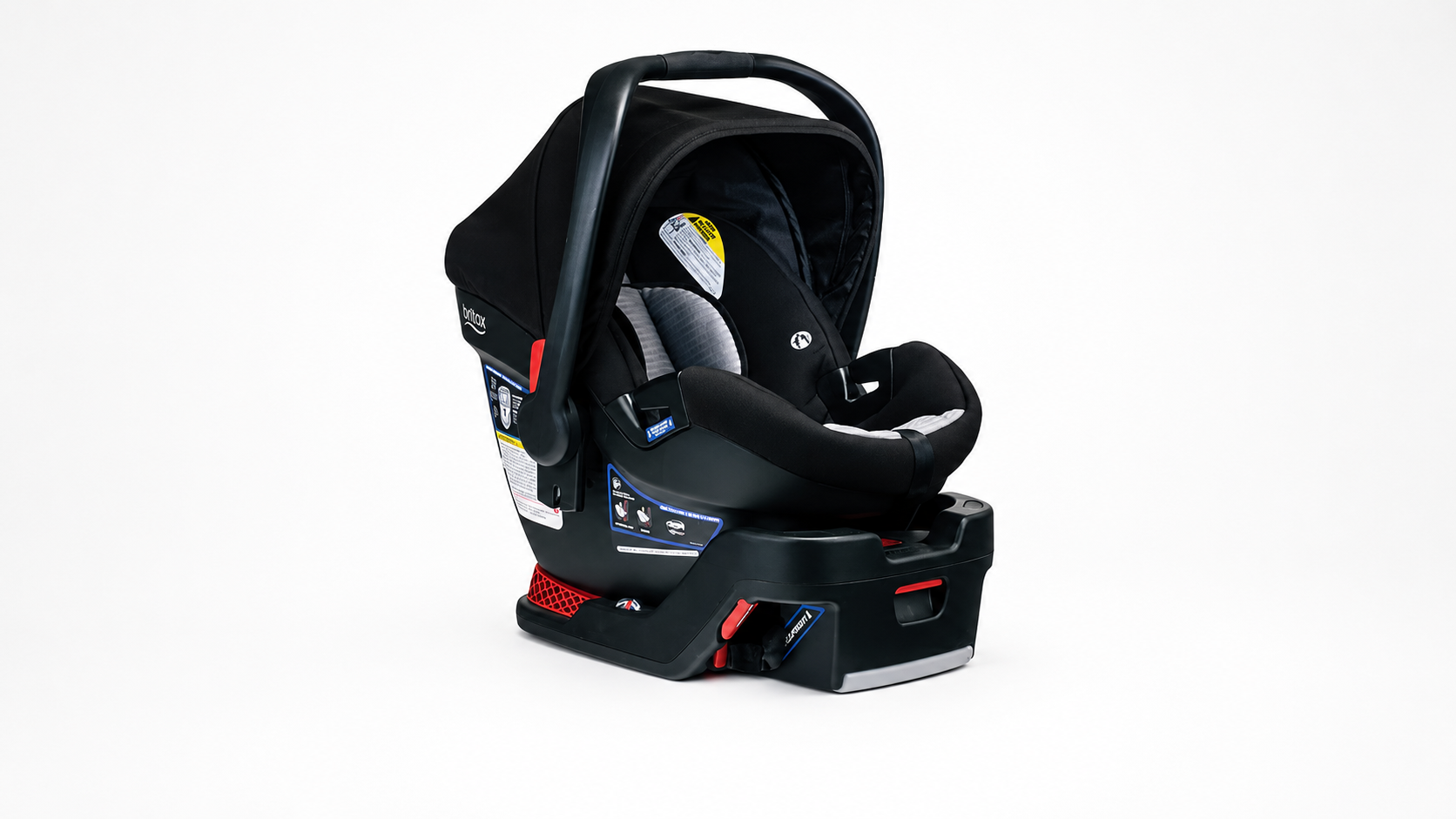
Families using several older Britax infant car seats have a new safety warning to check before picking up the carrier by its handle. The Britax recall covers 114,660 child seats after regulators determined that a screw inside the carrying handle can loosen and potentially allow part of the handle to separate, according to reporting on a recall notice from the National Highway Traffic Safety Administration.
According to the NHTSA notice cited, the defect can result in the screw coming loose, “causing the handle to partially detach,” while the seat is being carried. The agency described the potential consequence plainly: “A child may fall after a partial detachment, increasing the risk of injury.”
The Britax recall applies to certain B-Safe Gen 2, B-Safe Gen 2 Flexfit, B-Safe Gen 2 Flexfit Plus, B-Safe 35, B-Safe Ultra, and Endeavours child seats, according to the same NHTSA-based report. The recall was first posted August 20, and the affected population includes more than 114,000 seats that may still be in homes, vehicles, or circulation as previously purchased baby gear.
Britax told ABC News that the safety action involves “certain discontinued B-Safe and Endeavours model car seats last manufactured on May 16, 2023.” While the products are no longer being manufactured, Britax noted that some affected seats may still be approaching the end of their designated usable lifespan, making it important for caregivers to check both the recall status and expiration information on the seat they currently own.
“We have identified that, in rare cases involving extended use and wear, the carry handle may partially detach, creating a potential hazard. There have been no reports of serious injury associated with this condition,” Britax said in its statement to ABC News. “Many of the potentially affected products are also nearing the end of their designated expiration period. Caregivers are reminded never to use an expired car seat, as outlined in the product user manual. Products subject to this safety action should be carried or lifted by the shell until a remedy kit becomes available.”
That temporary guidance is especially important because a permanent fix is not yet available. According to the NHTSA recall information and Britax’s statement, the company is developing a remedy kit, while notification letters are expected to be mailed to affected owners beginning October 19. Britax is also directing owners to register their seats so they can receive updates when the remedy becomes available. Customers with questions can contact Britax at 888-427-4829.
“At Britax, children’s safety is at the heart of everything we do,” the company said in its statement. “We are taking this action out of an abundance of caution to support families, provide clear guidance, and make an appropriate remedy available to affected customers.”
The new Britax recall also arrives during a stretch of other child car seat recalls in recent months, although those safety actions involve different manufacturers and unrelated defects. An NHTSA recall report filed in August shows Evenflo recalled 22,981 Revolve180 LiteMax NXT seats and related systems because a level indicator could allow the seat to be installed with a child sitting more upright than intended. NHTSA said testing under those conditions indicated a heightened risk of injury in a crash.
Just weeks earlier, another NHTSA report involving Evenflo covered 59,661 Reo by Revolve360 child seats. The July recall followed testing showing the adjustable headrest could shift from its intended position in certain configurations during a crash, potentially increasing the risk of injury. That recall involved multiple Reo color variants manufactured through June 2026.
In April, NHTSA’s official Graco recall report detailed another separate car seat issue affecting 5,126 SnugRide Turn & Slide seats and related travel systems. Regulators said a properly seated infant carrier could detach from its convenience base under certain crash conditions. Graco advised owners to install the child seat using the vehicle seat belt without the base until a replacement arrived, and the company offered replacements at no charge.
Those recalls do not point to one shared defect, but they reinforce why caregivers should check the exact brand, model number, and manufacture date instead of assuming a seat is unaffected because it looks similar to another version. The NHTSA car seat safety guidance recommends registering child restraints with their manufacturers so families can receive recall and safety notices directly, while the agency also offers recall alerts through its SaferCar system.
For families affected by the Britax recall, the immediate instruction from the company is not to rely on the carrying handle while waiting for the remedy. Britax says the recalled seat should instead be lifted or carried by its shell, and caregivers should verify that the seat has not passed its expiration period while they wait for the company’s repair kit and formal recall notification.
