

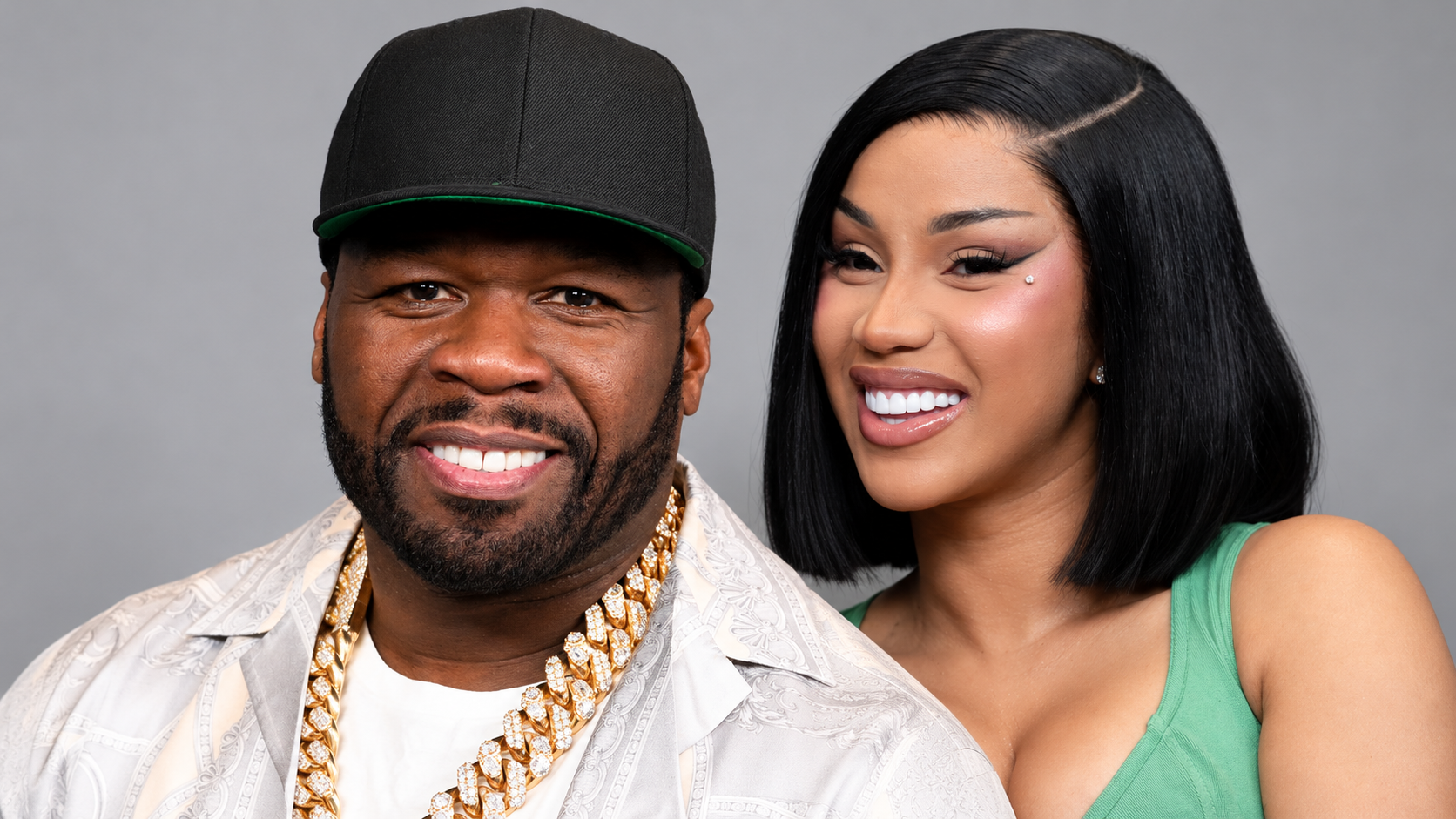
50 Cent is giving Cardi B her flowers for escaping what he calls the “Love & Hip Hop” graveyard and becoming one of the biggest names in rap after spending just two seasons on reality television.
Video
During the October 13 episode of “The Crew Has It” podcast, the rap mogul reflected on Cardi’s journey from VH1 personality to Grammy-winning superstar. 50 Cent argued that Cardi had something many aspiring artists lacked: the ability to entertain people before having a hit record.While discussing Cardi B and Sexyy Red, he said both women embrace “hood [expletive]” and are “entertaining to watch without the hit record.”
“They were already going viral just being who they are,” he continued. “Look, Cardi’s from the graveyard. She came out the graveyard, bro. ‘Love & Hip Hop.’ Everybody that was there was dying. That was the dead hip-hop section.”
50 Cent explained why he believed Cardi’s success was unusual, suggesting the reality franchise had become a place where struggling artists sought exposure when their music careers were not taking off.
“The people who couldn’t expect to have hit records and do things, they went to go do ‘Love & Hip Hop’ and be seen,” he added. “The way she was responding [on the show] was comedic, and that makes her bulletproof.”
His comments highlighted something that made Cardi B’s career different. While “Love & Hip Hop” introduced plenty of aspiring rappers to television audiences, Cardi managed to turn that exposure into mainstream music success.
However, her come-up started long before she stepped in front of VH1’s cameras.
The Bronx native, born Belcalis Almánzar, developed a following on social media through her hilarious, outspoken videos about relationships, stripping, money, and everyday life.
Before television fame, she worked at a supermarket and later became an exotic dancer. Her personality helped her attract hundreds of thousands of Instagram followers, eventually opening the door to music and television opportunities.
On December 14, 2015, Cardi made her debut on season six of “Love & Hip Hop: New York.” The season also showcased Remy Ma, Papoose, Mariahlynn, and other personalities navigating the music business.
Cardi immediately stood out.
Her confessionals, arguments, facial expressions, and unapologetic personality made her one of the show’s breakout stars. Fans connected with her humor and the fact that she rarely seemed concerned with how other people perceived her.
But behind the memorable television moments, Cardi was serious about becoming a rapper.
Her storyline included a complicated relationship with DJ Self, a New York radio personality who was connected to her early music ambitions. Their on-screen relationship became strained over expectations surrounding his involvement in her career.
Instead of allowing those setbacks to define her, Cardi continued recording music.
In February 2016, she released “Stripper Hoe,” followed by her debut mixtape, “Gangsta [Expletive] Music, Vol. 1,” on March 7. The project included “Foreva” and helped establish her as more than a reality television personality.
By the time season seven premiered on November 21, 2016, Cardi’s popularity was growing, but she was already thinking about her next chapter.
On December 29, 2016, she announced that she would leave “Love & Hip Hop: New York” after two seasons.
Cardi explained on Instagram that her decision was not connected to a feud with Mona Scott-Young or a disagreement over money. She wanted to focus on other career opportunities and knew her schedule would become increasingly demanding.
Although season seven continued airing through February 2017, Cardi had already committed to moving forward without the show.
What happened next proved just how important that decision would become.
On January 20, 2017, only three weeks after announcing her exit, Cardi released her second mixtape, “Gangsta [Expletive] Music, Vol. 2.” The project included “Lick,” featuring Offset, and gave listeners another look at her developing sound.
Days later, on January 31, she appeared on BET’s “Being Mary Jane,” expanding her television experience beyond reality programming.
Then came another major opportunity.
By February 2017, Cardi had secured a recording deal with Atlantic Records. The agreement placed her in a stronger position to reach audiences beyond the fan base she had built through Instagram and VH1.
On June 16, 2017, Cardi released “Bodak Yellow,” the song that would change her career forever.
The record gradually climbed the Billboard Hot 100 before reaching No. 1 in September 2017. Cardi became the first solo female rapper since Lauryn Hill in 1998 to top the chart without a featured artist.
Less than a year after announcing her departure from “Love & Hip Hop,” Cardi had gone from reality television breakout to having the biggest song in the country.
Her success continued with the April 2018 release of “Invasion of Privacy,” which debuted at No. 1 on the Billboard 200. According to the Recording Academy, the album won Best Rap Album at the 2019 Grammy Awards, making Cardi the first solo female rapper to win the category.
50 Cent previously celebrated her journey during a 2023 interview with Billboard, describing Cardi as an example of the American dream.
“She’s from the bottom. She was in Club Lust in Brooklyn. [Going] from that and actually making a hit record and turning into who she did? I don’t know why anybody wouldn’t like to see that. It felt like she got everything — married, the baby — it came really fast. That’s the American dream right there,” he said.
Cardi’s career has continued to evolve. Her sophomore album, “Am I the Drama?,” arrived in September 2025 and debuted at No. 1 on the Billboard 200 with 200,000 equivalent album units in its opening week, according to Billboard.
That achievement gave Cardi two consecutive chart-topping studio albums nearly a decade after she decided to walk away from reality television.
While 50 Cent’s “graveyard” description might rub some “Love & Hip Hop” veterans the wrong way, Cardi’s trajectory remains one of the franchise’s biggest success stories. She arrived with an audience, used television to expand her platform, and left to build a career that eventually surpassed the show that helped make her famous.
