

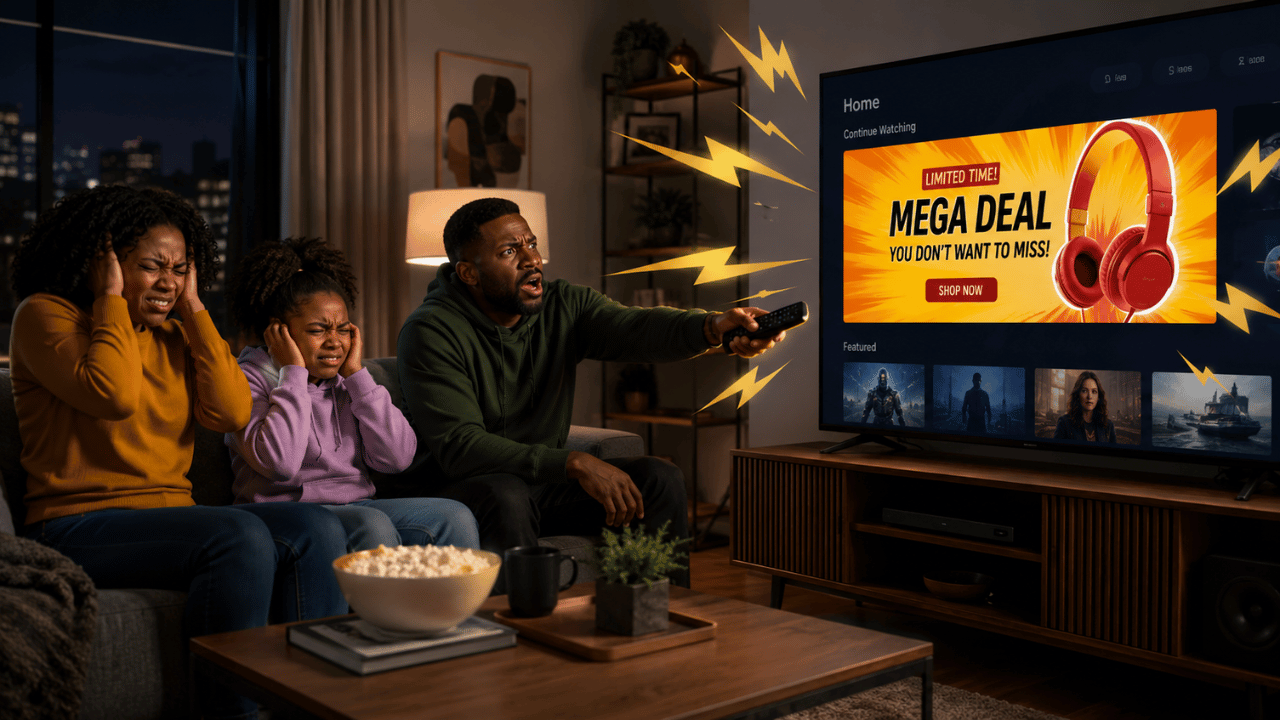
California is finally telling streaming platforms to stop playing audio jump-scares in people’s living rooms. A new state law aimed at loud streaming ads officially takes effect on Wednesday, July 1, and it could change the way ads sound on platforms like Netflix, Hulu, Prime Video, YouTube, and other ad-supported streamers. The law bans video streaming services from airing ads “louder than the video content” they accompany.
The measure, California Senate Bill 576, was signed by Gov. Gavin Newsom in October 2025 and applies to streaming services serving consumers in California. The bill text says streamers cannot “transmit the audio of commercial advertisements louder than the video content the advertisements accompany.” The law also states that it does not create a private right of action, meaning individual viewers cannot sue streamers directly over a loud commercial.
For anyone who has ever had to grab the remote because an ad suddenly blasted through the TV, this law closes a major loophole. Traditional broadcast and cable commercials have already been covered under the federal Commercial Advertisement Loudness Mitigation Act, better known as the CALM Act, which requires commercials to have the same average volume as the programs they accompany. However, those federal rules did not extend to streaming platforms.
Newsom’s office said SB 576 builds on the 2010 CALM Act by applying similar protections to streaming services, which have exploded in popularity over the last decade. “We heard Californians loud and clear, and what’s clear is that they don’t want commercials at a volume any louder than the level at which they were previously enjoying a program,” Newsom said in an October 2025 press release.
State Senator Thomas Umberg, who authored the bill, said the idea came from a very real household frustration. “This bill was inspired by baby Samantha and every exhausted parent who’s finally gotten a baby to sleep, only to have a blaring streaming ad undo all that hard work,” Umberg said.
The industry did not exactly roll out the red carpet for the legislation. Groups including the Motion Picture Association of America and the Streaming Innovation Alliance opposed the bill, arguing that streamers were already working on the issue and that compliance can be complicated across TVs, tablets, phones, and other devices. Politico reported that industry groups raised concerns because streaming ads can come from multiple sources and ad systems.
Still, California may only be the beginning. Illinois has already advanced a similar measure, SB 3222, requiring video streaming services and third-party ad managers to use reasonable care in normalizing ad audio starting July 1, 2027. That means streamers may have more reason to make volume changes broadly instead of building separate systems for different states.
For viewers, the takeaway is simple: the days of a peaceful movie night being interrupted by a commercial screaming through the speakers may finally be numbered.
