

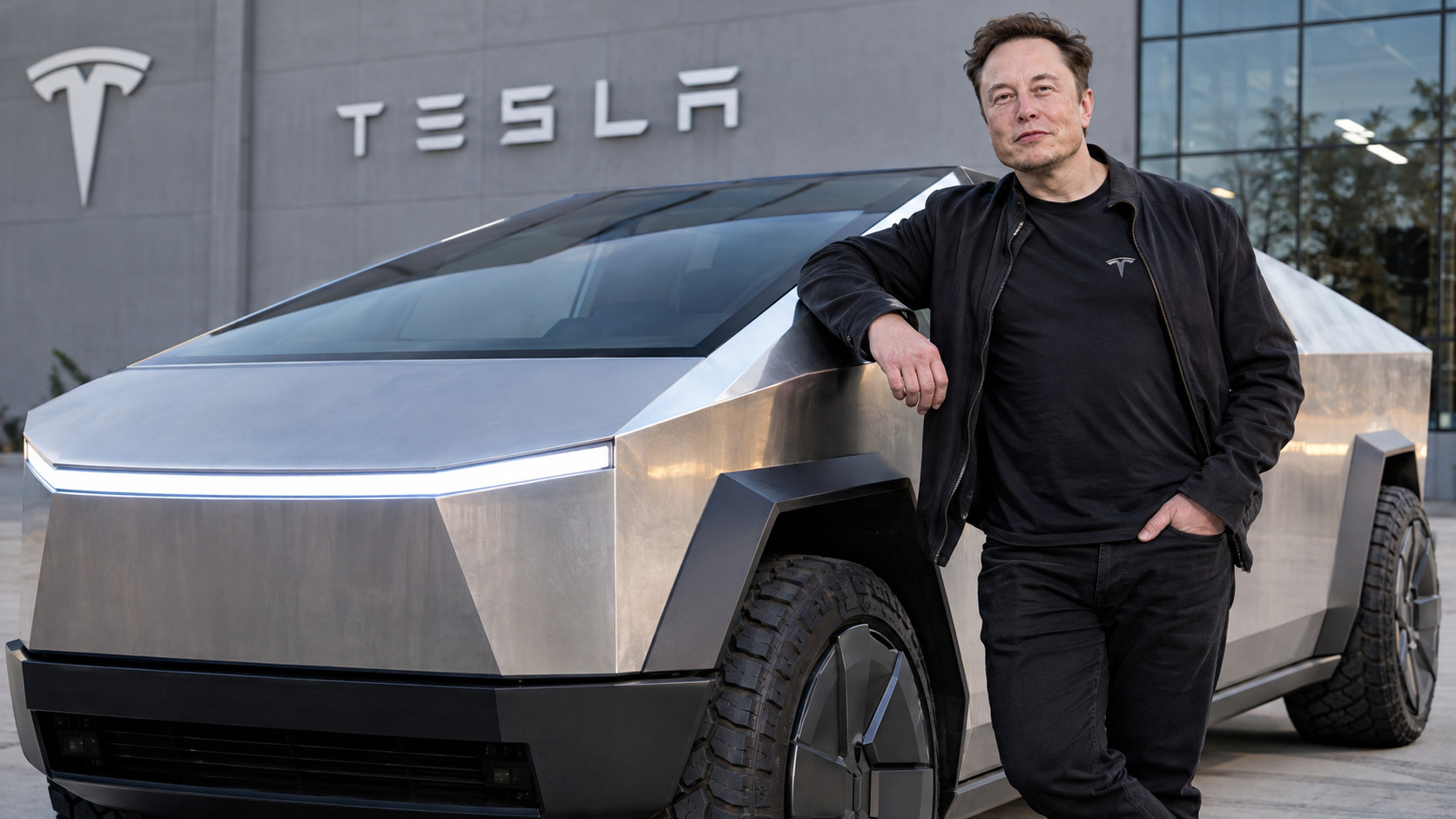
Cybertruck production is scheduled to wind down at Tesla’s Texas factory around mid-2027, with Elon Musk saying the company needs more space to manufacture its driverless Cybercab. However, the November 6, 2026 announcement follows years of disappointing sales, safety recalls, manufacturing difficulties, and lawsuits involving deadly crashes. Tesla has not confirmed whether the pickup will be manufactured elsewhere or discontinued entirely.
Tesla introduced the Cybertruck in November 2019, promising a futuristic electric pickup unlike anything on the road. Its stainless-steel exterior, unusual shape, and advertised durability immediately attracted attention. But the unveiling also produced an embarrassing moment when two supposedly durable windows cracked during an onstage demonstration.
The truck was initially expected to reach customers in late 2021. Instead, production difficulties and supply chain disruptions repeatedly delayed its arrival. The first Cybertruck rolled off Tesla’s Texas assembly line in July 2023, with customer deliveries finally beginning that November, approximately two years behind the original schedule.
Manufacturing the vehicle was unusually complicated. Its stainless-steel body required specialized processes, making large-scale production difficult. During Tesla’s October 2023 earnings call, Musk acknowledged the challenges himself.
“We dug our own grave with Cybertruck,” he said.
Pricing created another obstacle. Tesla originally advertised a base model starting at $39,900 in 2019. By November 2026, available configurations were priced between approximately $82,490 and $102,490. The relatively affordable electric pickup initially promoted to buyers had become a luxury-priced vehicle.
Demand never reached Musk’s expectations. He previously projected annual sales of around 250,000 Cybertrucks. Kelley Blue Book estimated that Tesla sold 38,965 in 2024 and just 20,237 in 2025, a 48% decline. Sales fell another 28% during the first nine months of 2026 compared with the same period a year earlier.


Made to order and shipped to your door.
Cybertruck production also became associated with an extensive series of safety problems. By November 2026, the vehicle had been included in 11 federal safety recalls covering defects and regulatory violations.
One of the most concerning recalls involved an accelerator pedal cover that could slide loose and become trapped against interior trim, potentially causing unintended acceleration. Another involved windshield wiper motors that could fail, reducing visibility during dangerous weather.
Tesla also recalled certain Cybertrucks because faulty drive inverters could suddenly cut propulsion, leaving drivers without acceleration. Other recalls involved malfunctioning rearview cameras and tire pressure warning systems that might fail to properly alert drivers.
Physical components created additional hazards. In 2024, Tesla recalled trucks over improperly secured bed trim that could detach while driving. A March 2025 recall involved stainless-steel exterior panels that could separate from the vehicle and create road hazards. Another recall addressed optional off-road light bars that could detach.
Additional problems included overly bright parking lights, undersized warning light lettering, and a 2026 recall affecting certain wheels because damaged mounting components could allow a wheel stud to separate. Some recalls required replacement parts, while others were resolved through software updates.
Beyond these manufacturing issues, Tesla faces lawsuits involving fatal Cybertruck crashes.
In August 2024, Michael Sheehan died following a Cybertruck crash and fire near Houston, Texas. His family subsequently filed a wrongful death lawsuit alleging that defects involving the vehicle’s battery system, crash protection, and door mechanisms prevented him from escaping. Those allegations have not been established as legal findings.
Another devastating crash occurred in Piedmont, California, on November 27, 2024. College students Soren Dixon, Jack Nelson, and Krysta Tsukahara died after their Cybertruck crashed and caught fire. California Highway Patrol investigators attributed the collision to unsafe speed and impaired driving.
The families of Nelson and Tsukahara later sued Tesla, alleging that the truck’s electronic door mechanisms prevented their loved ones from escaping after the crash. Tesla disputed responsibility, arguing that the vehicle met applicable safety standards.
Jordan Miller, the crash’s only survivor, also filed a lawsuit in March 2026 alleging that the Cybertruck’s design trapped occupants inside the burning vehicle. A friend managed to rescue Miller after breaking a window.
The lawsuits raised questions about emergency exits when a vehicle loses electrical power. Although Cybertrucks have manual door releases, the plaintiffs contend that the releases are difficult to locate during emergencies. Federal regulators have separately considered new rules addressing emergency exits in vehicles with electronically operated doors.
Musk’s stated reason for winding down Cybertruck production is Tesla’s increased investment in the Cybercab. Yet the pickup’s limited sales, repeated recalls, high manufacturing complexity, and unresolved litigation provide additional context for the decision. None of those factors has been officially identified by Tesla as the direct cause.
The Cybertruck was supposed to transform the pickup market. Instead, Tesla is redirecting factory capacity toward autonomous transportation, leaving the future of one of Musk’s most ambitious vehicles uncertain.
